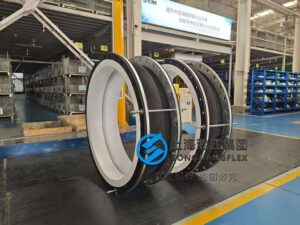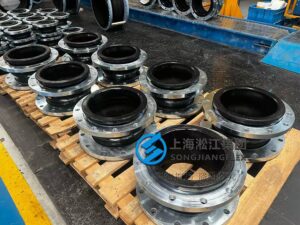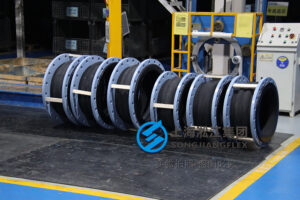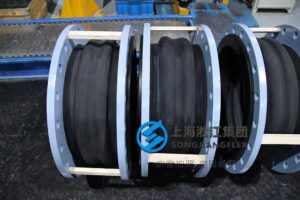
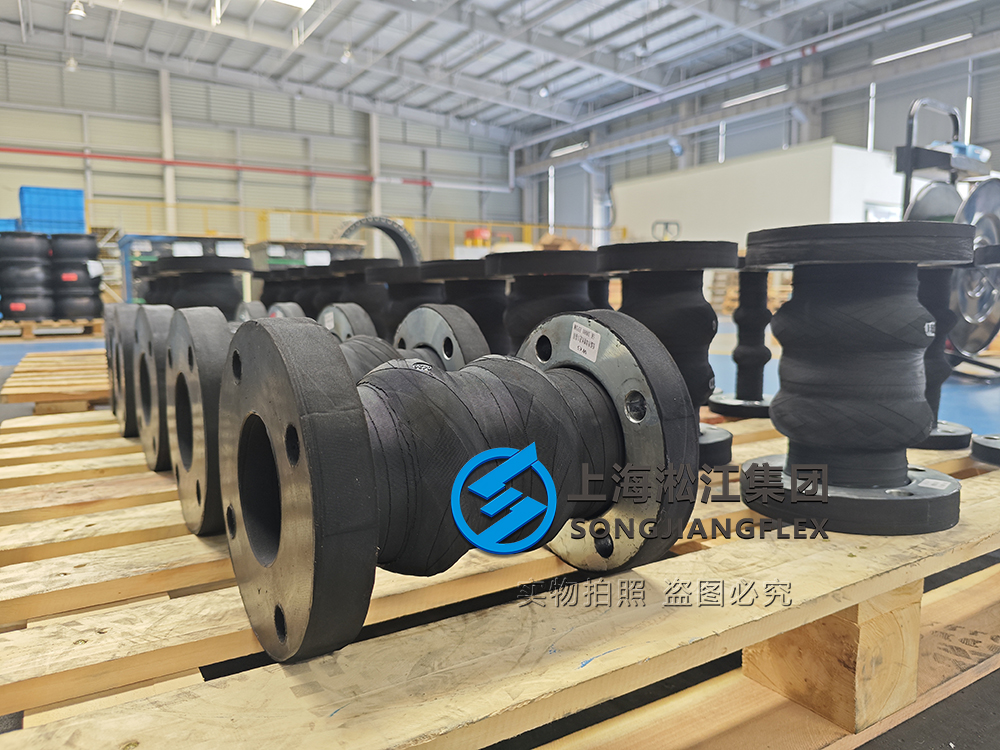
A flexible rubber hose is an important component in many industrial fluid-transfer systems where conventional rigid piping cannot easily accommodate vibration, movement, misalignment, thermal expansion, equipment movement, or installation tolerances.
Unlike a rigid steel pipe, a properly engineered rubber hose can provide a flexible connection between pumps, pipelines and other equipment while continuing to safely transport the required medium.
Flexible rubber hoses are widely used in marine engineering, dredging, mining, power generation, seawater systems, chemical processing, oil and gas, water treatment and industrial fluid handling.
The correct hose, however, must always be selected according to the actual operating conditions. Diameter alone is not enough to determine the appropriate hose construction.
What Is an Industrial Flexible Rubber Hose?
An industrial flexible rubber hose is an engineered fluid-transfer component consisting of an inner rubber tube, reinforcement layers and an outer protective cover.
Depending on the application, the hose construction may include:
- Inner rubber tube
- Textile reinforcement
- Polyester cord
- Rayon reinforcement
- Aramid fiber
- Steel wire reinforcement
- Steel spiral reinforcement
- Reinforcement rings
- Rubber outer cover
- Fixed flanges
- Loose flanges
- Stainless steel end connections
- Carbon steel end connections
- Special fittings
- Custom bends
- Pre-formed hose sections
The internal rubber compound is selected according to the transported medium, while the reinforcement structure determines many of the hose’s mechanical characteristics.
For example, a hose designed for clean water does not necessarily have the same construction as a hose for abrasive slurry, seawater, petroleum products, chemicals or vacuum service.
Therefore, the fundamental principle of flexible hose selection is:
The hose construction should be determined by the medium and operating conditions.
What Industries Use Flexible Rubber Hoses?
Flexible rubber hoses are used across a wide range of industries.
Marine and Shipbuilding
Marine applications can include:
- Seawater cooling systems
- Engine cooling systems
- Ballast systems
- Bilge systems
- Fire-fighting systems
- Fuel systems
- Exhaust systems
- Pump connections
- Marine piping systems
Ships contain many rotating machines and compact piping arrangements, making flexible connections particularly useful around engines, pumps and other vibrating equipment.
Power Plants
Power plant applications can include:
- Seawater intake systems
- Circulating-water systems
- Cooling-water pumps
- Condenser cooling-water pipelines
- Heat exchanger connections
- Cooling tower systems
- Auxiliary cooling systems
- Pump discharge pipelines
Large-diameter rubber hoses and flexible connections can be especially useful around large circulating-water pumps and equipment nozzles.
Mining and Mineral Processing
Mining applications can involve extremely abrasive media.
Typical equipment includes:
- Slurry pumps
- Tailings pumps
- Cyclones
- Hydrocyclones
- Mineral processing equipment
- Thickener systems
- Flotation equipment
- Ore processing systems
- Tailings pipelines
For these applications, the hose should be designed with an abrasion-resistant inner tube and suitable reinforcement.
Dredging
Dredging systems represent another demanding application.
Flexible rubber hoses can be used with:
- Cutter suction dredgers
- Trailing suction hopper dredgers
- Dredge pumps
- Booster pumps
- Suction pipelines
- Discharge pipelines
- Floating pipelines
- Shore pipelines
- Sand and gravel transfer systems
The transported material can contain sand, gravel, rock fragments and other abrasive particles.
Consequently, abrasion resistance becomes one of the most important hose-selection criteria.
Why Is a Flexible Hose Used at a Pump Connection?
Pumps are rotating machines and naturally generate mechanical vibration.
If a pump is connected directly to a rigid pipeline, vibration and mechanical forces can be transmitted into the piping system.
A flexible rubber hose can provide a flexible interface between the pump and the fixed pipeline.
Depending on the design, it can accommodate:
- Small lateral movement
- Minor axial movement
- Angular movement
- Equipment vibration
- Installation tolerances
- Small alignment differences
Common installation positions include:
Pump suction → flexible hose → pipeline
or
Pump discharge → flexible hose → fixed pipeline
However, the hose should never be used as a substitute for proper pipe supports.
The connected pipeline must be independently supported, and excessive external loads should not be transferred to the hose or equipment nozzle.
What Is the Difference Between a Suction Hose and a Discharge Hose?
This is an important technical distinction.
A discharge hose primarily needs to withstand positive internal pressure.
A suction hose may experience negative pressure or vacuum.
Under vacuum conditions, a conventional pressure hose may deform or collapse.
Therefore, suction hoses may require special construction such as:
- Steel spiral reinforcement
- Reinforcement rings
- Heavy-duty textile reinforcement
- Anti-collapse structures
- Special carcass construction
When requesting a hose for pump suction service, customers should provide the maximum vacuum level, not only the working pressure.
For example:
Working pressure: 4 bar
does not provide enough information if the hose is installed on the suction side.
The manufacturer also needs to know whether the system can reach:
-0.2 bar, -0.5 bar, -0.8 bar or another vacuum condition.
How Does Rubber Material Affect Hose Performance?
The rubber compound determines the hose’s compatibility with the transported medium and surrounding environment.
Common rubber materials include:
NR – Natural Rubber
Natural rubber is widely used where excellent elasticity and abrasion resistance are required.
It can be suitable for certain:
- Slurry applications
- Abrasive material transfer
- Water applications
- Mining applications
SBR – Styrene-Butadiene Rubber
SBR can be used for various industrial water and general-purpose applications.
Its suitability depends on the specific formulation and operating conditions.
NBR – Nitrile Rubber
NBR is commonly selected where resistance to oils and petroleum-based fluids is important.
Typical applications can include:
- Oil transfer
- Fuel systems
- Hydraulic applications
- Petroleum-related equipment
EPDM – Ethylene Propylene Diene Monomer
EPDM is widely considered for:
- Water
- Hot water
- Seawater
- Weather-exposed applications
- Ozone-exposed environments
It is particularly attractive for many water-based applications.
However, EPDM is generally not the first choice for petroleum-based fluids.
FKM – Fluoroelastomer
FKM can be considered for certain applications requiring higher chemical and temperature resistance.
The exact compatibility must be checked against the specific medium, concentration and temperature.
Why Is the Hose Outer Cover Important?
The outer cover protects the internal reinforcement from the surrounding environment.
Depending on the application, the hose may be exposed to:
- Sunlight
- Ozone
- Saltwater
- Oil
- Chemicals
- Abrasion
- Mechanical impact
- Moisture
- High temperature
A suitable outer cover helps protect the reinforcement and internal structure.
For marine and outdoor applications, resistance to weathering, ozone and UV exposure can be particularly important.
For mining applications, external abrasion and mechanical impact may be more significant.
Therefore, both the inside and outside environment should be considered when selecting a hose.
Can Flexible Rubber Hoses Be Used for Seawater?
Yes.
Flexible rubber hoses can be designed for seawater applications when the rubber compound and reinforcement system are compatible with the actual operating environment.
Typical applications include:
- Seawater intake
- Seawater discharge
- Seawater pumps
- Cooling-water pumps
- Power plant cooling systems
- Desalination systems
- Marine cooling systems
- Offshore platforms
- FPSO systems
- FLNG systems
For seawater applications, customers should provide information such as:
- Seawater temperature
- Working pressure
- Vacuum condition
- Hose diameter
- Hose length
- Chlorine concentration
- Sodium hypochlorite concentration, if applicable
- Installation environment
This information allows the hose construction to be evaluated more accurately.
Can Rubber Hoses Handle Abrasive Slurry?
Yes, but an ordinary water hose should not automatically be used for slurry.
Abrasive slurry can contain:
- Sand
- Gravel
- Mineral particles
- Ore
- Tailings
- Coal
- Limestone
- Cement particles
- Other solid materials
The hose selection should consider:
- Particle size
- Particle hardness
- Particle shape
- Solids concentration
- Flow velocity
- Operating pressure
- Operating temperature
- Hose bending requirements
A highly abrasive medium may require a thicker and more wear-resistant rubber liner.
In some severe applications, ceramic-lined rubber hose or other specialized wear-resistant constructions can be considered.
What Is a Ceramic-Lined Rubber Hose?
A ceramic-lined rubber hose combines the flexibility of a rubber hose with the high wear resistance of ceramic materials.
This type of hose can be considered for extremely abrasive applications where conventional rubber alone may not provide sufficient service life.
Typical applications may include:
- Mining slurry
- Coal slurry
- Ore transportation
- Power plant ash handling
- Cement transportation
- Mineral processing
- Sand and gravel
- High-abrasion slurry systems
The ceramic lining can be designed in selected high-wear areas rather than necessarily covering the entire hose.
This allows engineers to target the areas where abrasion is most severe.
How Should a Flexible Rubber Hose Be Installed?
Correct installation is critical to hose performance.
Before installation, check:
- Hose length
- Flange alignment
- Pipe alignment
- Connection dimensions
- Bolt-hole pattern
- Working pressure
- Hose orientation
- Minimum bending radius
- Support arrangement
The hose should not be:
- Twisted
- Over-stretched
- Excessively compressed
- Bent below its minimum radius
- Used to support heavy pipe loads
If the hose is installed between a pump and pipeline, the pipeline should have independent supports.
The hose should be allowed to move within its designed operating range.
Why Is the Minimum Bending Radius Important?
Every flexible hose has a minimum bending radius.
If the hose is bent too tightly, excessive stress can develop in the rubber and reinforcement layers.
Potential consequences include:
- Local deformation
- Reinforcement damage
- Reduced pressure capability
- Premature fatigue
- Reduced service life
- Connection stress
For large-diameter hoses, the minimum bending radius can become an important consideration during plant layout.
The required installation space should therefore be determined before the hose is manufactured.
What Information Is Needed for a Custom Flexible Rubber Hose?
For a technical quotation, customers should ideally provide the following information.
Basic Parameters
- Nominal diameter
- Hose inside diameter
- Hose length
- Medium
- Working pressure
- Design pressure
- Working temperature
- Design temperature
Mechanical Conditions
- Vacuum
- Axial movement
- Lateral movement
- Angular movement
- Vibration
- Minimum bending radius
- Installation orientation
Medium Information
For slurry:
- Particle size
- Solids concentration
- Particle hardness
- Flow velocity
For chemicals:
- Chemical name
- Concentration
- Temperature
For seawater:
- Normal seawater
- Chlorinated seawater
- Sodium hypochlorite concentration
Connection Information
- Flange standard
- Flange material
- Flange drilling
- Bolt-hole diameter
- Fixed or loose flange
- Stainless steel or carbon steel connection
- Special equipment connection
A drawing or photograph of the installation location is also extremely helpful.
FAQ: Can a Flexible Rubber Hose Replace a Metal Pipe?
In some applications, yes, but it depends entirely on the operating conditions.
A rubber hose should not be regarded as a universal replacement for rigid piping.
The hose must be suitable for the required:
- Pressure
- Temperature
- Medium
- Vacuum
- Flow velocity
- Movement
- Bending radius
- Installation environment
For short flexible connections around pumps and equipment, rubber hose can provide advantages that rigid steel pipe cannot.
For long straight pipelines requiring structural support, rigid piping may remain the more appropriate solution.
The best approach is to use each component according to its intended engineering function.
FAQ: Can a Flexible Rubber Hose Reduce Pump Vibration?
A properly selected flexible hose can help reduce the transmission of mechanical vibration between a pump and connected piping.
However, its effectiveness depends on the complete system.
Important factors include:
- Pump operating speed
- Vibration frequency
- Hose construction
- Hose length
- Pipe support
- Pipe alignment
- Pump foundation
- Connection arrangement
A rubber hose should therefore be considered one part of a complete vibration-control strategy rather than a standalone vibration solution.
FAQ: Can the Same Hose Be Used for Water, Seawater and Oil?
Not necessarily.
Different media have different effects on rubber compounds.
For example, a rubber compound suitable for water and seawater may not be suitable for petroleum products.
Likewise, a hose designed for oil may not be the best choice for hot water or certain chemicals.
The customer should always provide the exact medium before selecting the rubber compound.
For chemical applications, the chemical name, concentration and operating temperature are particularly important.
FAQ: Can a Flexible Rubber Hose Be Used at Both Pump Suction and Discharge?
Yes, but the hose construction may need to be different.
The discharge side primarily requires pressure resistance.
The suction side may require vacuum resistance.
Therefore, a hose that is suitable for pump discharge should not automatically be installed on the suction side.
For suction applications, the manufacturer should confirm the hose’s vacuum rating and anti-collapse construction.
FAQ: How Do I Choose the Correct Hose Diameter?
The hose diameter should normally correspond to the required flow rate and acceptable fluid velocity, while also matching the connected equipment and pipeline dimensions.
Important information includes:
- Required flow rate
- Pump capacity
- Existing pipe diameter
- Fluid viscosity
- Medium density
- Solids concentration
- Allowable pressure loss
For slurry systems, velocity is particularly important because excessive velocity can significantly increase wear.
Therefore, selecting a hose solely based on the nominal pipe diameter may not be sufficient for specialized applications.
FAQ: What Should I Provide When Requesting a Flexible Rubber Hose Quotation?
Please provide as much technical information as possible.
At minimum, we recommend:
Diameter: DN___
Length: ___ mm
Medium: ___
Working pressure: ___
Working temperature: ___
Vacuum: ___
Connection: ___
Required movement: ___
Application equipment: ___
For example:
DN900 flexible rubber hose, seawater, 4 bar working pressure, 10–35°C, 2,000 mm length, stainless-steel flanges, installed at seawater pump discharge.
With this information, the manufacturer can evaluate the appropriate rubber compound, reinforcement structure, flange configuration, pressure rating and movement capability.
Conclusion
Flexible rubber hoses play an important role in modern industrial piping systems.
They provide a combination of fluid-transfer capability and mechanical flexibility, making them particularly useful around pumps, rotating equipment, marine systems, mining equipment, dredging machinery and large industrial pipelines.
The key to successful hose selection is not simply choosing a product with the correct diameter.
The complete operating environment should be evaluated:
Medium + Pressure + Temperature + Vacuum + Movement + Equipment + Installation
For seawater applications, the hose should be selected according to seawater chemistry and temperature.
For mining and dredging, abrasion resistance becomes a major consideration.
For pump suction, vacuum resistance must be confirmed.
For oil and chemical transfer, rubber compatibility is essential.
For vibrating equipment, the hose construction and installation arrangement should be evaluated together with the complete piping system.
A correctly engineered flexible rubber hose can provide reliable fluid transfer while helping accommodate movement, vibration and installation requirements.
Product Specifications and Construction Drawing
For each flexible rubber hose project, we can evaluate the appropriate:
- Rubber compound
- Hose structure
- Reinforcement material
- Inner liner
- Outer cover
- Flange configuration
- Connection type
- Working pressure
- Vacuum rating
- Minimum bending radius
- Movement capability
- Hose length
- Special lining requirements
Please contact us with your pipeline operating conditions, drawings, or technical datasheet. We can evaluate the appropriate rubber compound, reinforcement structure, flange configuration, pressure rating, and movement capability according to your application.
About Us
Shanghai Songjiang Vibration Absorber Group specializes in flexible rubber hoses, rubber expansion joints, industrial vibration isolators and flexible piping products.
Our products can be customized for:
- Seawater systems
- Marine equipment
- Dredging equipment
- Mining and mineral processing
- Power plants
- Pump connections
- Chemical plants
- Water treatment
- Desalination plants
- Industrial cooling-water systems
- Offshore engineering
- Large-diameter pipelines
Our company’s new website is now live, featuring the latest product introductions. For more details, please visit https://shsjflex.com/
Email: [email protected]