
DJ Rubber Support
The DJ Rubber Pad is an advanced vibration isolation and noise reduction solution specifically engineered for HVAC systems, air conditioning outdoor units, heat pumps, and various mechanical equipment installations. Manufactured using environmentally friendly rubber compounds compliant with EU ROHS standards, the product features an innovative formula that delivers exceptional bond strength, effectively preventing particle shedding and ensuring long-term structural integrity.
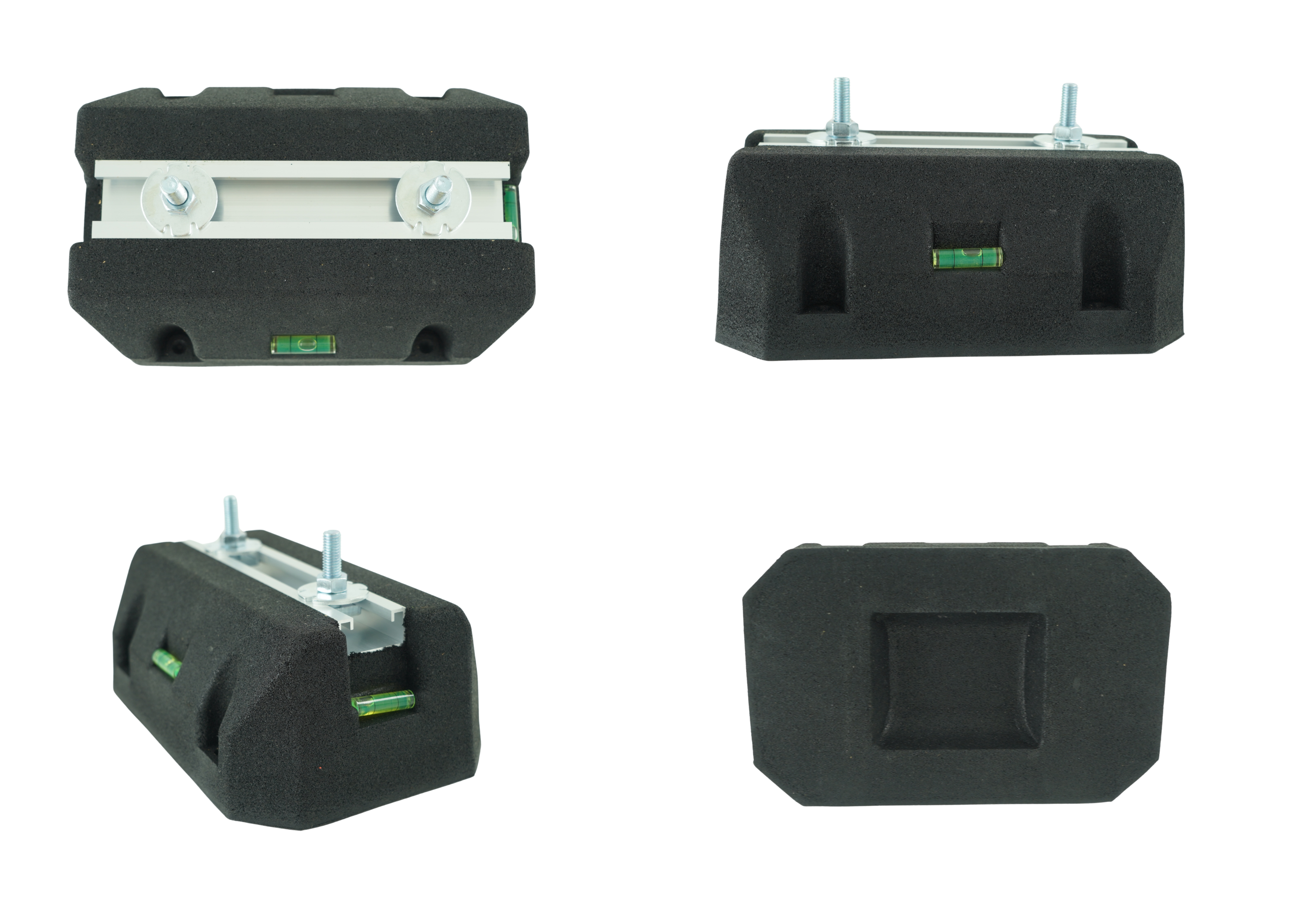
Key Features
- Manufactured from environmentally friendly rubber materials compliant with EU ROHS standards
- Innovative rubber formulation with high bond strength to prevent particle shedding
- Excellent vibration isolation and noise reduction performance
- Superior outdoor weather resistance and anti-aging properties
- Reliable operation at temperatures down to -40°C
- High load-bearing capacity for various equipment types
- Anti-slip design enhances installation stability and safety
- Adjustable oxidized aluminum alloy sliding groove for flexible mounting
- Reduces structural vibration transmission to surrounding buildings
- Extends equipment lifespan by minimizing operational stress
- Suitable for both indoor and outdoor installations
- Supports custom dimensions and configurations upon request
Typical Applications
The DJ Rubber Pad is widely used for vibration control in:
HVAC Equipment
- Air conditioning outdoor condenser units
- Central HVAC systems
- VRF/VRV systems
- Rooftop packaged units
- Air handling units (AHU)
- Fan coil units (FCU)
- Heat pumps
Mechanical Equipment
- Water pumps
- Booster pumps
- Centrifugal pumps
- Compressors
- Vacuum pumps
- Chillers
- Cooling towers
Power and Industrial Equipment
- Generators
- Diesel generator sets
- Blowers and industrial fans
- Mechanical processing equipment
- Industrial machinery bases
Building Installations
- Rooftop equipment supports
- Equipment mounting platforms
- Commercial building mechanical rooms
- Residential HVAC installations
Industry experience shows that proper vibration isolation can significantly reduce structure-borne noise and improve equipment stability in HVAC applications. Anti-vibration pads are commonly used beneath air conditioners, compressors, pumps, generators, and cooling equipment to minimize operational vibration transmission.
Product Structure Drawing
The DJ Rubber Pad typically consists of:
- High-density vibration isolation rubber body
- Oxidized aluminum alloy sliding channel
- Adjustable fixing slot system
- Anti-slip contact surface
- High-strength bonded construction
The optimized structural design ensures excellent load distribution while providing effective vibration damping and installation flexibility.
DJ Rubber Pad Dimensions and Load Capacity
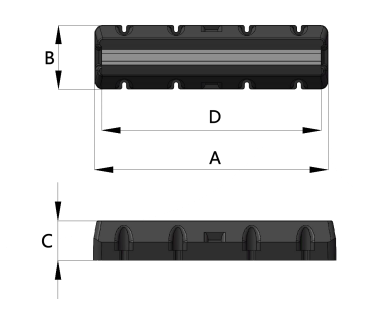
| Model | A (mm) | B (mm) | C (mm) | D (mm) | Product Weight (kg) | Maximum Load (kg) |
|---|---|---|---|---|---|---|
| DJ250 | 250 | 163 | 98 | 210 | 2.78 | 80–230 |
| DJ400 | 400 | 163 | 98 | 360 | 4.14 | 120–380 |
| DJ450 | 450 | 163 | 98 | 410 | 4.74 | 150–420 |
| DJ500 | 500 | 163 | 98 | 460 | 5.23 | 180–460 |
| DJ500B | 500 | 130 | 60 | 460 | 2.97 | 120–380 |
| DJ600 | 600 | 163 | 98 | 560 | 6.37 | 200–560 |
| DJ1000 | 1000 | 163 | 98 | 960 | 11.10 | 320–920 |
DJS Series Technical Specifications
| Model | Dimensions (L × W × H) (mm) | Load Capacity (kg) | Applicable Units | Aluminum Channel (mm) |
|---|---|---|---|---|
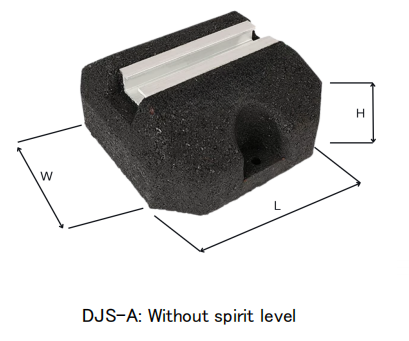
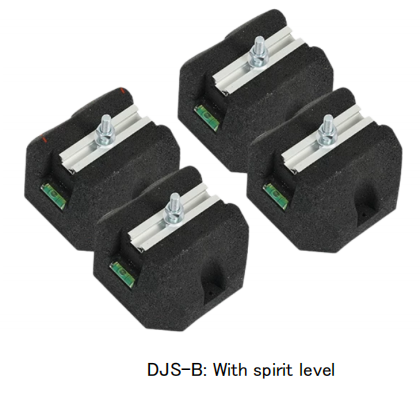
| DJS110 | 110 × 110 × 68 | < 400 | 1–3P | 88 |
| DJS120 | 120 × 120 × 50 | < 500 | 1–3P | 88 |
| DJS142 | 142 × 142 × 95 | < 500 | 1–3P | 100 |
| DJS150 | 150 × 150 × 98 | < 600 | 1–5P | 100 |
1. What is the primary function of the DJ Rubber Pad Support?
The DJ Rubber Pad is designed to reduce vibration and structure-borne noise generated by HVAC equipment and mechanical machinery. By absorbing and isolating operational vibrations before they are transmitted into floors, roofs, or supporting structures, the pad helps create a quieter environment while improving equipment stability. It also reduces mechanical stress on equipment components, potentially extending service life and lowering maintenance requirements.
2. Which types of equipment can use DJ Rubber
Supports?
DJ Rubber Pads are suitable for a wide range of applications, including air conditioning outdoor units, heat pumps, rooftop HVAC equipment, chillers, compressors, water pumps, cooling towers, generators, industrial fans, and other rotating mechanical equipment. Their versatile design makes them appropriate for residential, commercial, and industrial installations.
3. Can the DJ Rubber Support be used outdoors?
Yes. The DJ Rubber Pad is specifically engineered for long-term outdoor use. The high-quality rubber compound offers excellent resistance to UV exposure, ozone, moisture, and environmental aging. In addition, the aluminum alloy components provide corrosion resistance, ensuring reliable performance even in challenging outdoor conditions.
4. How does the DJ Rubber Support improve equipment lifespan?
Continuous vibration can accelerate wear on bearings, fasteners, piping connections, and structural supports. By effectively isolating vibration and reducing impact loads during operation, the DJ Rubber Pad minimizes mechanical fatigue and stress concentrations throughout the equipment system. This contributes to improved operational reliability and may help extend the service life of both the equipment and supporting infrastructure.
5. Is the DJ Rubber Support suitable for cold climates?
Absolutely. The DJ Rubber Pad has undergone rigorous testing to verify performance in low-temperature environments. It remains flexible and functional at temperatures as low as -40°C, resisting brittleness and cracking that can affect conventional rubber materials. This makes it suitable for installations in cold regions and outdoor winter applications.
6. Does the product support different installation requirements?
Yes. The integrated oxidized aluminum alloy sliding groove allows installers to adjust fixing screw positions according to actual equipment mounting dimensions. This design provides excellent installation flexibility and simplifies alignment during field installation. Customized dimensions and configurations can also be offered for specific project requirements.
7. Why is vibration isolation important for HVAC equipment?
HVAC systems generate continuous vibration during normal operation due to compressors, fans, and rotating components. Without proper isolation, these vibrations can transfer into building structures, causing excessive noise, occupant discomfort, equipment instability, and premature wear of connected components. Effective vibration isolation improves indoor comfort, reduces maintenance issues, and enhances overall system performance.
8. What are the advantages of using ROHS-compliant rubber materials?
ROHS-compliant materials meet stringent environmental standards by restricting hazardous substances in manufacturing. In addition to supporting environmental responsibility, high-quality ROHS-compliant rubber compounds often provide excellent durability, elasticity, aging resistance, and long-term performance stability, making them ideal for demanding HVAC and industrial applications.