
Trelleborg Flexible Rubber Hose
Trelleborg Flexible Rubber Hose is designed for demanding fluid transfer applications requiring flexibility, durability, and reliable performance. It can be customized with different rubber compounds and reinforcement structures for seawater, water, slurry, abrasive materials, oil, chemicals, and industrial fluids. Suitable for connecting pumps, dredging equipment, marine engines, cooling systems, mining equipment, and industrial pipelines, the hose helps accommodate movement, reduce vibration transmission, and simplify installation. Available in customized diameters, lengths, pressure ratings, and end connections to meet specific project requirements.
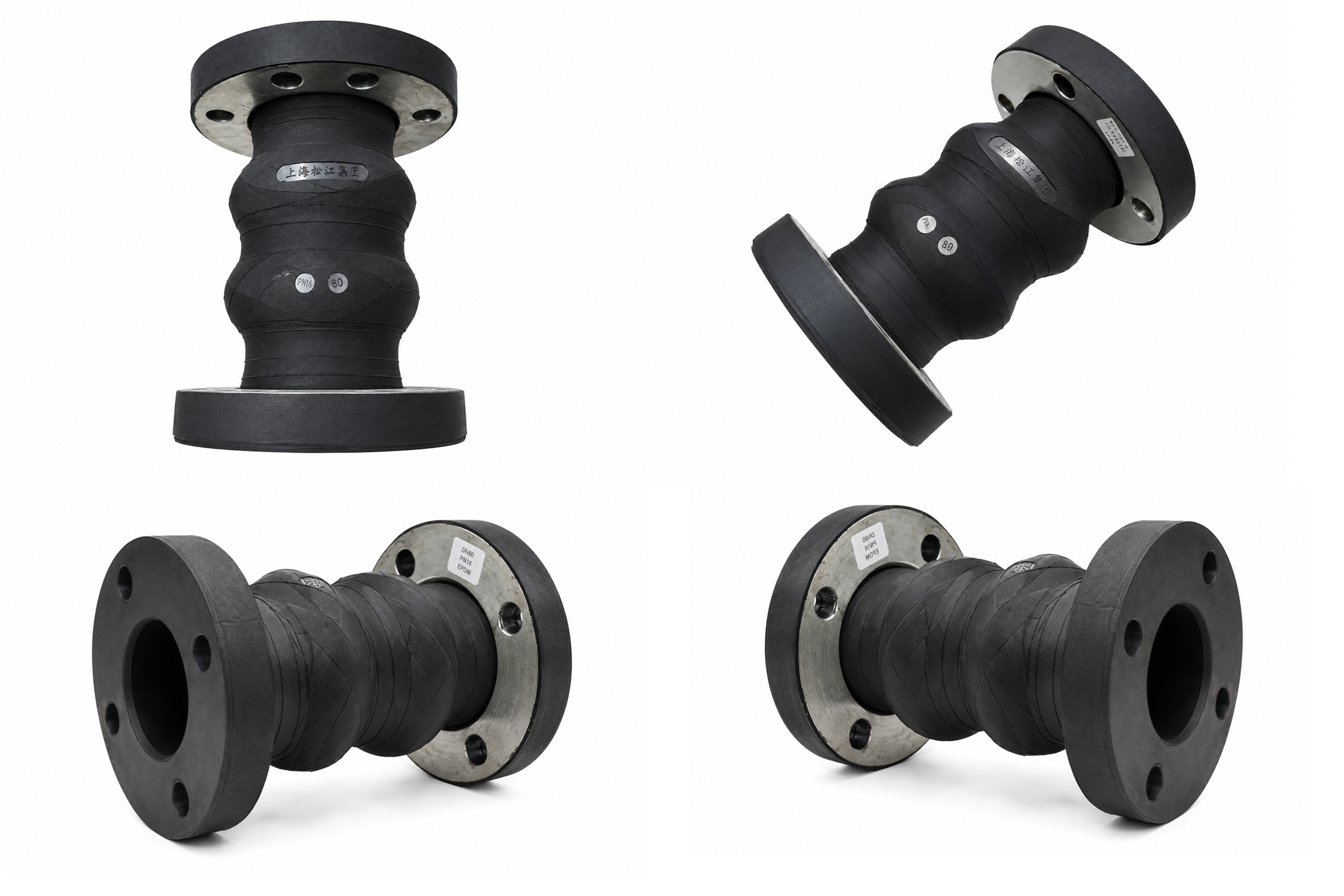
Why Choose a Trelleborg Flexible Rubber Hose?
When rigid piping cannot absorb vibration, movement, misalignment or repeated mechanical stress, a flexible rubber hose can become an essential part of the fluid handling system.
Trelleborg is widely known for its engineered hose solutions used across industrial, marine, mining, dredging, oil and gas, chemical and fluid-transfer applications. Its hose portfolio covers rubber, PTFE, stainless steel and composite hose solutions, with different constructions designed for abrasion resistance, oil resistance, heat resistance, corrosion resistance and demanding mechanical conditions.
A Trelleborg flexible rubber hose is therefore more than a simple connection between two pieces of equipment. Depending on its construction and application, it can provide flexibility, vibration isolation, movement compensation, wear resistance and reliable transfer of liquids, slurry, seawater, oil, chemicals and other industrial media.
This article explains where flexible rubber hoses are used, what equipment they connect, why hose construction matters and what information should be confirmed before selecting a suitable hose assembly.
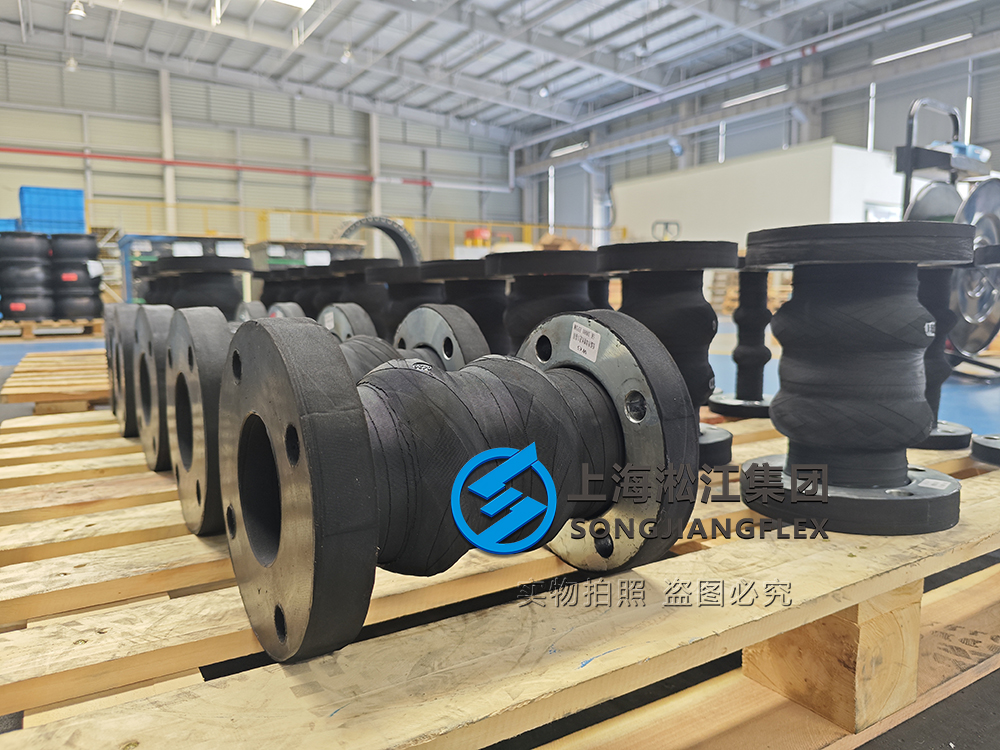
A flexible rubber hose is generally designed to transfer fluid between two connection points while allowing routing flexibility and movement.
A rubber expansion joint is usually installed as part of a piping system to absorb movement, vibration or thermal expansion.
Although both products are made from engineered rubber and reinforced structures, their designs and applications can be different.
A hose may be longer and designed to bend around equipment or follow a specific route.
An expansion joint is generally shorter and designed around defined axial, lateral or angular movement requirements.
The correct choice depends on the installation.
For example, if a pump must connect to a pipeline with a longer flexible section, a hose assembly may be appropriate.
If two aligned pipe flanges require a compact flexible connection for vibration isolation and movement compensation, a rubber expansion joint may be more suitable.
Yes, but the hose must be specifically suitable for suction or vacuum service.
This is an important requirement because the pressure inside a pump suction hose can fall below atmospheric pressure.
A standard hose that is not designed for vacuum may collapse.
For a suction application, the manufacturer should confirm the maximum vacuum, hose diameter, medium, temperature and pump operating conditions.
Reinforcement such as steel helix or other anti-collapse construction may be required.
The hose should also be installed without excessive bending or twisting, because incorrect installation can reduce its effective vacuum resistance.
Service life depends heavily on the application.
There is no single service-life number that applies to all flexible rubber hoses.
The following factors can significantly affect hose life:
- Abrasion
- Pressure
- Pressure pulsation
- Vacuum
- Temperature
- Chemical compatibility
- UV exposure
- Ozone
- External mechanical damage
- Bending frequency
- Installation quality
- Medium velocity
- Particle size
A hose carrying clean water at moderate pressure may have completely different service conditions from a hose carrying abrasive slurry at high velocity.
For critical applications, regular visual inspection and preventive maintenance should be part of the maintenance program.
Yes, but the hose must be specifically designed for abrasive service.
Abrasion-resistant slurry hoses use suitable inner rubber compounds and reinforcement systems to withstand continuous particle wear.
The customer should provide particle size, solids concentration, material hardness and flow velocity.
These factors are extremely important.
A hose designed for fine mineral slurry may not be suitable for sharp gravel or large rock particles.
Specialist dredging and mining hose systems are specifically engineered for abrasive material handling and slurry transfer.
Yes, provided the hose material is compatible with the seawater conditions.
The selection should consider whether the medium is natural seawater only or whether chemicals are added.
For example, chlorinated seawater and seawater treated with sodium hypochlorite may require additional material compatibility review.
The application is also important.
A low-pressure seawater cooling connection and a large offshore seawater intake hose can require completely different hose constructions.
The hose diameter, pressure, vacuum, length, reinforcement and end connection should therefore be selected for the actual equipment and installation.
Every flexible rubber hose has a mechanical limit on how tightly it can bend.
If the hose is bent below its minimum bending radius, excessive stress may be placed on the rubber and reinforcement layers.
This can lead to:
- Hose deformation
- Reinforcement damage
- Reduced pressure capability
- Reduced service life
- Localized wear
- Connection stress
The installation layout should therefore provide sufficient space for the hose to bend naturally.
The hose should also not be twisted during installation.
Before ordering, customers should provide as much technical information as possible.
At a minimum, we recommend confirming:
Hose size
Medium
Working pressure
Operating temperature
Required length
Connection type
Required movement
Installation drawing or photograph
For special applications, additional information may be required.
For slurry, please provide particle information.
For chemicals, please provide the complete chemical name and concentration.
For pump suction, please provide the maximum vacuum.
For marine applications, please provide the vessel equipment, installation location and applicable technical standards.
A correct technical selection at the beginning can help avoid premature hose failure and unnecessary maintenance costs.
Where Are Flexible Rubber Hoses Used?
Flexible rubber hoses are used wherever a piping system requires both fluid transfer and mechanical flexibility.
Typical industries include:
- Marine and shipbuilding
- Dredging
- Mining
- Mineral processing
- Power generation
- Oil and gas
- Offshore platforms
- FPSO systems
- Chemical processing
- Petrochemical plants
- Steel mills
- Cement plants
- Water treatment
- Wastewater treatment
- Desalination
- Aquaculture
- Construction and infrastructure
Trelleborg’s official product information covers applications ranging from abrasive material transfer and industrial water to chemicals, petroleum products, marine equipment, mining and offshore oil transfer.
What Equipment Can a Flexible Rubber Hose Connect?
One of the biggest advantages of a flexible hose assembly is its ability to connect equipment that may experience vibration, movement or installation tolerance.
Flexible rubber hoses can be installed around:
- Centrifugal pumps
- Seawater pumps
- Cooling-water pumps
- Circulating-water pumps
- Slurry pumps
- Dredge pumps
- Sand pumps
- Gravel pumps
- Booster pumps
- Fire pumps
- Bilge pumps
- Ballast pumps
- Cargo pumps
- Chemical transfer pumps
- Process pumps
- Vacuum pumps
For example, a flexible hose may be installed at the pump suction line, pump discharge line or between a pump skid and the fixed pipeline.
The hose can help accommodate equipment vibration and small relative movements, provided the system is properly supported and the hose is selected for the correct pressure, vacuum and movement requirements.
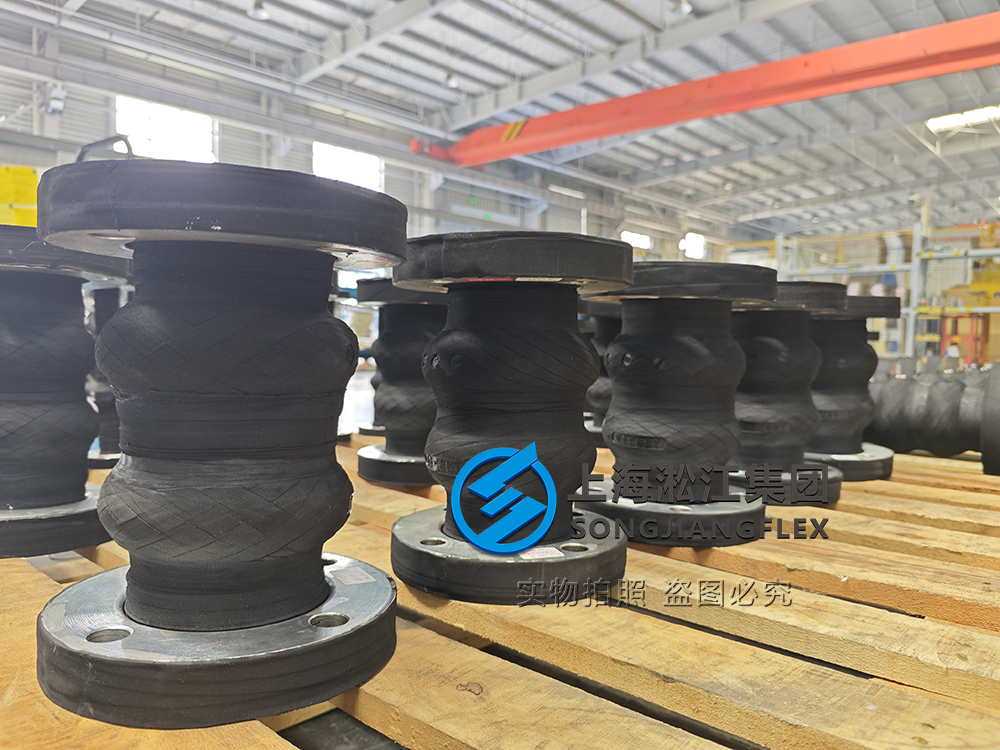
What Is a Flexible Rubber Hose?
A flexible rubber hose is an engineered fluid-transfer component designed to carry a specified medium while allowing more movement than a conventional rigid steel pipe.
Depending on the application, a hose assembly may include:
- Inner rubber tube
- Multi-layer textile reinforcement
- Polyester cord reinforcement
- Rayon reinforcement
- Aramid fiber reinforcement
- Steel wire reinforcement
- Steel helix
- Reinforcement rings
- Rubber outer cover
- Integrated flanges
- Loose flanges
- Steel end connections
- Custom bends or pre-formed shapes
The rubber compound and reinforcement structure must match the actual application. Trelleborg describes the use of compounds including NR, SBR, NBR and EPDM for different industrial requirements, while its specialist mining hoses can incorporate additional compounds and textile or steel reinforcement according to the service conditions.
This means that a flexible rubber hose for clean water is not necessarily suitable for abrasive slurry, petroleum, seawater, chemicals or high-temperature service.
The medium and operating conditions should always determine the hose design.
Product Specifications and Structure Drawing
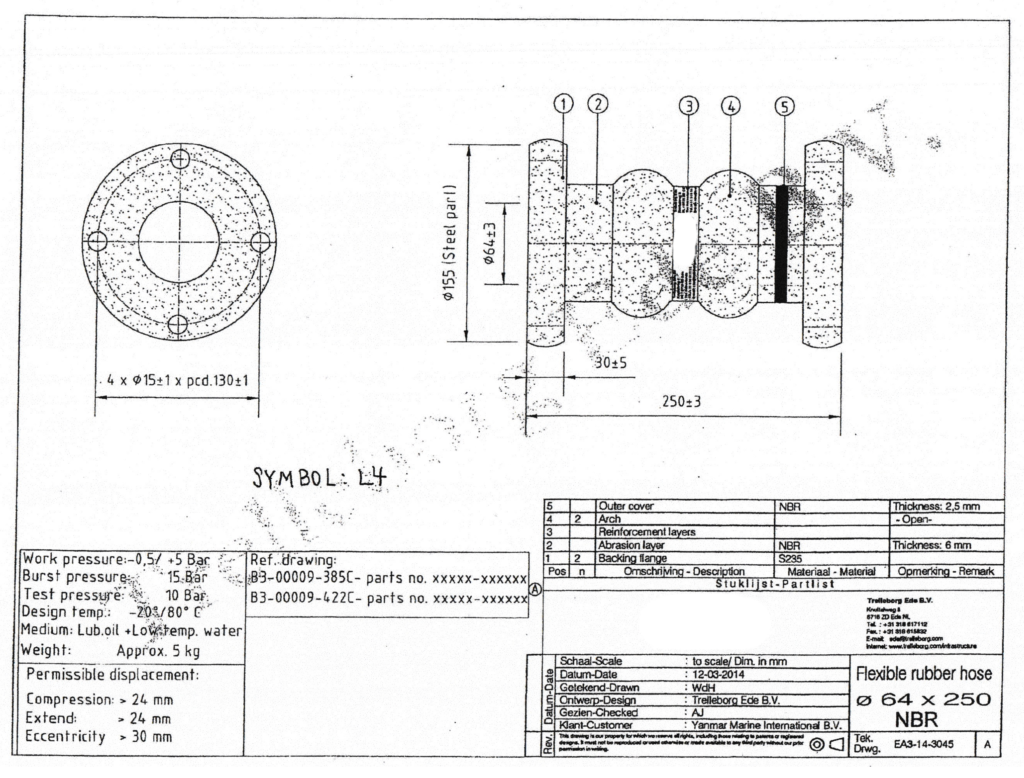
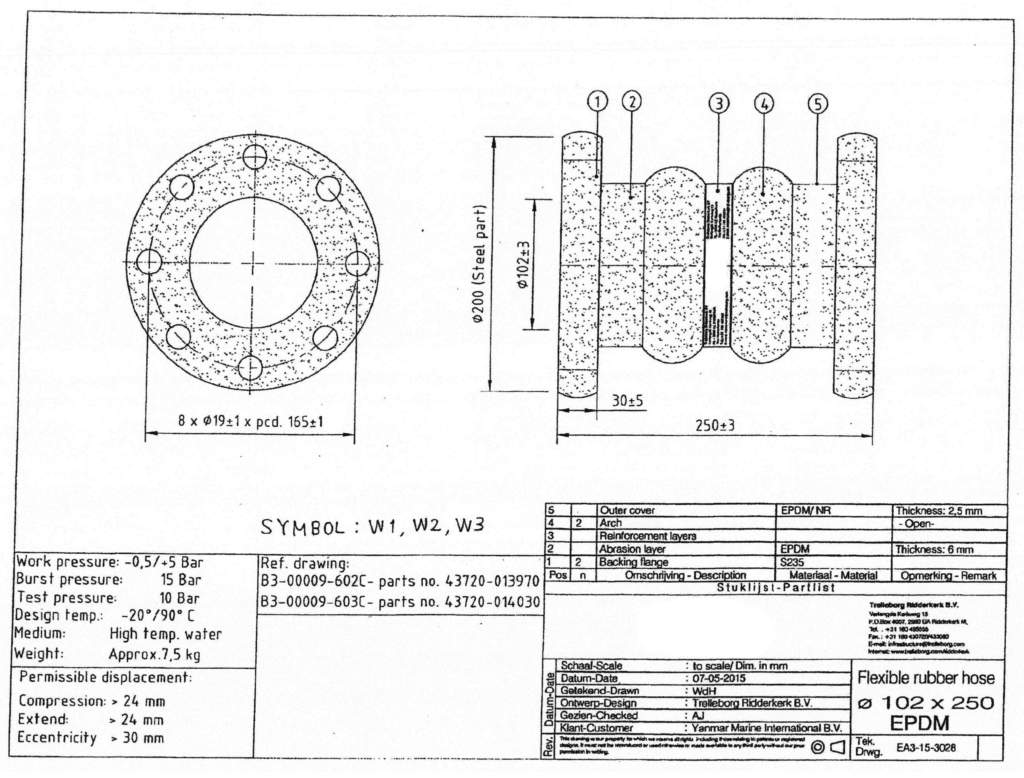
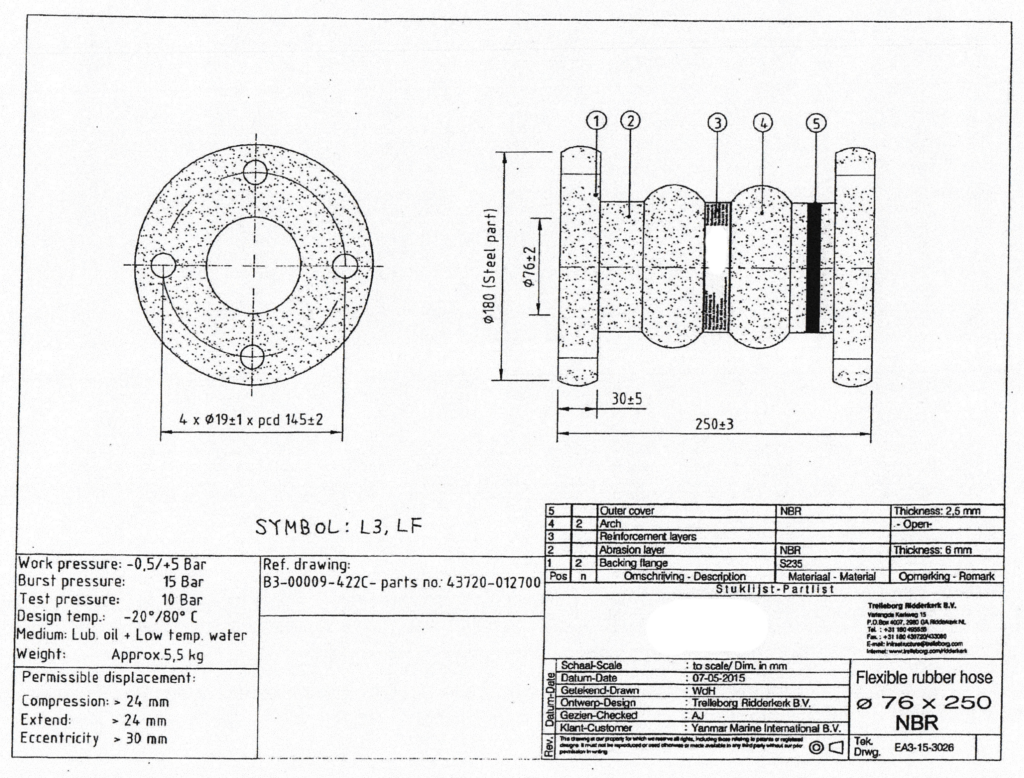
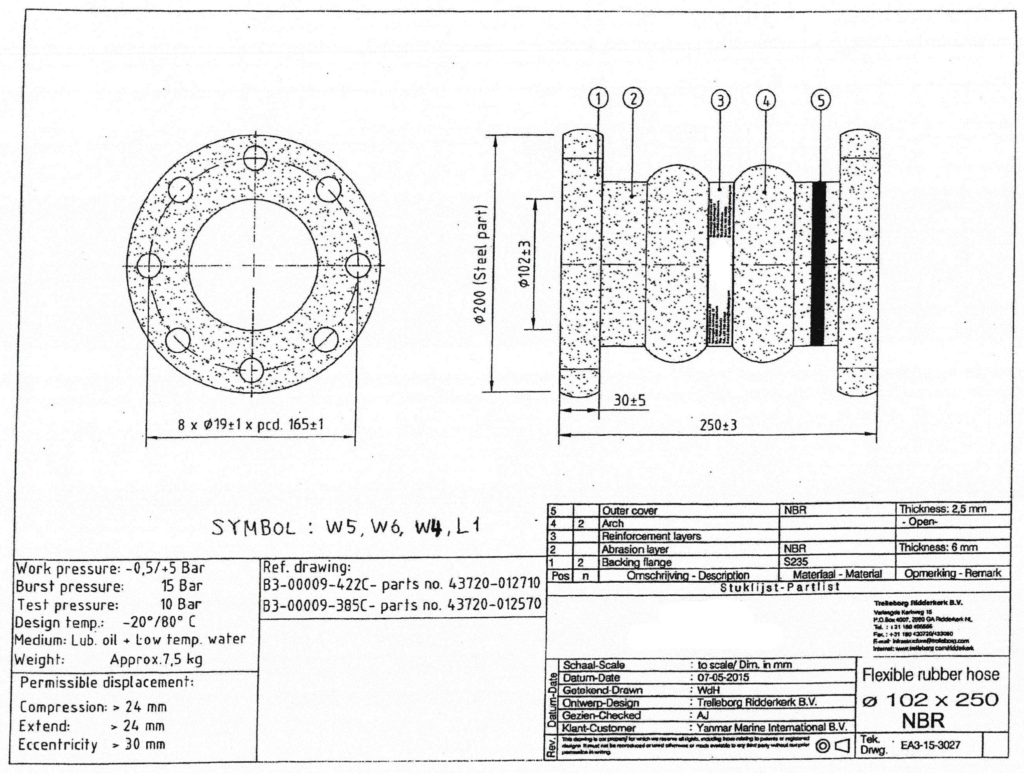
Contact us with your pipeline operating conditions, drawings, or technical datasheet. We can evaluate the appropriate rubber compound, ceramic lining, reinforcement structure, flange configuration, pressure rating, and movement capability according to your application.
Need other customized rubber expansion joints? Explore our full range of rubber expansion joint solutions, including different sizes, materials, flange standards, pressure ratings, and special designs for various industrial applications.