
JYC Cup-Style Vibration Isolation Mount
JYC Cup-Style Vibration Isolation Mounts feature a durable metal housing bonded with high-quality natural rubber. With high damping, excellent shock resistance, and reliable lateral stability, they effectively reduce equipment vibration, impact, and high-frequency structure-borne noise.
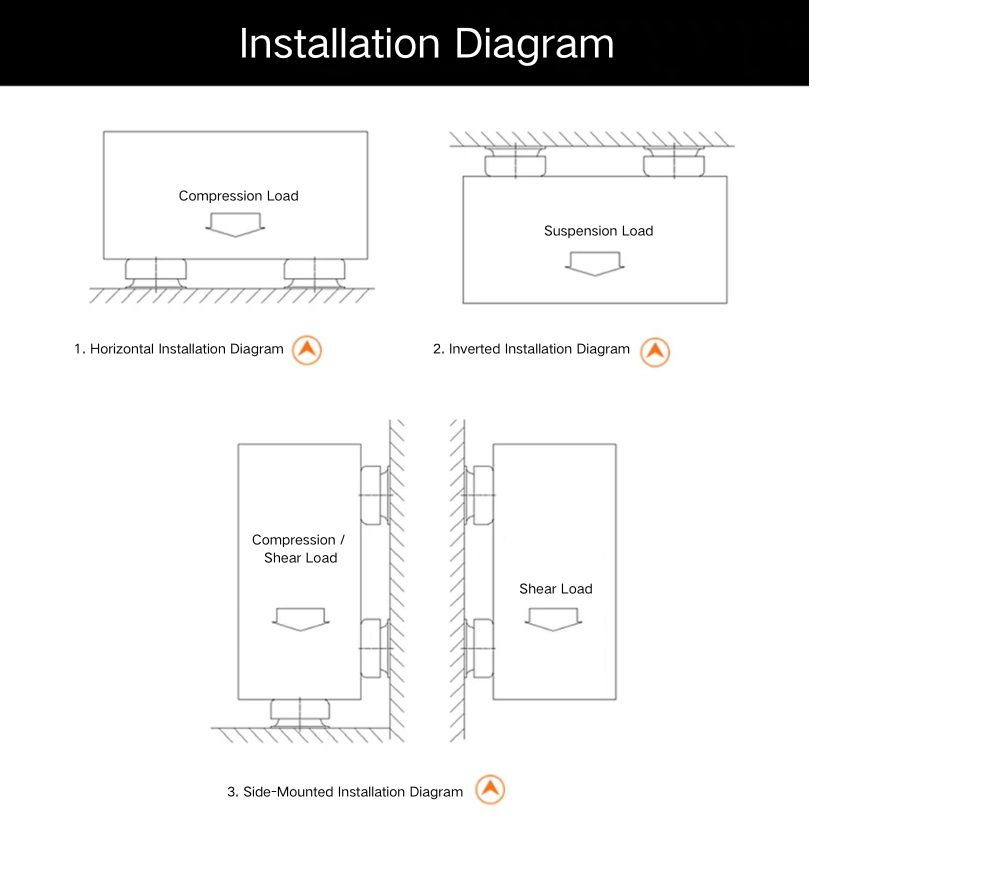
The mounts support horizontal, inverted, and side installation, making them suitable for various installation conditions. With a load range of 20–1000 kg and a natural frequency of 10–25 Hz, they provide effective vibration isolation above 40 Hz.
Ideal for diesel generators, engines, compressors, pumps, fans, hydraulic power units, vehicle-mounted equipment, marine machinery, airborne equipment, and industrial machines, especially where vibration, shock, and lateral forces are present.
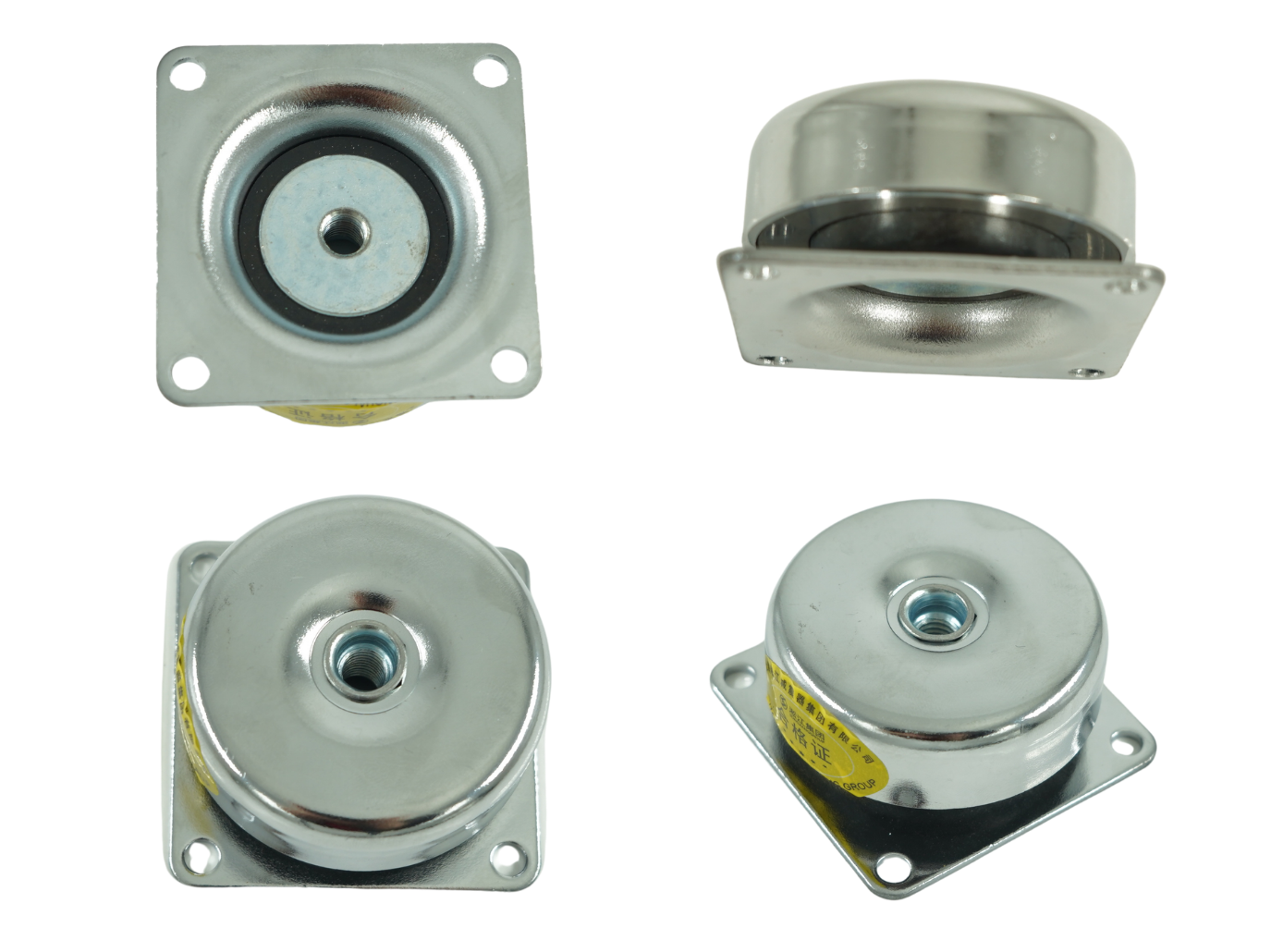
How Do JYC Cup-Style Vibration Isolation Mounts Reduce Equipment Vibration?
Industrial machinery, mobile equipment, marine systems, and vehicle-mounted units can generate continuous vibration and sudden shock during operation. Without proper vibration isolation, these dynamic forces may be transmitted into equipment frames, steel structures, floors, vehicle chassis, or foundations, resulting in structure-borne noise, component fatigue, loosened fasteners, and reduced equipment reliability.
JYC Cup-Style Vibration Isolation Mounts are compact rubber-metal isolators designed for both vibration isolation and shock protection. Their cup-shaped construction combines a durable metal housing with high-quality natural rubber, providing a practical solution for fixed and mobile machinery operating under demanding conditions.
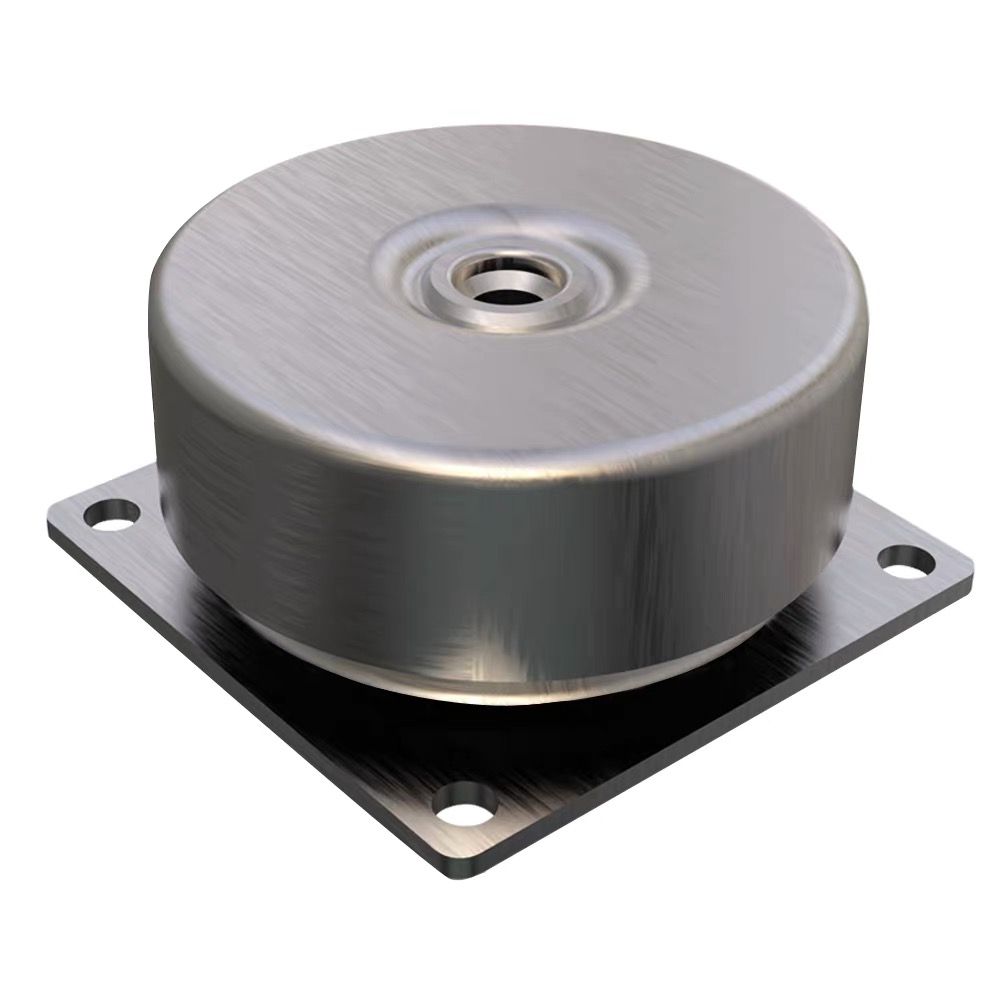
The JYC vibration isolator uses the elastic deformation of rubber to absorb and isolate dynamic energy between the machine and its supporting structure.
When rotating or reciprocating machinery generates vibration, the rubber element reduces the transmission of dynamic forces to the mounting base. During sudden impact or movement, the elastomer also provides damping to control excessive motion.
The JYC series has a natural frequency range of approximately 10–25 Hz and a damping ratio greater than 0.1. Effective vibration isolation can be achieved when the excitation frequency is sufficiently higher than the isolator’s natural frequency, with particularly useful isolation performance above approximately 40 Hz.
This makes JYC mounts suitable for applications where both vibration and shock loads need to be considered.
One advantage of cup-style vibration mounts is their versatility. They can be incorporated into many types of mechanical equipment, including:
- Diesel generator sets and auxiliary generator packages
- Small and medium industrial diesel engines
- Gasoline engines and engine-driven equipment
- Reciprocating and rotary air compressors
- Refrigeration compressors
- Hydraulic power units and hydraulic pump stations
- Centrifugal pumps and booster pump assemblies
- Vacuum pumps
- Lubrication oil pump skids
- Cooling-water circulation pumps
- Industrial centrifugal fans
- Axial-flow ventilation fans
- Blowers and exhaust systems
- Gearboxes and geared motor assemblies
- Electric motors and motor-driven machinery
- Mobile power packs
- Vehicle-mounted air compressors
- Truck-mounted hydraulic equipment
- Railway auxiliary equipment
- Marine auxiliary machinery
- Shipboard pump units
- Marine ventilation equipment
- Electrical cabinets and industrial control systems
For mobile installations, vibration mounts can help isolate vibration between the equipment and the vehicle, vessel, or structural frame while also protecting machinery from shock generated during transportation or movement.
Vehicle-mounted machinery faces a combination of operating vibration and external road shock.
For example, a truck-mounted diesel generator produces vibration from the engine itself, while the same generator may also experience shock caused by braking, acceleration, uneven roads, and vehicle movement.
The same conditions can occur with mobile air compressors, hydraulic power packs, emergency power systems, communication equipment, service-truck machinery, and mobile testing systems.
JYC cup-style mounts provide both elastic support and damping. Their ability to withstand lateral forces makes them particularly useful where the equipment may experience forces in more than one direction.
A machine weighing 2,000 kg does not necessarily place 500 kg on each of four vibration mounts.
Motors, compressors, gearboxes, flywheels, fuel tanks, and other heavy components may shift the center of gravity. As a result, one mounting point may carry considerably more load than another.
For accurate vibration isolator selection, engineers should ideally provide the total equipment weight, number of mounting points, center-of-gravity information or individual mounting-point loads, operating speed, mounting dimensions, and expected shock conditions.
This information helps determine the appropriate load capacity and prevents individual mounts from being overloaded.
Start with the total operating weight and number of mounting positions. However, do not assume that every mounting point carries the same load. If possible, provide individual point loads or the equipment’s center-of-gravity information.
Operating speed is also important. For rotating machinery, motor RPM, compressor speed, fan speed, or other dominant excitation frequencies should be considered together with the isolator’s natural frequency. For mobile applications, expected shock and lateral forces should also be evaluated.
Yes, depending on the generator weight, mounting arrangement, engine speed, and required isolation performance. Cup-style rubber mounts are particularly useful for compact generator packages and mobile generator systems where vibration isolation and shock resistance are both important.
For larger stationary generator sets requiring very low natural frequencies, spring isolators or other isolation systems may be more appropriate. Selection should therefore be based on actual operating conditions rather than equipment name alone.
Vibration is generally repetitive dynamic movement generated continuously by operating equipment, while shock is a relatively short-duration force caused by impact, sudden movement, transportation, or other transient events.
A good vibration isolator reduces the transmission of repetitive vibration, while its damping and deformation characteristics can also help absorb shock energy. JYC mounts are designed to provide both functions in suitable applications.
Key Technical Characteristics
JYC Cup-Style Vibration Isolation Mounts offer the following typical performance characteristics:
Natural Frequency: 10–25 Hz
Load Range: 20–1000 kg
Damping Ratio: >0.1
Effective Isolation: Above approximately 40 Hz
Installation: Horizontal, inverted, or side-mounted
Application: Fixed and mobile equipment
Functions: Vibration isolation, shock absorption, structure-borne noise reduction, and equipment protection
Correct model selection should always consider the actual load carried by each mount rather than simply dividing the total equipment weight equally.
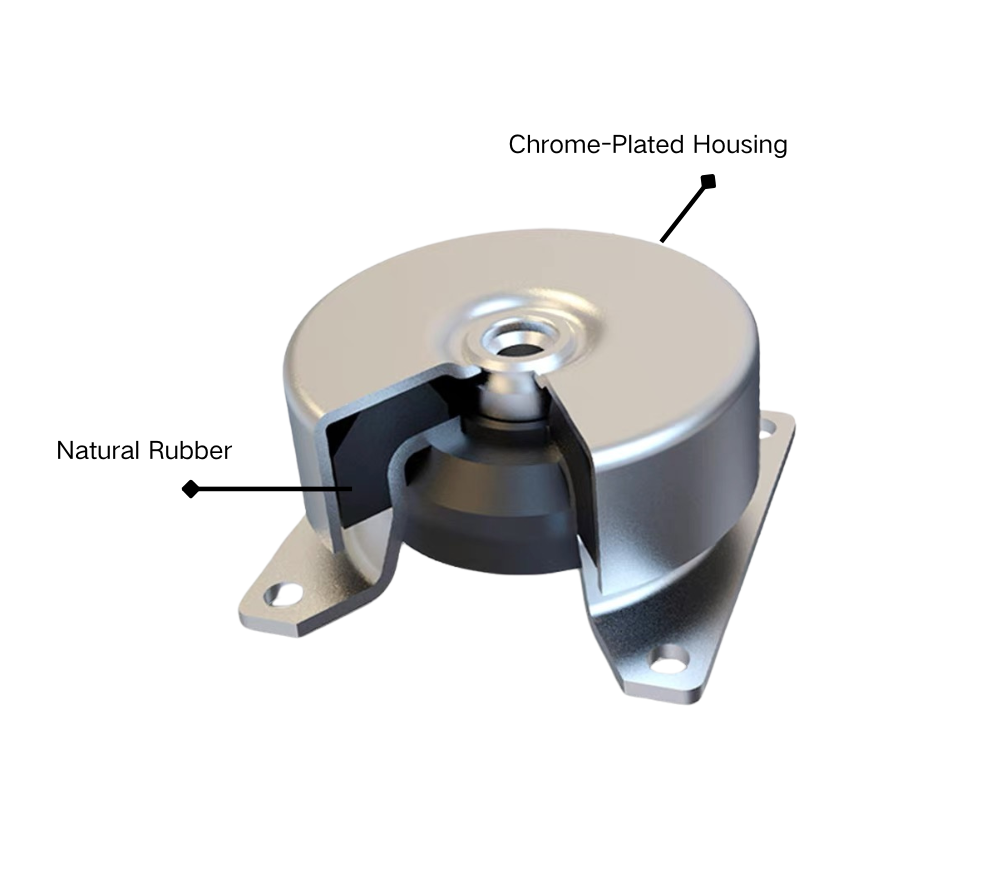
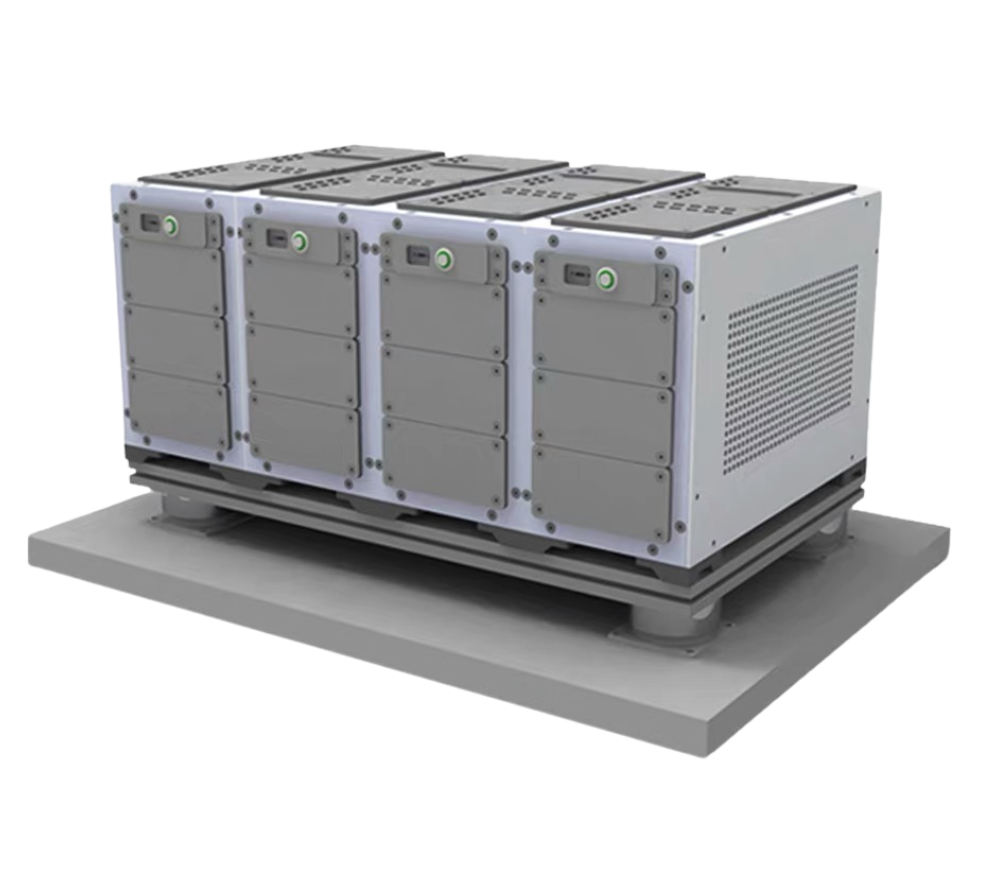
Product Specifications and Structure Drawing
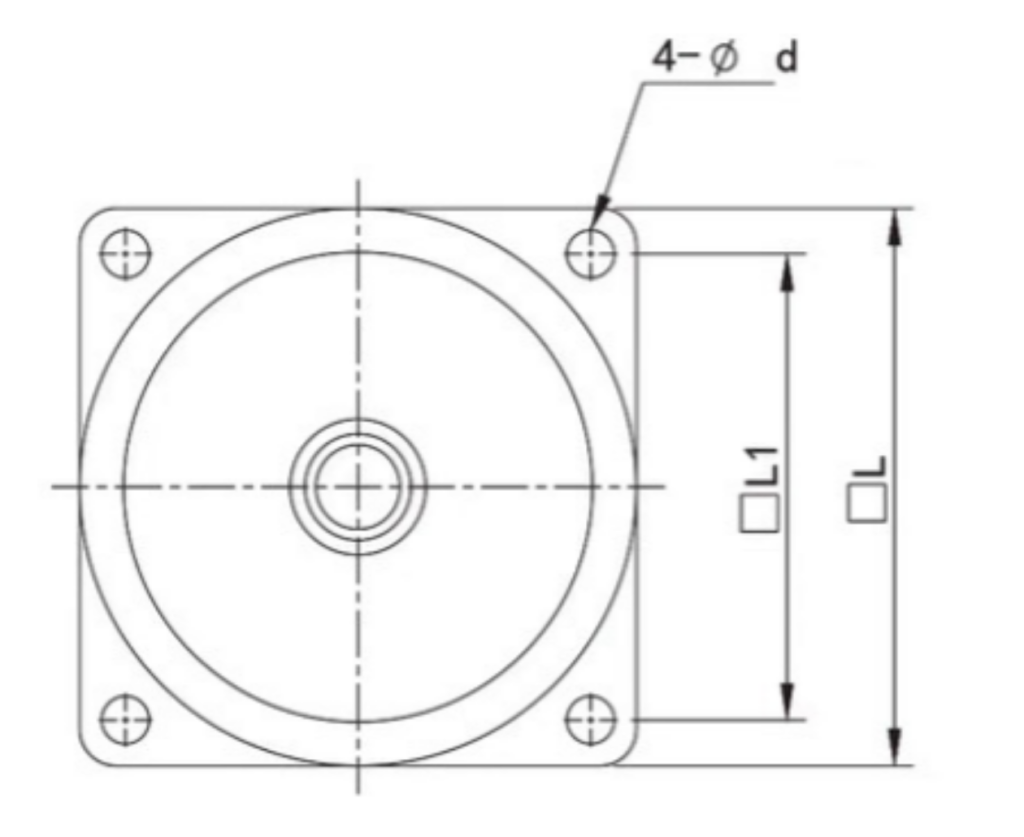
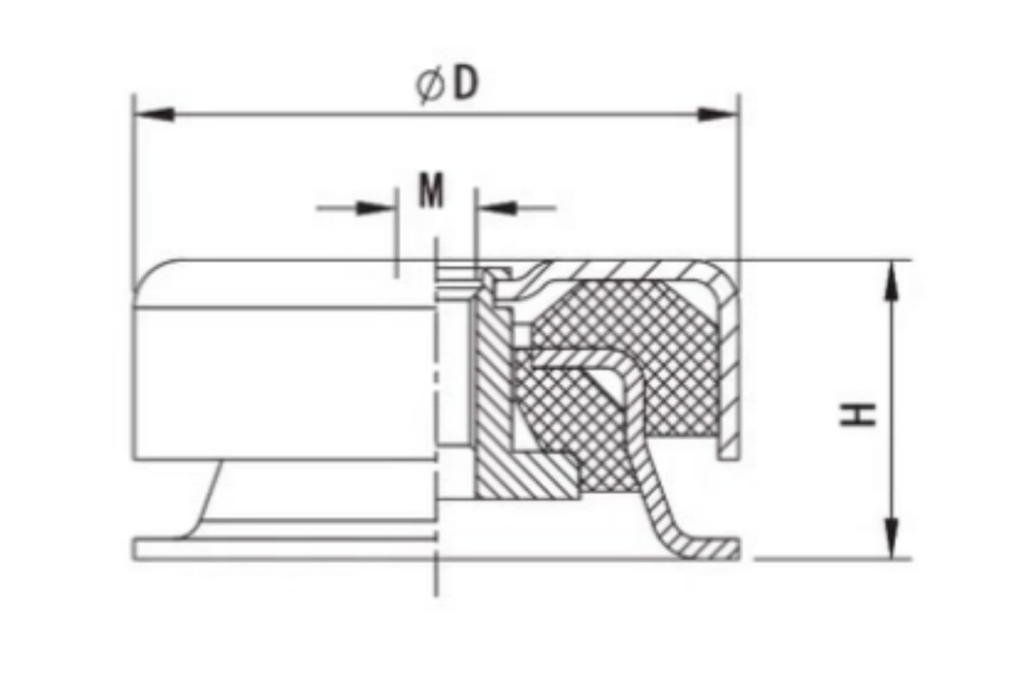
| Model | Load Range (kg) | L | L1 | D | H | d | M |
|---|---|---|---|---|---|---|---|
| JYC00 | 10–20 | 42 | 32 | 36 | 20 | 4.2 | M6 |
| JYC01 | 20–100 | 60 | 49.5 | 58 | 28 | 5.5 | M8 |
| JYC02 | 80–300 | 76 | 63.5 | 76 | 38 | 6.5 | M10 |
| JYC03 | 200–750 | 133 | 108 | 124 | 63 | 11.9 | M16 |
| JYC04 | 600–1000 | 175 | 143 | 168 | 90 | 13.5 | M16 |
If you are looking for an AMVB All-Metal Vibration Isolator, stainless steel shock mount, precision instrument vibration isolator, or multi-directional vibration isolation solution, please send us your equipment specifications and installation requirements.
Our company’s new website is now live, featuring the latest product introductions. For more details, please visit more products.
Or you can send your inquiry directly to [email protected].