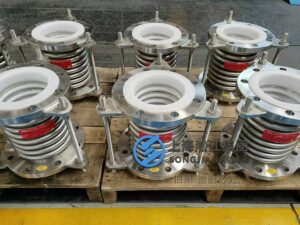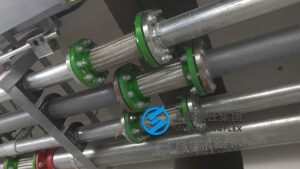
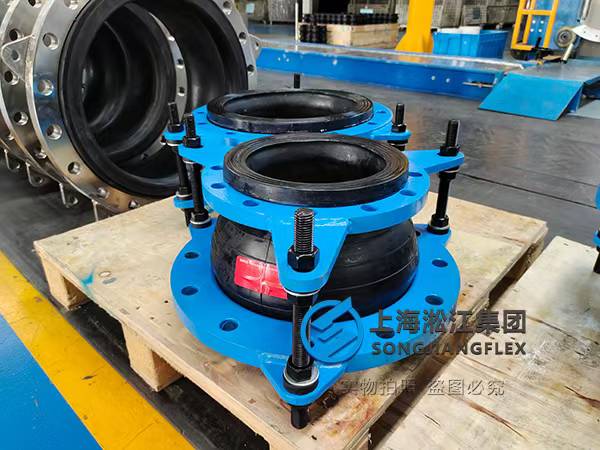
Industrial piping systems often require connections between pipes of different diameters. At the same time, these systems must deal with vibration, thermal expansion, pressure fluctuations, and slight installation misalignment. A concentric reducing rubber expansion joint combines the functions of a pipe reducer and a flexible expansion joint into one compact product, making it an ideal solution for modern industrial piping systems.
Unlike installing a separate reducer and rubber expansion joint, this integrated design reduces installation space, minimizes flange connections, lowers the risk of leakage, and simplifies maintenance. It is widely used in HVAC systems, water treatment plants, chemical processing facilities, marine engineering, mining equipment, power stations, and many other industries where reliable pipe flexibility is required.
Why Choose a Concentric Reducing Rubber Expansion Joint?
A concentric reducing rubber expansion joint maintains the centerline of the pipeline while connecting two different pipe sizes. This balanced design allows fluid to flow evenly through the pipeline and reduces unnecessary turbulence. It is particularly suitable for vertical piping systems and applications requiring stable hydraulic performance.
The flexible rubber body effectively absorbs mechanical vibration generated by rotating equipment while compensating for axial, lateral, and angular movement caused by temperature changes or installation tolerances. This helps protect pumps, valves, flow meters, and other expensive equipment from excessive stress.
Compared with traditional rigid reducers, a reducing rubber expansion joint offers better vibration isolation, lower operating noise, and a longer service life for the entire piping system.
Typical Equipment That Uses Concentric Reducing Rubber Expansion Joints
These expansion joints are installed on a wide variety of industrial equipment, including:
- Centrifugal pumps
- Split case pumps
- Vertical turbine pumps
- Booster pump stations
- Fire fighting pump systems
- Water-cooled chillers
- Air-cooled chillers
- Cooling towers
- Plate heat exchangers
- Shell and tube heat exchangers
- HVAC circulating pumps
- Variable frequency pump systems
- Air compressors
- Screw compressors
- Refrigeration compressors
- Chemical dosing pumps
- Sulfuric acid transfer pumps
- Hydrochloric acid pumps
- Reverse osmosis booster pumps
- Sludge transfer pumps
- Seawater cooling pumps
- Marine ballast pumps
- Generator cooling systems
- Diesel engine cooling systems
These applications require both flexibility and durability to ensure stable long-term operation.
Rubber Materials for Different Working Conditions
Selecting the appropriate rubber material is one of the most important factors affecting service life.
EPDM is widely used for chilled water, cooling water, hot water, and many mild chemicals. NBR is suitable for fuel oil, lubricating oil, hydraulic oil, and petroleum-based media. Neoprene provides excellent weather resistance and performs well in seawater applications. FKM is recommended for higher temperature chemical service, while PTFE-lined EPDM is commonly selected for highly corrosive acids and aggressive chemical solutions.
Choosing the correct elastomer significantly improves reliability and reduces maintenance costs.
Main Advantages
A concentric reducing rubber expansion joint provides several important benefits:
- Excellent vibration isolation
- Noise reduction
- Compensation for thermal expansion
- Compensation for pipeline misalignment
- Reduced stress on pumps and valves
- Fewer flange connections
- Lower installation cost
- Compact piping layout
- Improved equipment reliability
- Longer pipeline service life
These advantages make reducing rubber expansion joints an essential component in many industrial piping systems.
Installation Recommendations
Proper installation plays an important role in maximizing performance.
Pipelines should be properly supported so the expansion joint does not carry the weight of the piping. Flange bolts should be tightened evenly using a cross pattern, and excessive twisting of the rubber body should be avoided during installation. When high internal pressure exists, control rods may be recommended to limit excessive movement and improve operational safety.
Following proper installation practices helps extend the service life of both the expansion joint and the connected equipment.
Frequently Asked Questions
Can a concentric reducing rubber expansion joint replace both a reducer and an expansion joint?
Yes. One of the biggest advantages of this product is that it combines two functions into a single component. Instead of installing a separate pipe reducer followed by a standard rubber expansion joint, engineers can use one integrated unit. This simplifies the piping layout, reduces installation time, decreases the number of flange connections, and minimizes potential leakage points. It also provides better vibration isolation because there are fewer rigid components transferring mechanical vibration throughout the system.
What pressure and temperature can these joints withstand?
The pressure and temperature rating depends on the rubber compound, reinforcement design, and flange specification. Standard industrial models commonly operate from vacuum conditions up to 16 bar or higher, while working temperatures generally range from approximately -20°C to 120°C for EPDM. Special materials such as FKM or PTFE-lined designs can accommodate more demanding chemical and temperature requirements. Every application should be evaluated according to its operating conditions before selecting the final product.
Are custom sizes available?
Yes. Most industrial projects require customized products. Manufacturers can produce concentric reducing rubber expansion joints according to ANSI, DIN, JIS, BS, GOST, and many other flange standards. Customized face-to-face lengths, rubber materials, pressure ratings, reinforcement layers, and drilling patterns are also available, allowing the expansion joint to perfectly match the customer’s piping system.
How long does a rubber expansion joint typically last?
The service life depends on the operating environment, rubber material, pressure, temperature, media, and installation quality. Under normal industrial conditions with proper material selection and correct installation, a high-quality concentric reducing rubber expansion joint can provide many years of reliable operation. Regular inspection and preventive maintenance will further extend its lifespan and reduce unexpected downtime.
Our company’s new website is now live, featuring the latest product introductions. For more details, please visit https://shsjflex.com/
[email protected]