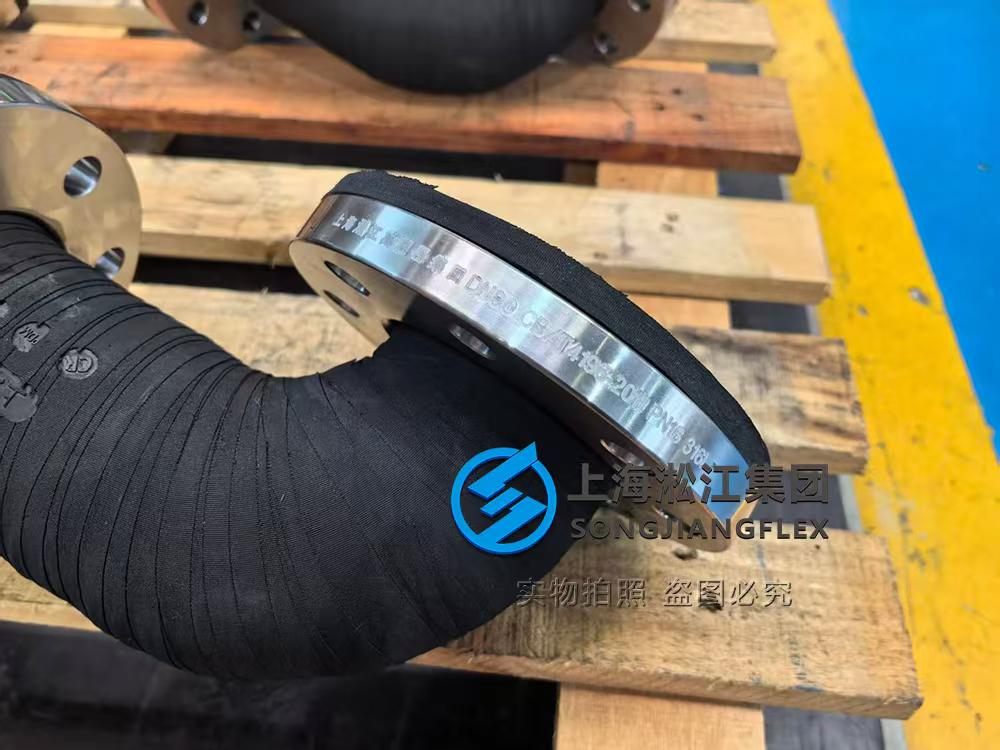
Marine auxiliary systems operate continuously under demanding conditions, including seawater corrosion, vibration, thermal expansion, and limited installation space. Traditional metal connectors often suffer from corrosion, fatigue failure, and noise transmission. A wrapped rubber elbow for marine auxiliary machinery provides an ideal solution by offering excellent flexibility, vibration isolation, seawater resistance, and customized configurations for various shipboard applications.
Featured Snippet
Wrapped rubber elbows for marine auxiliary machinery are flexible pipe connectors designed to absorb vibration, compensate for misalignment, reduce noise transmission, and resist seawater corrosion. They are widely used in marine diesel generators, ballast water treatment systems, seawater cooling circuits, pumps, and other ship auxiliary equipment.
What Is a Wrapped Rubber Elbow for Marine Auxiliary Machinery?
A wrapped rubber elbow is a flexible connector manufactured using a multi-layer filament winding process reinforced with high-strength synthetic fabric. Compared with conventional molded rubber joints, wrapped designs provide superior pressure resistance, fatigue life, and movement compensation capabilities.
Key Features
- Excellent seawater and salt spray resistance
- Effective vibration and noise reduction
- Compensation for axial, lateral, and angular movements
- Reduced stress on pumps and auxiliary equipment
- Available in custom angles such as 45° and 90°
- Support for OEM and non-standard designs
Applications in Marine Auxiliary Equipment
Marine Diesel Engine Systems
Suitable for:
- MAN B&W Low-Speed Marine Diesel Engines
- WinGD Marine Propulsion Engines
- Wärtsilä 31 Marine Engines
- Yanmar Marine Diesel Engines
- Caterpillar Marine Propulsion Systems
Marine Generator Sets
Common applications include:
- Cummins Marine Generator Sets
- Mitsubishi Marine Diesel Generators
- Volvo Penta Auxiliary Generators
- Perkins Marine Gensets
- Scania Marine Power Units
Seawater Cooling Systems
Used in:
- Central Cooling Systems
- Plate Heat Exchangers
- Seawater Lift Pumps
- Condensers
- Cooling Water Circulation Pumps
- Jacket Water Cooling Units
Ballast Water Management Systems
Applicable for:
- UV Ballast Water Treatment Systems
- Electrochlorination Ballast Systems
- Ballast Pumps
- Ballast Water Filters
- Ballast Water Monitoring Equipment
Marine Pumping Equipment
Including:
- Fire Pumps
- Bilge Pumps
- Fuel Transfer Pumps
- Lubricating Oil Pumps
- Hydraulic Pumps
- General Service Pumps
HVAC and Refrigeration Systems
Suitable for:
- Marine Air Conditioning Units
- Ventilation Fans
- Refrigeration Compressors
- Chiller Units
- Cooling Towers
Why Choose Wrapped Rubber Elbows Instead of Metal Expansion Joints?
Superior Corrosion Resistance
Marine environments expose piping systems to saltwater, humidity, and aggressive chemicals. Rubber materials such as EPDM, CR (Neoprene), NBR, and FKM provide outstanding resistance against:
- Seawater corrosion
- Ozone degradation
- UV exposure
- Chemical attack
Excellent Vibration Isolation
Marine engines and rotating equipment generate significant vibration. Wrapped rubber elbows help:
- Minimize vibration transmission
- Reduce structural noise
- Protect connected equipment
- Extend machinery service life
- Improve onboard comfort
Custom Engineering Capability
Customized options include:
- DN25 to DN3000 sizes
- Pressure ratings from PN6 to PN40
- 45° and 90° elbow configurations
- ANSI, DIN, JIS, and GB flange standards
- CCS, ABS, DNV, BV, and LR classification requirements
FAQ
How long do marine rubber elbows last?
The service life depends on operating conditions, media type, pressure, temperature, and maintenance practices. In typical marine cooling applications using EPDM or neoprene materials, wrapped rubber elbows can provide reliable performance for 5–10 years or longer. Regular inspections help maximize lifespan and prevent unexpected failures.
What is the difference between wrapped and molded rubber elbows?
Wrapped rubber elbows use multiple reinforcement layers applied through a winding process, resulting in higher pressure capability, improved flexibility, and superior fatigue resistance. Molded rubber elbows are generally more economical but may not perform as well under demanding marine conditions involving continuous vibration and dynamic movement.
Can wrapped rubber elbows be customized?
Yes. Manufacturers can customize dimensions, pressure ratings, flange drilling patterns, rubber compounds, elbow angles, and classification society approvals according to project requirements. This flexibility makes them ideal for retrofit projects and specialized marine systems.
Are classification certificates necessary?
For commercial vessels and offshore installations, certifications from organizations such as CCS, ABS, DNV, BV, and LR are often mandatory. Certified products help ensure compliance with marine regulations and improve confidence in long-term operational reliability.
How often should marine rubber elbows be inspected?
Visual inspections are generally recommended every 6–12 months. Operators should check for surface cracking, abnormal swelling, flange loosening, leakage, or signs of rubber aging. Preventive maintenance significantly reduces the risk of unplanned downtime.
Conclusion
Wrapped rubber elbows designed for marine auxiliary machinery provide exceptional seawater resistance, vibration isolation, and flexible installation capabilities. Their ability to support custom configurations makes them a preferred solution for modern marine piping systems.
Contact Us
Shanghai Songjiang Vibration Absorber Co., Ltd.
Website: www.shsjflex.com
Email: [email protected]
We provide:
- Marine-grade rubber expansion joint solutions
- Non-standard custom manufacturing
- OEM & ODM services
- Global project support
- Classification society compliant products