A major sports facility requires more than impressive architecture. Behind the scenes, reliable mechanical systems are essential for maintaining comfortable indoor conditions, efficient water circulation, and dependable equipment operation.
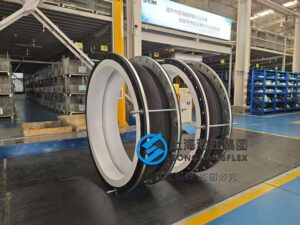
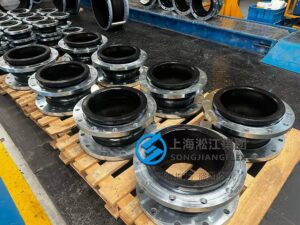
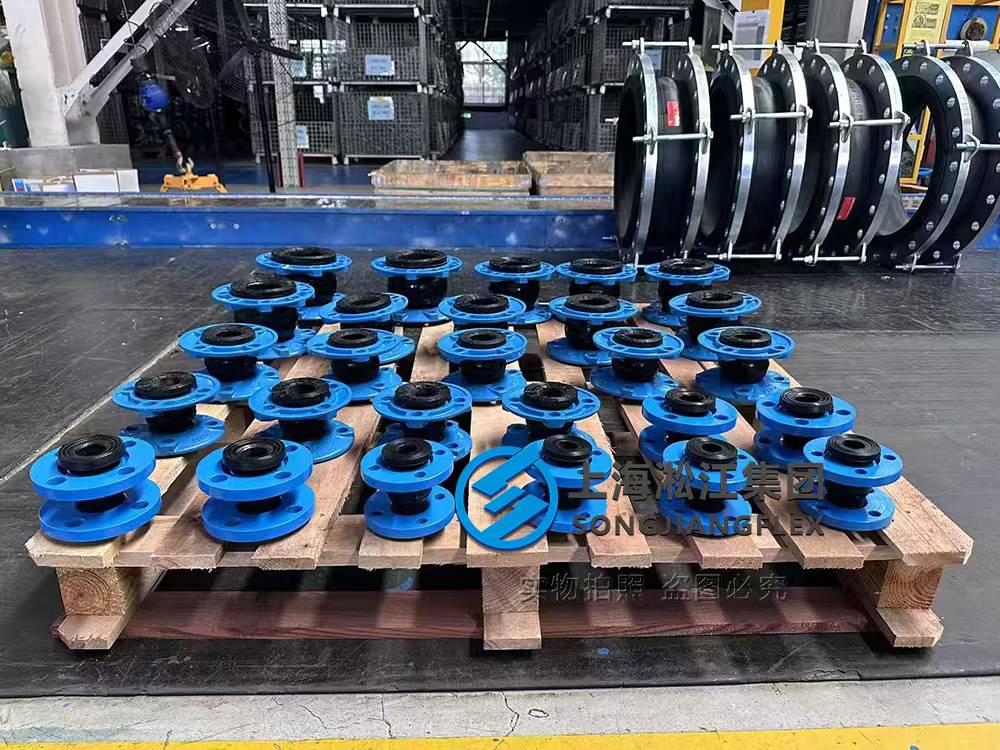
We recently received an order for rubber expansion joints for the Shenzhen Guangming Science City Sports Center project in China.
Unlike ordinary off-the-shelf piping accessories, rubber expansion joints for large public facilities should be selected according to the customer’s specific mechanical and piping requirements.
For this project order, our focus is on providing suitable flexible rubber connectors for building mechanical systems, with attention to pipe dimensions, flange connections, operating pressure, temperature, rubber materials, and installation requirements.
What Makes the Shenzhen Science City Sports Center Project Special?
The Shenzhen Guangming Science City Sports Center is a major public sports complex located in Guangming District, Shenzhen.
According to publicly available project information, the development covers approximately 115,200 square meters and includes a sports arena, comprehensive sports facilities, training-related spaces, supporting facilities, and mechanical equipment areas.
A large sports complex requires coordinated building services, including ventilation, air conditioning, water supply, drainage, and other mechanical systems.
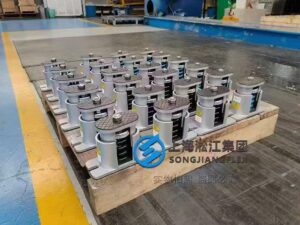
For these applications, rubber expansion joints, flexible pump connectors, and vibration isolation components can play an important role in reducing the transfer of mechanical vibration through connected piping.
Why Are Rubber Expansion Joints Important in Sports Facilities?
Large sports venues contain numerous mechanical systems that operate for extended periods.
Typical equipment may include:
centrifugal chillers, water-cooled screw chillers, chilled-water circulation pumps, condenser-water pumps, cooling towers, booster pump sets, plate heat exchangers, shell-and-tube heat exchangers, air handling units, fresh air handling units, swimming pool circulation pumps, filtration pumps, and drainage pumps.
These machines can generate vibration during operation.
Without suitable flexible connections, vibration may travel through rigid piping into pipe supports, mechanical-room structures, and surrounding building areas.
A properly engineered rubber expansion joint for HVAC piping can help reduce vibration transmission and accommodate limited thermal or mechanical movement.
This makes flexible connectors particularly relevant to mechanical rooms serving sports arenas, indoor training facilities, swimming pools, and large public buildings.
Customized Rubber Expansion Joints for HVAC Systems
Sports facilities frequently require large-capacity heating, ventilation, and air-conditioning systems.
Typical HVAC equipment includes:
- Water-cooled centrifugal chillers
- Air-cooled and water-cooled screw chillers
- Primary chilled-water pumps
- Secondary chilled-water pumps
- Condenser-water circulation pumps
- Cooling tower circulation pumps
- Plate heat exchangers
- Air handling units and fresh air units
- Building cooling-water distribution systems
For these installations, rubber expansion joints can be positioned at appropriate equipment connections to provide flexibility and help reduce vibration transfer.
However, the correct product depends on the actual pipeline arrangement.
A rubber connector installed on a pump suction line may require different pressure and vacuum considerations from one installed on a pump discharge line.
Therefore, equipment connection drawings and operating data should be reviewed before selecting the final product.
Rubber Flexible Connectors for Swimming Pool Equipment
Swimming pool systems are another important application category in sports facilities.
Typical pool mechanical equipment includes:
main swimming pool circulation pumps, competition pool filtration pumps, training pool circulation pumps, balance tank transfer pumps, backwash pumps, sand filtration vessels, automatic filtration systems, plate heat exchangers, pool water heating systems, and chemical dosing equipment.
These systems may operate continuously to maintain circulation, filtration, and water quality.
Rubber flexible connectors can be considered for suitable pump and water circulation connections.
However, swimming pool water chemistry requires special attention.
The selected rubber material must be compatible with the actual disinfectant concentration, temperature, and operating conditions.
A general-purpose water-service rubber joint should not automatically be assumed suitable for every pool-water or chemical dosing line.
How Do We Customize Rubber Expansion Joints for a Project Order?
For large construction projects, customization begins with the technical requirements.
1. Confirm the Nominal Pipe Diameter
Customers may require multiple sizes, such as DN50, DN80, DN100, DN150, DN200, DN250, or larger diameters.
Each size must match the corresponding pipeline and equipment connection.
2. Confirm the Installation Length
The face-to-face length (F2F) determines the distance between the mating flanges.
This dimension is especially important when the pipeline arrangement has already been designed or installed.
3. Select the Rubber Material
For many water-based HVAC systems, EPDM rubber is commonly considered because of its resistance to water, weathering, and suitable hot-water conditions.
Other rubber compounds may be required for oil-containing media, special chemicals, or different temperatures.
4. Confirm the Flange Standard
Depending on the project, flange connections may follow GB, EN, ASME, JIS, or customer-specific dimensions.
Important measurements include:
flange outside diameter, bolt circle diameter, number of bolt holes, bolt-hole diameter, flange thickness, and sealing-face configuration.
5. Review Pressure and Movement
The selected joint must be suitable for the working pressure, design pressure, operating temperature, possible vacuum, and required movement.
Axial compression, extension, lateral displacement, and angular movement should be evaluated according to the actual piping arrangement.
Why Is Accurate Selection Important for Public Buildings?
Sports venues often contain mechanical equipment located close to occupied spaces.
A poorly selected flexible connector may create problems such as excessive movement, leakage, abnormal deformation, or vibration transmission.
Correct product selection can help improve the overall mechanical installation by addressing:
equipment vibration, pipe movement, connection flexibility, flange compatibility, and maintainability.
The rubber expansion joint must also be integrated with appropriate pipe supports, anchors, guides, and equipment connections.
It should not be used to carry unsupported pipe weight or compensate for major piping misalignment.
From Project Order to Manufacturing
For the Shenzhen Science City Sports Center order, the supply process is based on the customer’s confirmed requirements.
A typical project workflow includes:
Customer order → technical specification review → material selection → dimensional confirmation → flange verification → production → dimensional inspection → quality inspection → packaging and delivery.
For large projects requiring several sizes or configurations, each product should be identified and checked against the corresponding order schedule.
This helps contractors organize installation and avoid confusion between different mechanical-system connections.
FAQ
1. What type of rubber expansion joint is suitable for a sports center HVAC system?
For many chilled-water and cooling-water applications, a flanged rubber expansion joint with an appropriately selected EPDM rubber body can be considered.
However, the final selection depends on the actual working pressure, operating temperature, pipe diameter, installation length, and movement requirements.
A chilled-water pump discharge connection, cooling tower circulation line, and swimming pool filtration line may require different specifications even if the nominal diameter is identical.
For accurate selection, we recommend providing the mechanical equipment schedule and piping drawings.
2. Can rubber expansion joints reduce noise in sports facilities?
Rubber expansion joints can help reduce the transmission of vibration and structure-borne noise from pumps and other rotating machinery into connected piping.
This is particularly relevant to mechanical rooms serving indoor sports arenas, swimming pools, training facilities, and large public buildings.
However, overall noise control also depends on equipment vibration isolators, pipe supports, building structure, operating speed, and installation quality.
A rubber expansion joint should be considered one part of a complete vibration and noise control strategy rather than a standalone guarantee of acoustic performance.
3. Can the flange dimensions be customized according to construction drawings?
Yes. Customized rubber expansion joints can be evaluated according to the customer’s approved drawings.
We can review the nominal diameter, flange outside diameter, bolt circle diameter, bolt-hole quantity, bolt-hole diameter, flange thickness, and face-to-face length.
For large building projects, drawing confirmation is especially important because different mechanical equipment suppliers may use different connection standards.
The purpose is to ensure that the finished rubber joint matches the actual installation interface.
4. What information should contractors provide before ordering rubber expansion joints?
The most useful information includes the DN/NPS size, quantity, medium, working pressure, design pressure, operating temperature, installation length, flange standard, rubber material requirements, and connected equipment.
For example, please identify whether the joint will be installed on a chilled-water pump, condenser-water pump, cooling tower, pool circulation pump, or another equipment connection.
For projects with multiple mechanical systems, an itemized schedule is recommended so that each joint can be manufactured and checked against its intended service.
Customized Piping Connections for Modern Sports Facilities
The Shenzhen Guangming Science City Sports Center order demonstrates the importance of matching rubber expansion joints to actual construction project requirements.
Whether the application involves chilled-water circulation, condenser-water systems, swimming pool filtration, water supply, heat exchangers, or mechanical pump connections, the right flexible connector begins with accurate technical information.
We support customized rubber expansion joints for commercial buildings, sports complexes, public facilities, and industrial mechanical systems.
Our company’s new website is now live, featuring the latest product introductions. For more details, please visit https://shsjflex.com/
Email: [email protected]