
DSM Motor Vibration Isolation Strip
The DSM Motor Vibration Isolation Strip is made of high-quality NBR (Nitrile Rubber) with a rubber hardness of 60–65 Shore A, combined with cold-drawn steel components. It offers excellent oil resistance, compression resistance, vibration damping, and anti-slip performance. It effectively reduces motor vibration and noise, improves equipment stability, and helps extend service life. Suitable for IM B35 motors with IP54 protection ratings, pumps, fans, compressors, and other industrial machinery. Custom sizes and load capacities are available to meet different application requirements.
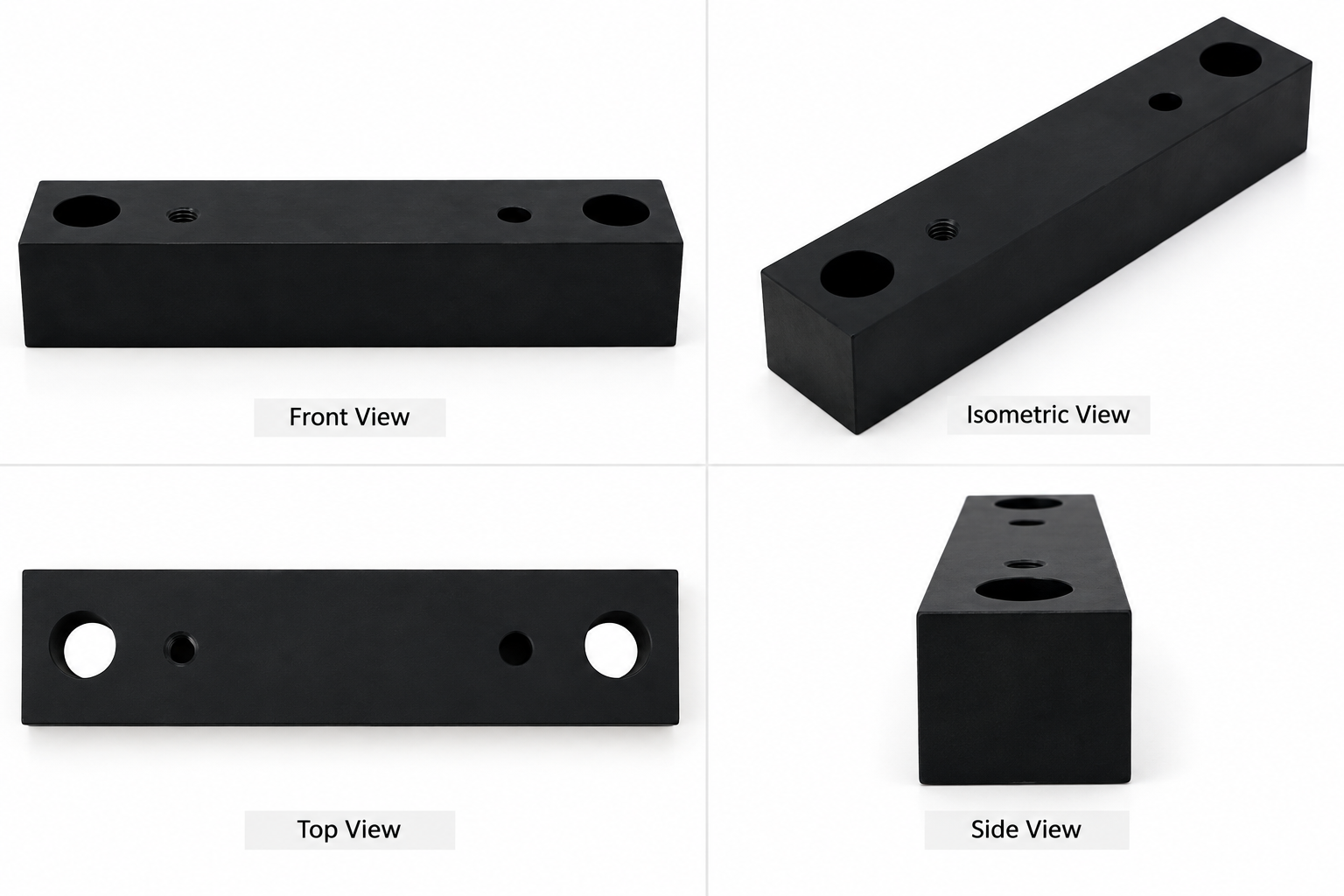
Can DSM Motor Vibration Isolation Strips Reduce Industrial Motor Vibration?
Oil-Resistant NBR Rubber Motor Mounts for Industrial Equipment
Industrial electric motors are widely used in manufacturing plants, pumping stations, HVAC systems, processing facilities, and automated production lines. During continuous operation, motor rotation, mechanical imbalance, shaft misalignment, and changing loads can generate vibration that travels through the motor mounting feet into the supporting frame or foundation.
These vibrations may contribute to unwanted noise, loosened fasteners, increased mechanical wear, and reduced equipment stability.
The DSM Motor Vibration Isolation Strip is designed to provide a practical vibration control solution for industrial electric motors and motor-driven machinery. Manufactured from oil-resistant nitrile rubber (NBR) with cold-drawn steel components, the DSM vibration isolation strip combines elastic damping, mechanical support, and secure mounting in a compact rectangular design.
With a standard rubber hardness of 60–65 Shore A, DSM motor vibration isolation strips are suitable for selected IM B35 motor installations, including motors with IP54 protection ratings, subject to load and mounting compatibility.
DSM vibration isolation strips can be used with selected IM B35 electric motor installations, but compatibility must be confirmed individually.
According to IEC 60034-7, IM B35 describes a motor mounting arrangement combining mounting feet and a drive-end flange.
This configuration is commonly used where a motor is mechanically connected to a gearbox, pump, or other driven equipment.
Before selecting DSM vibration isolation strips, engineers should verify the motor frame size, mounting hole arrangement, total weight, and shaft alignment requirements.
If the motor flange is rigidly connected to another machine, adding flexible supports only beneath the motor feet may create unwanted movement between the motor and driven equipment.
In these situations, the motor and driven equipment may need to be mounted together on a common isolated base.
The motor’s IP54 protection rating does not determine the vibration isolator’s load capacity or mechanical compatibility.
Rubber hardness affects the deformation, stiffness, and mechanical response of a vibration isolation component.
The DSM motor vibration isolation strip uses NBR rubber with a hardness of 60–65 Shore A to provide a practical combination of elastic support and mechanical damping.
A softer rubber compound may allow greater deformation under the same load, while a harder compound may provide greater resistance to compression.
However, hardness alone cannot determine the natural frequency or vibration isolation performance.
The rubber element’s thickness, contact area, shape factor, bonding conditions, and dynamic stiffness also influence its behavior.
For this reason, selecting a DSM vibration isolation strip should involve evaluating both the rubber properties and the actual supported equipment load.
DSM motor vibration isolation strips can help reduce the transmission of structure-borne vibration from motor-driven equipment into supporting frames and foundations.
For example, a centrifugal fan may transmit vibration through its motor mounting feet into a steel support frame. The frame can then transmit vibration into nearby structural components.
Introducing a properly selected rubber isolation element can reduce this mechanical transmission.
However, not all industrial noise originates from structural vibration.
Fan blade turbulence, airflow, bearing defects, pump cavitation, and mechanical friction can also produce airborne noise.
DSM vibration isolation strips cannot eliminate these sources directly.
For the best result, motor vibration isolation should be combined with appropriate equipment balancing, shaft alignment, bearing maintenance, and system-level noise control measures.
The required number depends on the motor mounting configuration, supported weight, mounting geometry, and load distribution.
Some installations may use two longitudinal mounting strips, while others may require a different arrangement.
For a motor with four mounting feet, it is important to determine whether each DSM strip supports one or more mounting points.
The load on each strip should be calculated using the actual equipment weight distribution rather than assuming that every support carries an equal load.
In addition, engineers should check the allowable rubber compression, fastener arrangement, lateral stability, and dynamic forces.
For motor-driven equipment with rigid couplings, the support arrangement must also maintain acceptable shaft alignment during operation.
Yes, NBR rubber is commonly selected for industrial applications involving contact with petroleum-based oils and lubricants.
This makes DSM motor vibration isolation strips suitable for consideration in environments such as motor workshops, gearbox installations, hydraulic power units, and machinery rooms.
However, the chemical resistance of NBR depends on the specific rubber formulation, fluid composition, operating temperature, and exposure duration.
Some solvents, aggressive chemicals, and environmental conditions may cause rubber swelling, hardening, or degradation.
Before selecting DSM strips for continuous oil immersion or exposure to unusual industrial fluids, the exact medium and operating conditions should be reviewed.
DSM rubber vibration isolation strips and spring vibration isolators both provide elastic support, but they have different mechanical characteristics.
Rubber isolators are compact and provide inherent material damping. They are often suitable for applications requiring limited installation height, controlled movement, and moderate vibration isolation.
Spring vibration isolators can be designed with greater static deflection and lower natural frequencies, making them useful for certain low-frequency vibration applications.
The appropriate solution depends on excitation frequency, supported mass, allowable movement, installation geometry, and required vibration reduction.
For example, a compact electric motor mounted on a rigid industrial frame may benefit from rubber isolation, while a large low-speed machine may require a more flexible spring isolation system.
Engineering research on rubber-metal vibration isolators confirms that isolation performance depends strongly on the relationship between excitation frequency, natural frequency, and damping.
To develop a suitable customized DSM motor vibration isolation strip, customers should provide as much of the following information as possible:
Electric motor model and IEC frame size
Motor weight and total supported equipment weight
Motor operating speed or speed range
Existing mounting hole dimensions
Required strip length, width, and height
Quantity of mounting points
Operating temperature and environmental conditions
Exposure to oil, chemicals, or moisture
Expected vibration reduction requirements
Product drawings or installation photographs
Based on this information, the manufacturer can review the installation and determine whether an existing DSM model or a customized rubber-metal component is appropriate.
Where vibration performance is critical, additional stiffness measurements, load-deflection testing, or on-site vibration data may be required.
DSM Motor Vibration Isolation Strip Technical Specifications
Metal ComponentsCold-Drawn Steel
| Parameter | Specification |
|---|---|
| Product Name | DSM Motor Vibration Isolation Strip |
| Structure | Rubber-Metal Composite |
| Main Functions | Vibration Isolation, Noise Reduction, Shock Absorption |
| Motor Compatibility | Selected IM B35 Motor Installations |
| Protection Rating Compatibility | Motors with IP54 Protection Rating |
| Installation | Bolted Mounting |
| Load Capacity | Selected According to Equipment Weight and Operating Loads |
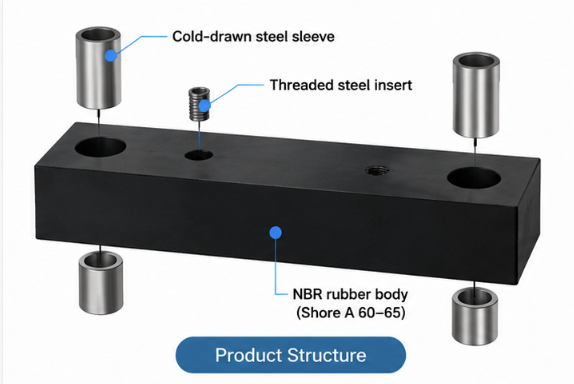
Product Specifications and Structure Drawing
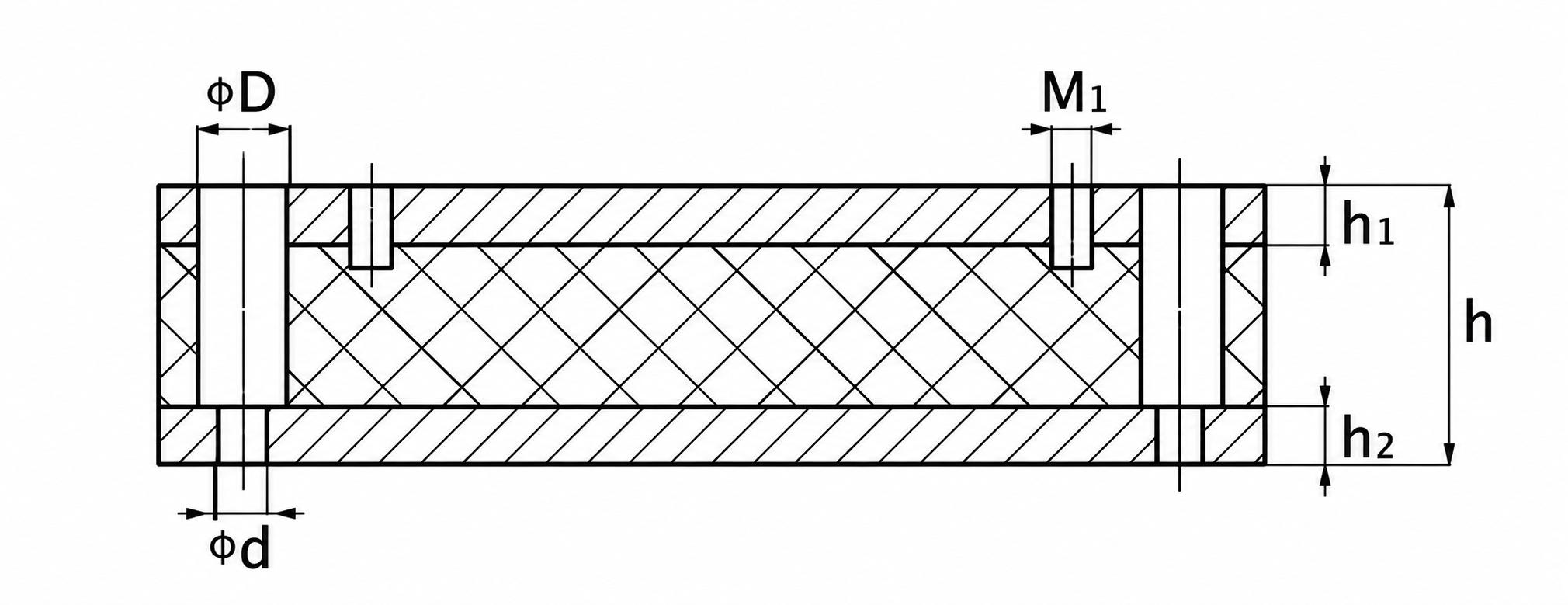
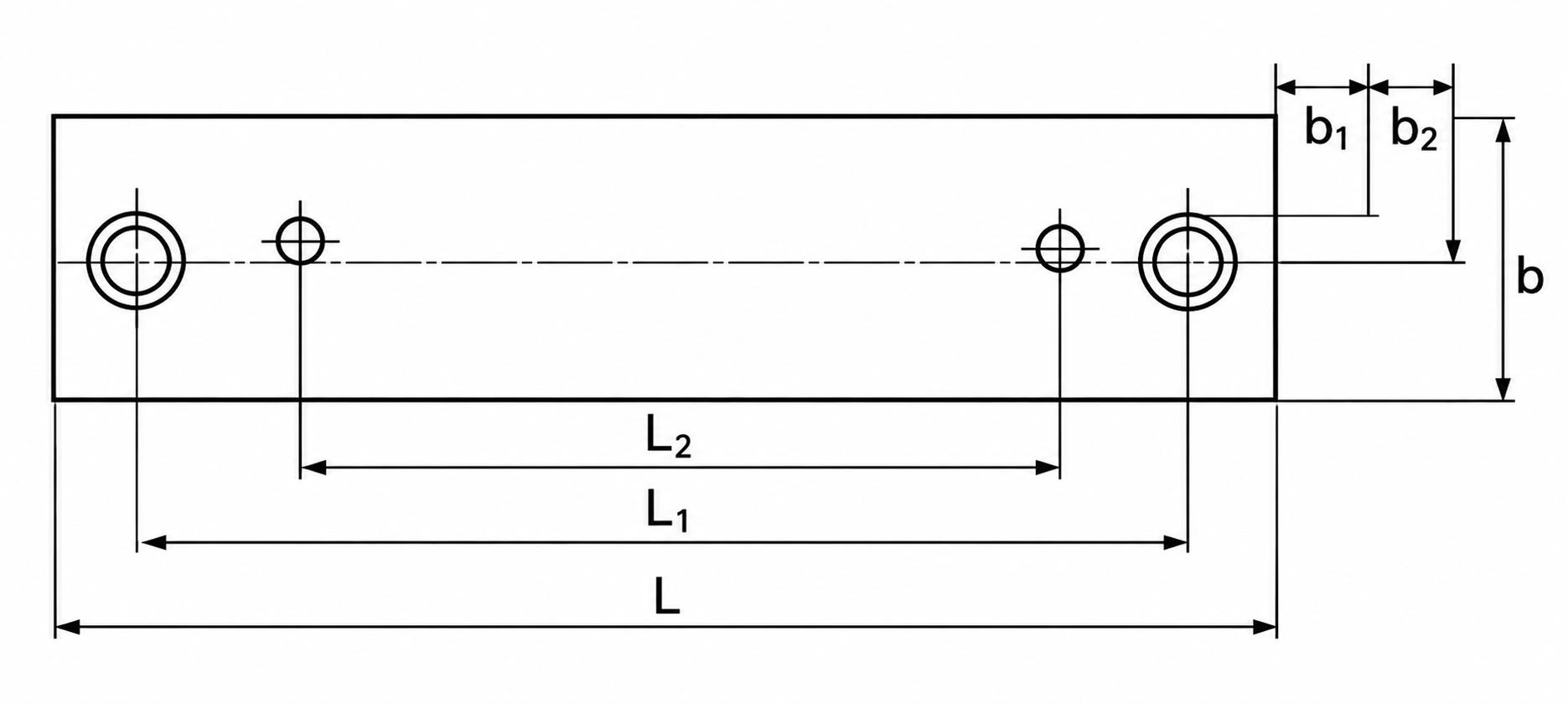
DSM Motor Vibration Isolation Strip Dimensions
| Motor Size | Dimensions (mm) | ||||||||||
|---|---|---|---|---|---|---|---|---|---|---|---|
| L | L1 | L2 | H | h1 | h2 | b | b1 | b2 | d | M1 | |
| DSM71 | 196 | 156 | 90 | 40 | 8 | 12 | 50 | 21 | 25 | 14 | M6 |
| DSM80 | 176 | 146 | 100 | 40 | 8 | 12 | 50 | 22 | 25 | 14 | M8 |
| DSM90S | 196 | 156 | 100 | 40 | 8 | 12 | 50 | 25 | 25 | 14 | M8 |
| DSM90L | 240 | 205 | 125 | 40 | 8 | 12 | 50 | 24 | 25 | 14 | M8 |
| DSM100L | 240 | 205 | 140 | 40 | 8 | 12 | 50 | 24 | 25 | 14 | M10 |
| DSM112M | 240 | 205 | 140 | 40 | 8 | 12 | 50 | 20 | 25 | 14 | M10 |
| DSM132S | 285 | 245 | 140 | 45 | 8 | 12 | 50 | 20 | 25 | 14 | M10 |
| DSM132M | 285 | 245 | 178 | 45 | 8 | 12 | 50 | 20 | 25 | 14 | M10 |
| DSM160M | 340 | 300 | 210 | 60 | 15 | 15 | 70 | 28 | 35 | 18 | M12 |
| DSM160L | 416 | 370 | 254 | 60 | 15 | 15 | 70 | 28 | 35 | 18 | M12 |
| DSM180M | 416 | 370 | 241 | 60 | 15 | 15 | 70 | 35 | 35 | 18 | M12 |
| DSM180L | 446 | 400 | 279 | 60 | 15 | 15 | 70 | 35 | 35 | 18 | M12 |
| DSM200L | 496 | 430 | 305 | 60 | 15 | 15 | 70 | 35 | 35 | 22 | M16 |
| DSM225S | 496 | 430 | 286 | 60 | 15 | 15 | 70 | 35 | 35 | 22 | M16 |
| DSM225M | 496 | 445 | 311 | 60 | 15 | 15 | 70 | 35 | 35 | 22 | M16 |
| DSM250M | 496 | 445 | 349 | 60 | 15 | 15 | 100 | 50 | 50 | 22 | M20 |
| DSM280S | 614 | 570 | 368 | 60 | 15 | 15 | 100 | 50 | 50 | 22 | M20 |
| DSM280M | 614 | 570 | 419 | 60 | 15 | 15 | 100 | 50 | 50 | 22 | M20 |
| DSM315S | 614 | 570 | 406 | 60 | 15 | 15 | 120 | 60 | 60 | 22 | M24 |
| DSM315M | 614 | 570 | 457 | 60 | 15 | 15 | 120 | 60 | 60 | 22 | M24 |
| DSM315L | 704 | 660 | 508 | 60 | 15 | 15 | 120 | 60 | 60 | 22 | M24 |
| DSM335M | 770 | 710 | 560 | 60 | 15 | 15 | 120 | 60 | 60 | 25 | M24 |
Material: NBR Rubber + Cold-Drawn Steel
Rubber Hardness: 60–65 Shore A
Application: IM B35 Motors with IP54 Protection Rating
Note: All dimensions are in millimeters (mm). Custom specifications are available upon request.
If you are looking for an AMVB All-Metal Vibration Isolator, stainless steel shock mount, precision instrument vibration isolator, or multi-directional vibration isolation solution, please send us your equipment specifications and installation requirements.
Our company’s new website is now live, featuring the latest product introductions. For more details, please visit more products.
Or you can send your inquiry directly to [email protected].