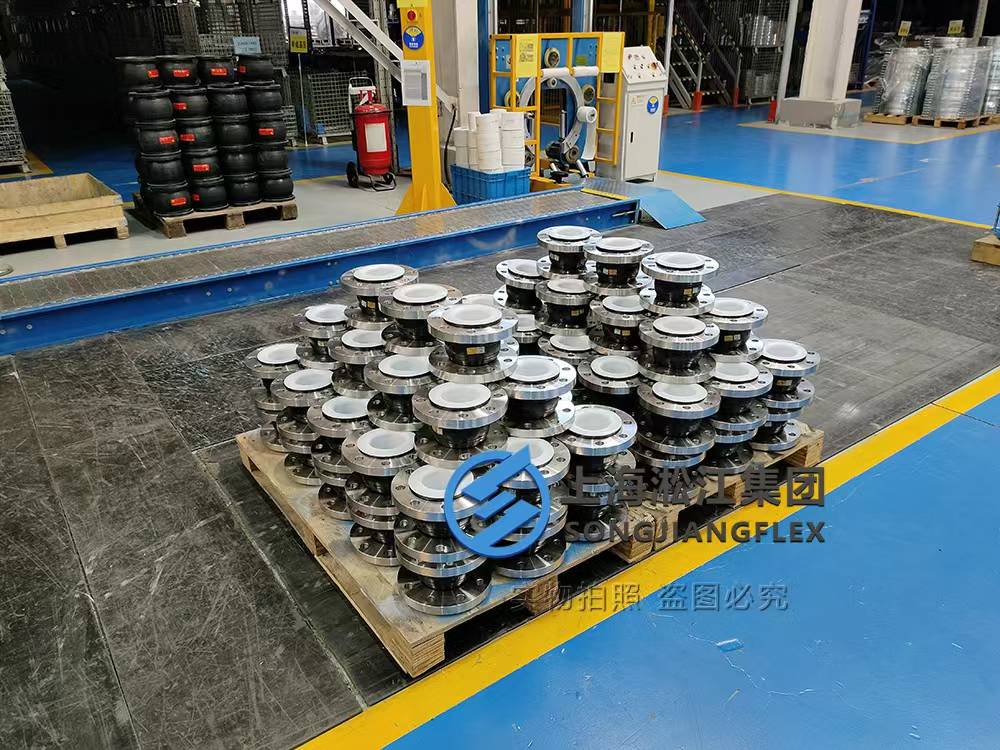
Chemical plant piping is rarely a simple fluid-transfer system. Pumps vibrate, reactors heat and cool, tanks move slightly under loading conditions, pipelines expand with temperature, and corrosive chemicals continuously attack wetted components.
For these reasons, chemical piping engineers often require a flexible connection that performs two different functions simultaneously: resisting chemical corrosion while accommodating movement and vibration.
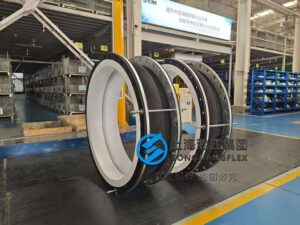
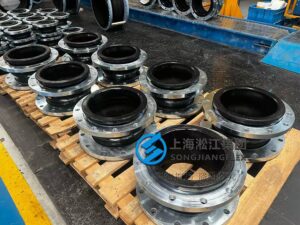
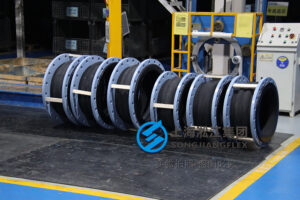
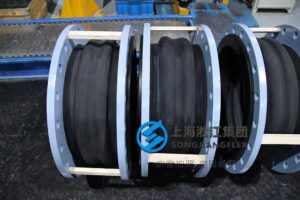
A PTFE-lined rubber expansion joint is designed specifically for this type of application.
By combining a corrosion-resistant PTFE inner surface with a flexible reinforced rubber body, it can be applied to selected acid, alkali, chemical-processing, petrochemical, pharmaceutical, wastewater, and pollution-control piping systems.
Chemical Plant Piping Requires More Than Chemical Resistance
Corrosion resistance is important, but it is only one part of expansion joint design.
Consider a typical chemical transfer pump. Even when the pump casing and pipeline materials are fully compatible with the chemical medium, vibration can still travel from the pump through rigid piping.
At another location, a reactor may operate through repeated heating and cooling cycles. Connected piping can expand and contract.
At a scrubber, the circulation pump may simultaneously introduce vibration while the piping carries an aggressive chemical solution.
A flexible connector therefore may need to manage:
- Corrosive media
- Pump vibration
- Thermal expansion
- Axial movement
- Lateral displacement
- Angular deflection
- Installation misalignment
- Pressure fluctuations
- Start-up and shutdown cycles
PTFE-lined rubber expansion joints have been developed for demanding chemical and petrochemical processing applications where both corrosion resistance and pipeline flexibility are required.
How Does the PTFE-Lined Structure Work?
The basic concept is straightforward.
The PTFE lining forms the primary wetted barrier facing the chemical medium.
Behind this layer is a reinforced rubber body engineered to provide flexibility and structural support. Depending on the operating requirements, the rubber section may incorporate textile reinforcement and additional reinforcing elements.
Flanges at both ends connect the expansion joint to the pipeline.
This hybrid structure allows engineers to take advantage of two different materials:
PTFE provides chemical resistance, while rubber provides elasticity and vibration isolation.
This makes PTFE-lined rubber joints particularly useful where an all-rigid corrosion-resistant connection would not provide enough flexibility.
Typical Chemical Plant Equipment Applications
Centrifugal Chemical Pumps
Chemical centrifugal pumps are commonly used for acid transfer, alkali circulation, solvent processing, wastewater handling, and general process transfer.
Expansion joints may be installed around pump suction and discharge piping to reduce vibration transfer and accommodate limited movement.
Typical equipment includes:
- Horizontal centrifugal chemical pumps
- Vertical chemical pumps
- Fluoroplastic-lined pumps
- Magnetic-drive pumps
- Acid circulation pumps
- Caustic transfer pumps
- Chemical dosing pumps
- Scrubber circulation pumps
- Wastewater chemical pumps
Correct installation is essential because an expansion joint should not be used to compensate for major piping design errors or unsupported pipe loads.
Reactor Circulation and Process Piping
Reactors are central to chemical production.
PTFE-lined flexible joints may be evaluated for piping associated with:
polymerization reactors, neutralization vessels, synthesis reactors, oxidation reactors, stirred tank reactors, batch reactors, crystallization systems, chemical mixing tanks, and process circulation loops.
Connections around these systems may experience thermal movement in addition to chemical exposure.
Where pressure, temperature, movement, and medium compatibility fall within the selected expansion joint’s design range, a flexible PTFE-lined construction can reduce stress transferred to equipment nozzles.
Scrubbers, Absorption Towers, and Exhaust Treatment Systems
Chemical plants often use pollution-control equipment to remove acidic gases, alkaline gases, particulates, or process contaminants from exhaust streams.
Typical systems include:
- Wet scrubbers
- Packed-bed scrubbers
- Venturi scrubbers
- Acid mist scrubbers
- Chemical absorption towers
- Flue-gas washing systems
- Exhaust neutralization systems
- Scrubber reagent preparation skids
Corrosive fluids used in these systems may attack ordinary piping components. PTFE-lined expansion joints are used in highly corrosive industrial piping and pollution-control systems, making this one of the relevant application areas for the technology.
Chemical Storage and Unloading Systems
Storage-tank piping is another important location for chemical-resistant flexible connections.
Typical installations include piping serving:
hydrochloric acid tanks, sulfuric acid storage tanks, phosphoric acid storage vessels, sodium hydroxide tanks, bleaching-chemical tanks, process additive tanks, chemical intermediate tanks, tanker unloading stations, and chemical transfer skids.
Where a flexible connection is required, the expansion joint can be positioned according to the piping arrangement, anchors, guides, and equipment-nozzle design.
Dosing and Metering Systems
Chemical plants use precise dosing equipment for pH adjustment, water treatment, neutralization, oxidation, coagulation, and process control.
Examples include:
metering pumps, dosing skids, chemical injection units, sodium hypochlorite systems, acid dosing systems, caustic dosing packages, antiscalant systems, reagent preparation systems, and neutralization stations.
Although many dosing pipelines are small in diameter, vibration from reciprocating or pulsating equipment can still create stress at rigid connections.
The correct expansion joint or flexible connector should be selected according to both the chemical and mechanical operating conditions.
What Pipeline Movements Can a Rubber Expansion Joint Absorb?
Depending on its geometry and design, a rubber expansion joint may accommodate several types of movement.
Axial compression occurs when two flange faces move closer together.
Axial extension occurs when the distance between flange faces increases.
Lateral movement occurs when the two ends shift sideways relative to each other.
Angular movement occurs when the connected pipe ends rotate relative to one another.
These capabilities make rubber expansion joints useful around rotating equipment and piping sections where controlled flexibility is required.
However, movement capacity varies significantly with DN size, face-to-face length, arch configuration, pressure rating, and reinforcement structure. Required movement should therefore be specified before manufacturing.
What About High Temperature and High Pressure?
This is one of the most important engineering questions.
PTFE itself may have excellent chemical and thermal characteristics, but a PTFE-lined rubber expansion joint is a composite product. Its allowable temperature is not determined by PTFE alone.
The rubber body, reinforcement materials, adhesive or bonding structure, flange configuration, pressure, chemical concentration, and operating cycle must all be considered.
For particularly high-temperature or high-pressure chemical service, an engineer may determine that another product—such as a PTFE bellows or specially designed metallic expansion joint—is more appropriate.
The correct approach is to evaluate the complete operating envelope rather than selecting a product based on one material property.
PTFE-Lined Rubber Joint or PTFE Bellows?
Both products can be used in corrosive applications, but they serve different requirements.
A PTFE-lined rubber expansion joint is particularly useful when chemical resistance must be combined with good vibration isolation and flexible multidirectional movement.
A PTFE bellows expansion joint may be considered when the application requires a different movement configuration, high purity, or a fully PTFE flexible element.
Industry product guidance distinguishes PTFE-lined rubber joints from fully formed PTFE bellows and recommends selection based on actual medium, temperature, pressure, and installation requirements.
FAQ
Is PTFE lining better than simply using EPDM or FKM rubber?
It depends on the application. EPDM, NBR, FKM, chlorobutyl, and other elastomers each have their own chemical compatibility ranges. For many moderate chemical services, correctly selected rubber can work very well without a PTFE liner. The advantage of PTFE lining appears when a broader or more demanding corrosion-resistant wetted surface is needed while retaining the flexibility of a rubber expansion joint. The exact medium and concentration must always be checked.
Can the expansion joint be used between a pump and a reactor?
Potentially, yes. This is a common type of process-equipment connection, but the engineering details matter. Pump vibration, reactor temperature, pipe diameter, working pressure, chemical composition, nozzle loads, available installation space, and movement must all be evaluated. The surrounding piping should also have proper anchors and guides so that the expansion joint operates within its designed movement range.
Do chemical expansion joints require control rods?
Not every installation requires them. Control rods or limit rods are generally considered when pipeline forces and movement must be restricted, or when additional protection against excessive extension is needed. Whether they are required depends on pressure, joint design, piping anchors, pump arrangement, diameter, and system configuration. They should therefore be determined during engineering rather than automatically added or omitted.
What flange materials are recommended for chemical plants?
Carbon steel flanges can be used where the external environment and project specification permit. Stainless steel 304 or 316L flanges are frequently considered where increased external corrosion resistance is required. Special coatings and custom flange materials are also possible. The wetted PTFE lining protects the interior surface, but external flange exposure, washdown chemicals, coastal environments, and plant atmosphere should still be considered.
What data should be included in an RFQ?
A detailed RFQ should include the exact medium, concentration, normal operating temperature, maximum design temperature, working pressure, design pressure, vacuum level if applicable, DN/NPS size, face-to-face length, flange standard, flange material, axial compression, axial extension, lateral movement, angular movement, installation orientation, equipment type, and quantity.
Providing a piping drawing, equipment layout, or technical datasheet can significantly improve product selection.
Selecting the Right Flexible Joint for Chemical Service
There is no universal expansion joint for every chemical plant.
A sulfuric acid pump, chlorine scrubber, phosphoric acid tank, caustic circulation system, chemical reactor, wastewater neutralization unit, and solvent-transfer skid can all require different materials and structural designs.
The purpose of a PTFE-lined rubber expansion joint is to combine corrosion protection with flexible movement and vibration isolation where operating conditions allow.
Before manufacturing, each application should therefore be evaluated according to the actual chemical medium, concentration, temperature, pressure, vacuum condition, equipment type, pipeline movement, flange standard, and installation arrangement.
If you have a chemical plant project, send us your operating parameters and drawings. We can evaluate the appropriate rubber material, PTFE lining structure, reinforcement design, flange configuration, control rods, vacuum reinforcement, and required movement according to the application.
Our company’s new website is now live, featuring the latest product introductions. For more details, please visit https://shsjflex.com/
Email: [email protected]