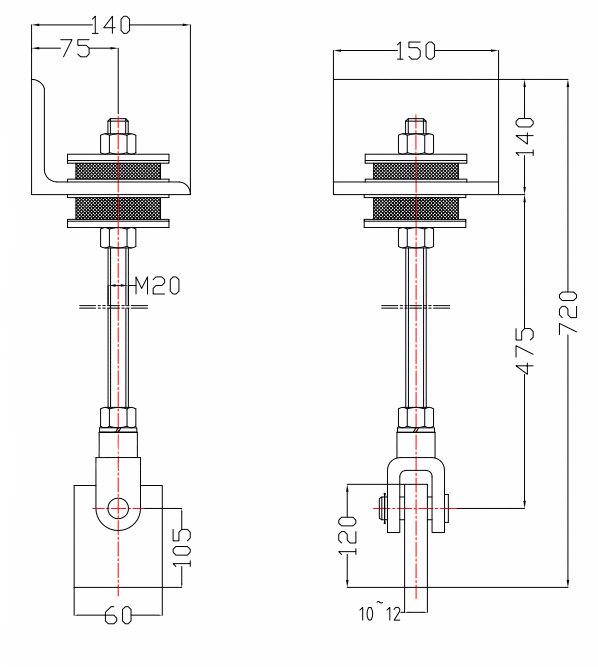
Marine vibration dampers are essential components for ensuring the safety and durability of ship exhaust systems. Continuous engine operation generates vibration, thermal expansion, and structural stress. Without proper control, these forces can lead to fatigue failure, excessive noise, and system misalignment.
Marine vibration dampers are specifically designed to absorb equipment weight, reduce vibration transmission, and compensate for thermal expansion. By combining elastic elements with robust structural design, they ensure long-term performance in demanding marine environments.
How Marine Vibration Dampers Work in Exhaust Systems
In marine exhaust systems, vibration dampers serve multiple functions simultaneously. They support the deadweight of pipes and silencers while allowing controlled movement caused by temperature changes.
Their core functions include:
- Supporting static and dynamic loads
- Absorbing axial and lateral thermal expansion
- Reducing vibration transfer to the hull structure
- Maintaining alignment of the piping system
Properly selected dampers significantly reduce system stress and extend service life.
Types of Marine Vibration Dampers
Different system configurations require different support solutions. Common types include:
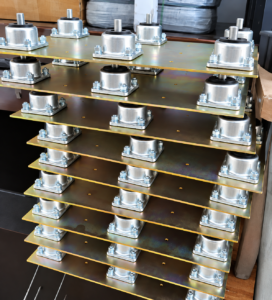
- Metal elastic support vibration isolators (ME Series)
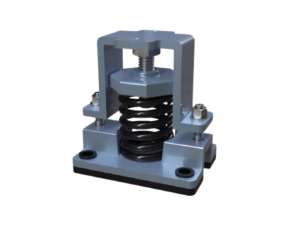
- Movable elastic hangers (P1 / TS Series)
- Fixed elastic suspension supports (VOP Series)
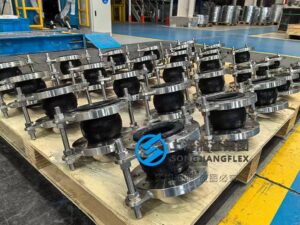
- Rubber elastic supports (VP Series)
Each type is designed for specific load ranges and installation conditions, ensuring optimal adaptability.
Materials and Structural Reliability
Marine vibration dampers are manufactured using high-performance elastomers and durable metal components. These materials provide resistance to high temperatures, corrosion, and long-term aging.
The integration of rubber elements, steel structures, and thermal isolation components ensures stable damping performance and minimizes heat transfer within the system.
Installation Principles for Marine Supports
Correct installation is critical for achieving optimal performance:
- Threaded rods should operate under proper tensile conditions
- Movement must be guided in the intended direction
- Reinforcement plates should be installed at load points
- Mounting structures must be rigid and stable
These principles ensure safety and reliability under continuous vibration.
Custom Solutions for Marine Projects
Each marine system has unique requirements. Customized solutions ensure precise compatibility and optimal performance.
We provide:
- Load analysis and product selection
- Custom design based on system layout
- Technical support for installation
📧 Email: [email protected]
🌐 Website: https://shsjflex.com
FAQ – Marine Vibration Dampers
What is the difference between a vibration isolator and a vibration damper?
A vibration isolator prevents vibration transmission, while a damper reduces vibration energy. Marine systems often combine both functions.
How do dampers handle thermal expansion?
They allow controlled movement through elastic components, absorbing expansion in multiple directions.
What happens if vibration is not controlled?
It can cause fatigue failure, noise, and structural damage over time.
How long do marine vibration dampers last?
With proper materials and installation, they can provide long-term stable performance.