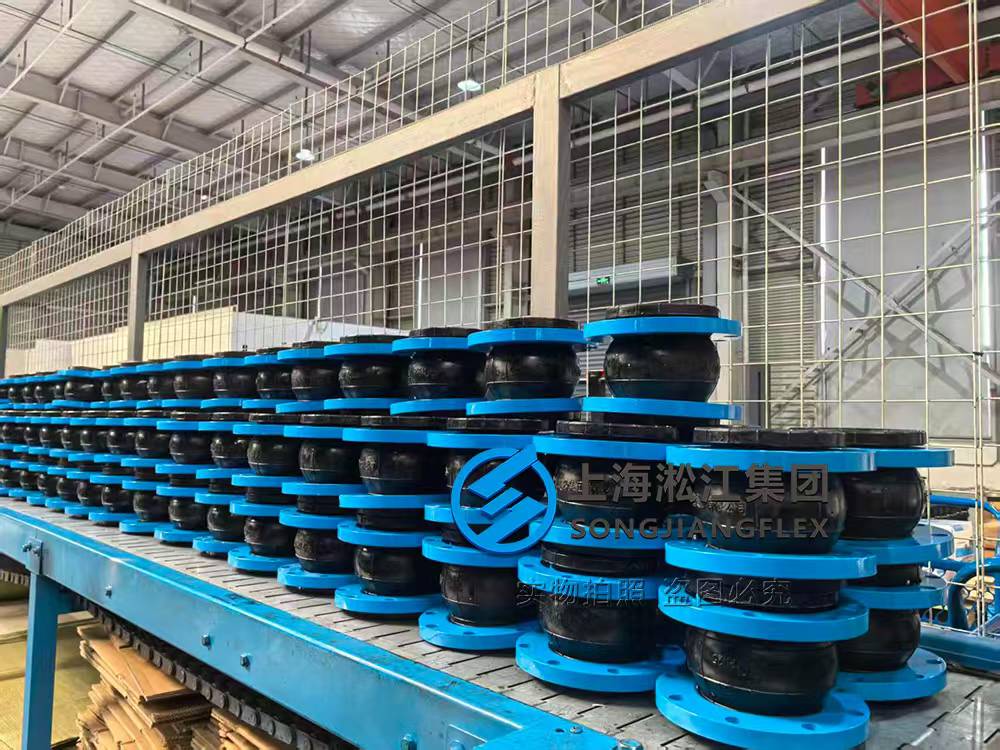
What Is a Cutting Oil Resistant Rubber Expansion Joint?
With the rapid development of precision manufacturing and automated production, modern industrial equipment such as CNC machining centers, CNC lathes, milling machines, grinding machines, and hydraulic systems are required to operate continuously under high-speed and high-load conditions.
During machining processes, cutting oil, coolant fluid, lubricating oil, and hydraulic oil are widely used to reduce friction, control temperature, and improve machining accuracy. However, long-term exposure to oil-based fluids can seriously affect ordinary rubber materials, causing swelling, cracking, hardening, loss of elasticity, and premature failure.
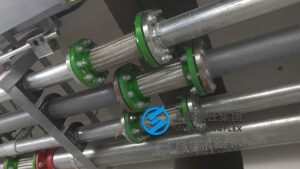
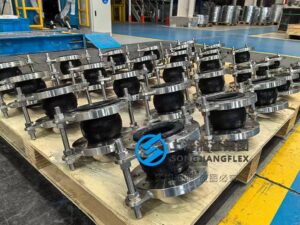
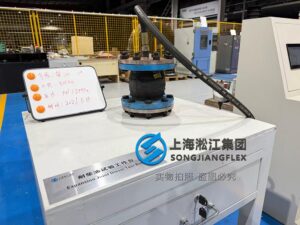
A Cutting Oil Resistant Rubber Expansion Joint, also known as an Oil Resistant Rubber Flexible Connector or NBR Rubber Expansion Joint, is specially designed for industrial applications where rubber components are exposed to cutting fluids, machining oils, and lubricants.
Unlike standard rubber expansion joints mainly used for water, air, or general industrial applications, oil resistant rubber expansion joints use specially formulated rubber compounds such as Nitrile Rubber (NBR), which provides excellent resistance against mineral oils, hydraulic fluids, lubricants, and machining coolants.
The product combines flexible connection, vibration isolation, noise reduction, and pipeline movement compensation functions, making it an ideal solution for modern manufacturing equipment.
Why Do CNC Machines Need Cutting Oil Resistant Rubber Expansion Joints?
CNC machines require extremely high operational stability because even small vibration levels can influence machining accuracy and product quality.
During operation, CNC equipment generates vibration from:
- High-speed spindle rotation;
- Servo motors;
- Hydraulic systems;
- Cooling pumps;
- Automatic tool changers;
- Mechanical transmission components.
At the same time, cutting oil and coolant circulation systems continuously expose connected pipelines and flexible components to oil-based fluids.
If ordinary rubber connectors are installed in this environment, several problems may occur:
- Rubber swelling caused by oil absorption;
- Reduced tensile strength;
- Cracking of rubber surface;
- Loss of sealing performance;
- Increased equipment maintenance frequency.
A cutting oil resistant rubber expansion joint provides a reliable flexible connection between equipment and pipelines while maintaining long-term mechanical performance.
What Are the Main Advantages of Oil Resistant Rubber Expansion Joints?
Excellent Resistance to Cutting Oil and Industrial Fluids
The biggest advantage of oil resistant rubber expansion joints is their ability to operate in environments containing various industrial oils.
Typical compatible media include:
- CNC cutting oil;
- Metalworking fluid;
- Hydraulic oil;
- Lubricating oil;
- Mineral oil;
- Industrial coolant;
- Gear oil.
The specially selected NBR rubber compound minimizes oil absorption and maintains stable elasticity, ensuring reliable sealing and vibration absorption during long-term operation.
Superior Vibration Isolation Performance
Industrial machinery generates continuous vibration during operation. If vibration is directly transferred through pipelines, it can affect equipment performance and increase noise levels.
The flexible rubber structure absorbs:
- Mechanical vibration;
- Pump pulsation;
- Motor vibration;
- Pressure shock;
- Pipeline stress.
For CNC machining equipment, reducing vibration helps improve:
- Machining accuracy;
- Surface finishing quality;
- Tool service life;
- Bearing durability;
- Overall equipment reliability.
Flexible Compensation for Pipeline Movement
During industrial operation, pipelines may experience:
- Thermal expansion;
- Equipment displacement;
- Installation deviation;
- Mechanical movement.
The rubber expansion joint provides flexibility to compensate for axial, lateral, and angular movements, reducing stress on connected equipment and pipelines.
Where Are Cutting Oil Resistant Rubber Expansion Joints Used?
Cutting oil resistant rubber expansion joints are widely applied in industries where equipment operates with oil-based fluids and requires vibration control.
CNC Machining Equipment
The most common applications include:
- CNC machining centers;
- CNC turning machines;
- CNC milling machines;
- CNC drilling machines;
- CNC grinding machines;
- Five-axis machining centers;
- Precision mold processing equipment;
- Automatic machining systems.
These machines usually contain coolant circulation systems. The rubber expansion joint is installed between pumps, pipelines, and machine connections to absorb vibration and prevent stress transfer.
Hydraulic Machinery and Industrial Automation Equipment
Hydraulic systems generate pressure fluctuation and mechanical vibration during operation.
Applications include:
- Hydraulic presses;
- Hydraulic punching machines;
- Hydraulic bending machines;
- Injection molding machines;
- Die casting machines;
- Automated production equipment.
Oil resistant rubber expansion joints help reduce hydraulic pump vibration and protect pipelines from repeated mechanical stress.
Automotive Manufacturing Production Lines
Automotive factories rely heavily on machining equipment and automated systems.
Typical applications include:
- Engine component machining lines;
- Transmission manufacturing equipment;
- Automotive parts processing machines;
- Robot welding systems;
- Automatic assembly lines.
The oil resistant flexible connector helps maintain stable operation in demanding production environments where cutting fluids and lubricants are continuously used.
Metal Processing and Heavy Machinery
Other applications include:
- Steel processing equipment;
- Aluminum machining systems;
- Gear manufacturing machines;
- Grinding production lines;
- Shipbuilding machinery;
- Heavy industrial equipment.
These industries require durable vibration isolation products capable of handling harsh working conditions.
How to Select the Right Cutting Oil Resistant Rubber Expansion Joint?
Choosing the correct model requires considering several important parameters:
Working Medium
The exact fluid type should be confirmed, such as:
- Cutting oil;
- Water-based coolant;
- Hydraulic oil;
- Lubrication oil.
Different fluids may require different rubber compounds.
Operating Temperature
Temperature affects rubber performance. Customers should provide the actual working temperature range to ensure proper material selection.
Working Pressure
The rubber expansion joint should be selected according to:
- System pressure;
- Pressure fluctuation;
- Pump operating conditions.
Connection Standard
Available connection options include:
- ANSI flange;
- DIN flange;
- JIS flange;
- GB standard flange;
- Customized flange design.
Installation Environment
For special applications, additional options can be provided:
- Stainless steel flange;
- Control rods;
- Vacuum supporting rings;
- Customized face-to-face length.
Frequently Asked Questions (FAQ)
1. Can ordinary rubber expansion joints be used with cutting oil?
Generally, ordinary rubber expansion joints are not recommended for long-term exposure to cutting oil or oil-based industrial fluids.
Standard rubber materials are mainly designed for applications such as water systems, HVAC pipelines, and general industrial fluids. When exposed to cutting oil or hydraulic oil for extended periods, the rubber structure may absorb oil molecules, resulting in swelling, softening, reduced strength, and cracking.
A cutting oil resistant rubber expansion joint uses oil-resistant rubber compounds such as NBR to maintain better mechanical properties and sealing performance. Before selection, customers should provide information about the cutting fluid composition, temperature, and operating pressure to ensure the correct rubber material is chosen.
2. Why is NBR rubber commonly used for oil resistant expansion joints?
NBR (Nitrile Butadiene Rubber) is one of the most widely used industrial rubber materials for oil resistance applications.
Its advantages include:
- Excellent resistance to mineral oils;
- Good abrasion resistance;
- High mechanical strength;
- Good sealing performance;
- Stable performance in industrial environments.
Because of these characteristics, NBR is commonly used in hydraulic seals, oil resistant hoses, industrial gaskets, and flexible rubber connectors.
3. Can a cutting oil resistant rubber expansion joint reduce CNC machine vibration?
Yes. The rubber expansion joint works as a flexible vibration isolation component between the machine and pipeline system.
During CNC operation, vibration from motors, pumps, and rotating components can transfer through rigid piping connections.
The flexible rubber structure absorbs part of this vibration energy, helping to:
- Reduce noise transmission;
- Protect connected equipment;
- Improve machining stability;
- Reduce pipeline stress;
- Extend component service life.
However, the final vibration reduction effect depends on correct product selection, installation method, and operating conditions.
4. What information should customers provide when ordering an oil resistant rubber expansion joint?
To recommend the correct product, customers should provide:
- Pipe diameter (DN size);
- Working pressure;
- Working temperature;
- Fluid type;
- Rubber material requirement;
- Flange standard;
- Installation length;
- Movement requirements.
For special industrial projects, technical drawings or equipment information can help engineers provide a more accurate solution.
5. Can Songjiang customize cutting oil resistant rubber expansion joints?
Yes.
Shanghai Songjiang Vibration Absorber Group provides customized rubber expansion joint solutions according to customer requirements.
Customization options include:
- Special rubber compounds;
- Different flange materials;
- Customized dimensions;
- High pressure designs;
- Large diameter rubber expansion joints;
- Special industrial applications.
These solutions are widely used in manufacturing plants, automotive factories, chemical industries, marine equipment, and heavy machinery projects.
Our company’s new website is now live, featuring the latest product introductions. For more details, please visit
https://shsjflex.com/
[email protected]