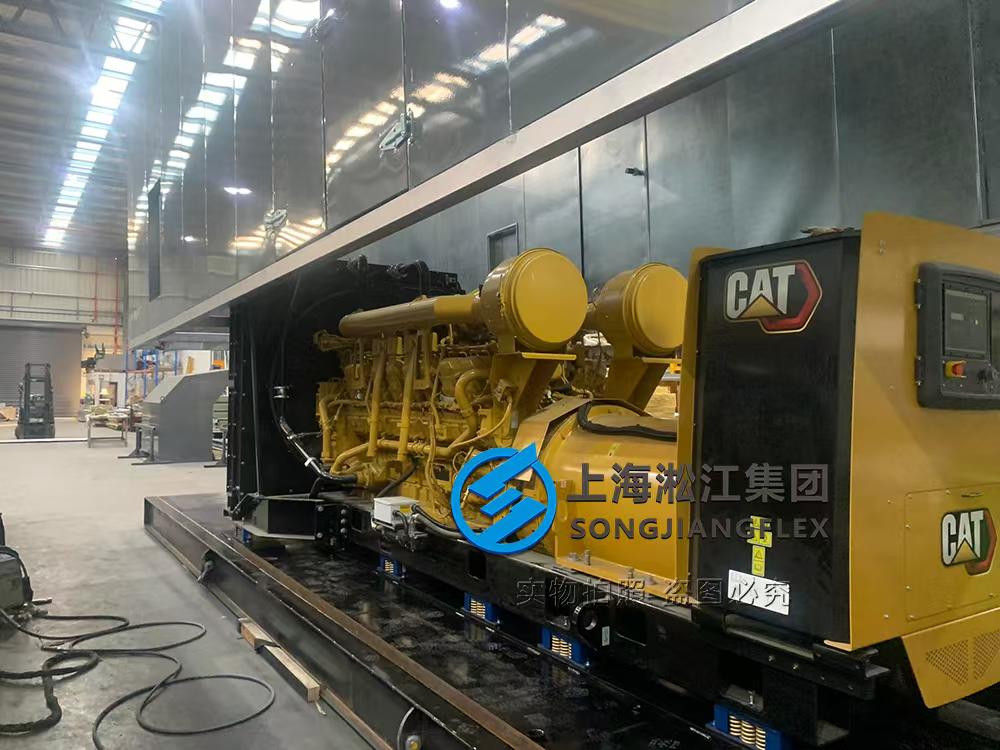
Large diesel generator sets are widely used as standby, emergency, and continuous power sources in data centers, hospitals, commercial buildings, industrial plants, energy facilities, and critical infrastructure. However, a diesel generator produces continuous mechanical vibration during operation. Without proper isolation, this vibration can travel through the generator base frame into the concrete foundation, structural steel, floors, and surrounding equipment.
For a recent project, custom spring vibration isolators were designed and selected for a CAT generator set according to the actual operating weight, mounting arrangement, and load distribution of the equipment.
Instead of simply dividing the total generator weight by the number of isolators, the selection considered several important engineering parameters, including support-point load, spring stiffness, static deflection, natural frequency, equipment center of gravity, installation height, and operating stability.
Where Does Generator Set Vibration Come From?
A CAT diesel generator set is a complete mechanical and electrical power system rather than simply an engine connected to an alternator.
Depending on the configuration, a generator package may include a diesel engine, synchronous alternator, steel skid base, radiator, cooling fan, turbocharger, air intake system, fuel system, lubrication system, cooling system, exhaust manifold, exhaust silencer, starting batteries, control panel, and circuit breaker.
During operation, vibration can be generated by engine combustion, reciprocating piston movement, crankshaft rotation, cooling fans, alternator rotation, and other mechanical components.
Without an effective vibration isolation system, vibration can travel through:
Generator Set → Steel Base Frame → Concrete Foundation → Building Structure
Installing correctly selected generator spring isolators between the equipment base and foundation helps reduce this transmission path.
Why Choose Customized Spring Vibration Isolators?
Large generator sets often have an uneven weight distribution.
The diesel engine, alternator, radiator, and auxiliary systems have different weights and are positioned at different locations on the common skid. Therefore, the center of gravity may not be located at the geometric center of the generator set.
For example, if a generator weighs 20,000 kg and uses eight isolators, simply calculating:
20,000 kg ÷ 8 = 2,500 kg per isolator
provides only an average load.
The actual load at individual mounting points may be considerably different.
For this reason, customized spring isolators can be selected with different load capacities and spring stiffness values at different positions. This helps achieve more consistent spring deflection and better equipment leveling.
Why Is Static Deflection Important?
Static deflection is one of the key parameters when selecting a spring vibration isolator.
When the generator weight is applied, the spring compresses by a certain amount. The relationship between load, spring stiffness, and deflection directly influences the natural frequency of the isolation system.
A properly designed low-natural-frequency spring system can significantly reduce vibration transmission when the equipment operating frequency is sufficiently above the isolator natural frequency.
Therefore, spring isolator selection should consider:
Load Capacity + Spring Stiffness + Static Deflection + Natural Frequency + Isolation Efficiency
The softest spring is not automatically the best solution.
If the spring is too soft, excessive movement may occur during generator startup, shutdown, or sudden load changes. This can affect equipment stability and connected piping systems.
Adjustable Spring Mounts for Heavy Generator Sets
For heavy-duty generator installations, adjustable spring vibration isolators offer an additional advantage.
Concrete foundations and steel equipment bases may have small differences in elevation. Adjustable isolators allow installers to make height corrections after the generator has been positioned.
This can help improve:
equipment leveling, spring load distribution, installation height, and uniform spring compression.
For large CAT generator packages, this feature can simplify installation while helping the isolators operate within their intended working range.
What Equipment Can Use Heavy-Duty Spring Isolators?
Although this project involved a CAT generator set, similar spring isolation systems can be used for many types of industrial and mechanical equipment, including:
diesel generator sets, natural gas generators, emergency standby generators, containerized generator sets, marine auxiliary generators, CHP units, centrifugal chillers, screw chillers, cooling towers, centrifugal fans, axial fans, AHU units, centrifugal blowers, air compressors, chilled-water pumps, condenser-water pumps, fire pumps, booster pump skids, and large HVAC equipment.
Each application, however, requires an independent evaluation of equipment weight, RPM, operating frequency, support arrangement, and installation conditions.
Flexible Connections Are Also Important
Installing spring isolators underneath a generator does not automatically eliminate every vibration transmission path.
Rigid connections such as exhaust pipes, cooling-water pipes, fuel lines, and auxiliary piping may transmit vibration around the isolation system.
Depending on the operating medium, temperature, pressure, and required movement, suitable flexible components may include:
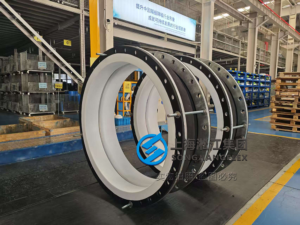
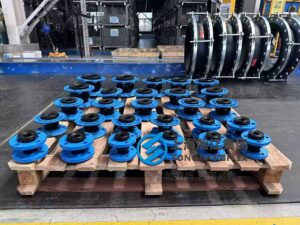
stainless steel expansion joints, exhaust flexible connectors, rubber expansion joints, metal hoses, and flexible pipe connectors.
A complete vibration control system should consider both the generator mounting system and its external connections.
Spring Isolators for Outdoor and Seismic Applications
Generator sets installed outdoors, in coastal environments, marine facilities, or offshore applications may require additional corrosion protection.
Depending on the project environment, spring housings and other metal components can be manufactured or treated for improved resistance to humidity, salt spray, weather exposure, and corrosion.
For projects located in seismic zones, the spring isolator can also incorporate a seismic restraint system to control excessive horizontal or vertical movement during an earthquake or abnormal impact event.
This means that a customized generator isolation system can combine vibration isolation, shock protection, movement restraint, leveling, and seismic protection within one mounting solution.
What Information Is Required for Generator Isolator Selection?
For accurate selection, customers are recommended to provide:
Generator model, operating weight, overall dimensions, engine RPM, number of mounting points, mounting-point locations, bolt-hole dimensions, and foundation details.
If available, a GA drawing, center of gravity, or individual support-point loads can significantly improve the accuracy of isolator selection.
For special projects, additional information such as required static deflection, target vibration isolation efficiency, installation height restrictions, corrosion protection requirements, and seismic design parameters should also be provided.
FAQ
1. How do you select spring isolators for a CAT generator set?
Selection begins with the operating weight, number and position of mounting points, generator RPM, and equipment dimensions. For large generator sets, the center of gravity and individual support loads should also be considered. The final isolator should then be evaluated according to its rated load, spring stiffness, static deflection, natural frequency, and available safety margin. Selecting only according to total generator weight may not provide the best result.
2. Can different spring isolators be used under the same generator?
Yes. Large generator sets often have uneven load distribution because the engine, alternator, radiator, and auxiliary components are positioned differently. Different spring stiffness values or load capacities can therefore be used at different mounting positions to achieve more uniform working deflection and better equipment leveling.
3. Should I choose 25 mm or 50 mm static deflection?
The correct deflection depends on generator speed, excitation frequency, required isolation efficiency, equipment weight, and allowable movement. A larger static deflection generally corresponds to a lower natural frequency, but it may also allow more equipment movement. The correct value should therefore be determined according to the actual operating conditions rather than simply choosing the largest available deflection.
4. Can spring isolators be used with existing rubber mounts?
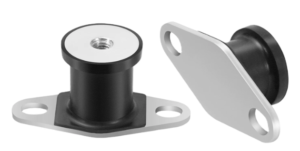
It depends on the generator design and project requirements. Rubber mounts provide useful damping and compact installation, while spring isolators can provide lower natural frequencies for applications requiring greater low-frequency vibration isolation. The complete mounting arrangement should be evaluated before combining different isolation systems.
5. Can you select the isolators from a generator GA drawing?
Yes. A GA drawing showing equipment dimensions, mounting locations, operating weight, and center of gravity is particularly useful. If individual mounting-point loads are available, different spring specifications can be selected for different positions to achieve more accurate load distribution.
6. Can seismic restraints be added?
Yes. For data centers, hospitals, critical facilities, and projects located in seismic regions, horizontal and vertical restraint structures can be incorporated. The restraint system should allow the spring to operate normally during everyday generator operation while controlling excessive displacement during seismic or abnormal loading conditions.
Contact Us
If you are selecting spring vibration isolators for a CAT Generator Set, Diesel Generator, Emergency Generator, Gas Generator, Data Center Generator, or other heavy rotating equipment, please send your equipment technical data or GA drawing for evaluation.
Our company’s new website is now live, featuring the latest product introductions. For more details, please visit https://shsjflex.com/
Email: [email protected]