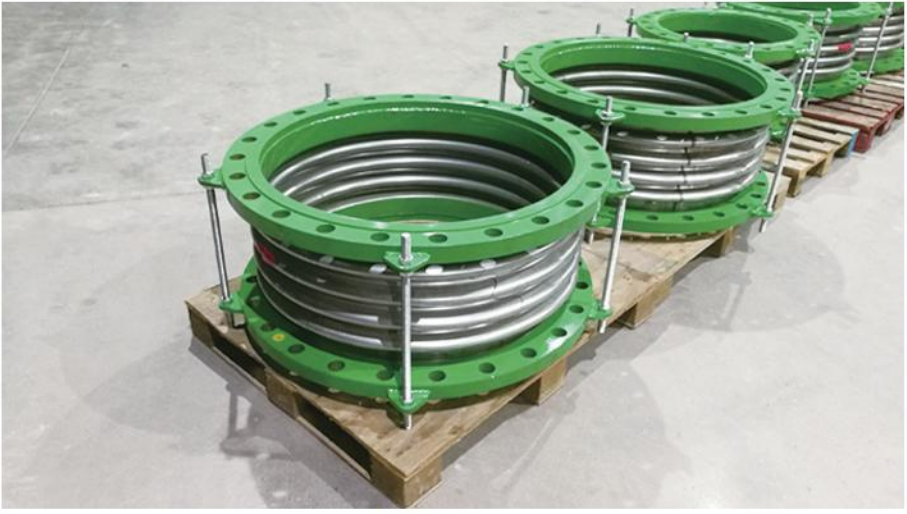
BGF Stainless Steel Bellows Compensator: Design, Materials, and Axial Movement
The BGF Stainless Steel Bellows Compensator is a flanged metallic expansion joint designed to accommodate axial thermal expansion and contraction in industrial piping systems. Available in stainless steel 304, 316L, and 321, it is suitable for selected food processing, drinking water, pharmaceutical, chemical, and hydraulic piping applications where material compatibility, reliable connections, and controlled pipeline movement are essential.
Unlike rigid pipe connectors, the BGF stainless steel expansion joint incorporates a flexible corrugated metal bellows that deforms elastically as the connected pipeline expands or contracts. This movement helps reduce thermal displacement loads transmitted to connected piping components, provided that the expansion joint is correctly selected, anchored, guided, and installed.
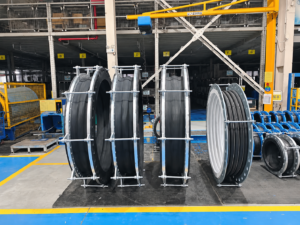
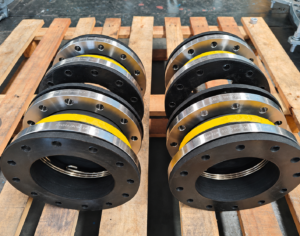
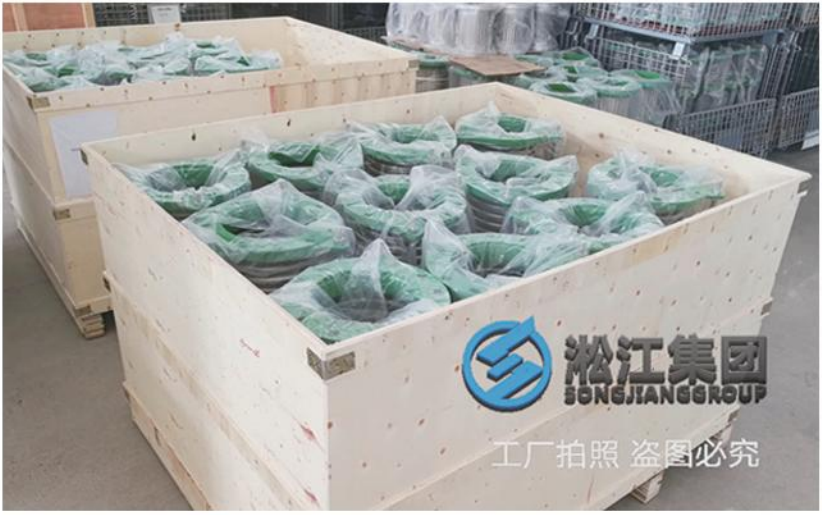
A recent batch of BGF stainless steel bellows compensators ordered by a customer in Indonesia is being prepared for shipment. The products are intended for industrial piping applications requiring flanged connections and axial movement compensation.
How Does the Stainless Steel Bellows Structure Work?
The BGF compensator consists primarily of a corrugated stainless steel bellows and two connecting flanges. The bellows provides the flexible section, while the flanges connect the assembly to the piping system.
When pipeline temperature increases, thermal expansion may cause the pipe sections to move toward each other. The bellows compresses axially to accommodate the displacement. When the pipeline contracts, the bellows can extend within its specified movement range.
This operating principle makes the BGF flanged bellows expansion joint suitable for piping systems with predictable axial thermal movement.
However, the BGF model is intended for axial compression and extension only. Lateral displacement must not be imposed on the compensator. The installation must also avoid excessive angular misalignment, torsion, and movement beyond the approved compensation capacity.
Stainless Steel 304, 316L, and 321 Material Options
Both the bellows and connecting flanges can be manufactured using stainless steel 304, 316L, or 321, depending on the project requirements.
| Material | Characteristics | Typical selection considerations |
|---|---|---|
| SS304 | General-purpose austenitic stainless steel with good corrosion resistance | Food processing, clean utility piping, and compatible water systems |
| SS316L | Molybdenum-containing stainless steel with improved resistance to certain chloride-related corrosion conditions | Pharmaceutical processing, chemical pipelines, and selected water applications |
| SS321 | Titanium-stabilized austenitic stainless steel with improved resistance to sensitization during certain elevated-temperature exposures | Industrial thermal piping and applications requiring stabilized stainless steel |
Material selection must consider the actual fluid composition, operating temperature, cleaning chemicals, chloride concentration, and environmental exposure.
Although SS316L generally offers better pitting corrosion resistance than SS304 in many chloride-containing environments, neither material is immune to chloride-induced localized corrosion or stress corrosion cracking.
SS321 should not automatically be considered a superior alternative to SS316L for chloride-containing water systems. Its selection should be based on temperature exposure and the applicable corrosion conditions.
For food and pharmaceutical processing systems, material selection alone does not establish hygienic suitability. Surface finish, weld quality, cleanability, drainage, and applicable project requirements must also be evaluated.
Technical Specifications and Flange Connection Standards
The BGF stainless steel bellows compensator is available with the following specified pressure classes and material configurations.
| Technical parameter | BGF specification |
|---|---|
| Product type | Flanged stainless steel bellows compensator |
| Bellows material | SS304 / SS316L / SS321 |
| Flange material | SS304 / SS316L / SS321 |
| Nominal pressure options | PN10 / PN16 / PN25 |
| Corresponding nominal pressures | 1.0 / 1.6 / 2.5 MPa |
| Standard flange reference | GB/T 9124.1-2019, P108 |
| Alternative flange standards | Available upon request |
| Standard face-to-face length | According to catalog P101 |
| Customized length | Available upon request |
| Permitted movement direction | Axial compression and extension |
| Lateral movement | Not permitted |
The nominal pressure designation should not be interpreted as an unconditional maximum operating pressure at every temperature. Allowable pressure depends on the bellows design, material, operating temperature, movement requirements, and applicable design criteria.
The actual axial compensation capacity must be established for the selected size and configuration. It should not be assumed from the nominal diameter or installation length alone.
For international projects, alternative flange configurations may be manufactured according to the specified piping standard, subject to dimensional and engineering review.
Manufacturing and Installation Considerations
Manufacturing a stainless steel bellows compensator requires careful control of bellows forming, flange alignment, joining processes, and dimensional consistency.
The corrugated geometry influences axial flexibility, pressure resistance, spring rate, and fatigue behavior. These characteristics must be considered together rather than evaluated independently.
During installation, the compensator must remain within its designed movement range. The piping system should incorporate appropriate main anchors and pipe guides to control pressure thrust and direct thermal displacement along the intended axis.
Welding precautions are particularly important. When welding is performed near the installed expansion joint, the bellows must be protected from excessive heat, welding sparks, and molten metal spatter. Damage to the thin corrugated wall can compromise its integrity.
For water piping applications, the specified chloride concentration should not exceed 25 mg/L. Effective chloride removal or suitable water treatment should be provided at the water inlet where necessary. This project-specific precaution is intended to reduce the risk of localized corrosion and pinhole leakage; it does not guarantee corrosion-free operation under all conditions.
Where Are BGF Stainless Steel Bellows Compensators Used?
BGF stainless steel bellows expansion joints are intended for industrial piping systems where thermal movement is predominantly axial and where a stainless steel wetted construction is appropriate for the process medium.
Food and Beverage Processing Pipelines
In food processing facilities, stainless steel piping is commonly used for transferring water, process liquids, and compatible food ingredients.
Potential applications include:
-
Pasteurized water distribution pipelines
-
Food processing utility water systems
-
Beverage production process piping
-
Stainless steel heat exchanger connections
-
Industrial hot water circulation systems
The compensator may be installed along a straight pipeline section where temperature changes generate predictable axial expansion.
For product-contact applications, hygienic design, cleaning procedures, and applicable sanitary requirements must be reviewed before selection. A conventional flanged bellows compensator should not automatically be treated as a sanitary expansion joint.
Drinking Water and Water Treatment Systems
BGF stainless steel compensators may be considered for compatible drinking water distribution and treatment piping, subject to material approval and water quality requirements.
Typical equipment and piping connections include water treatment skids, stainless steel filtration pipelines, treated-water distribution headers, and hot water circulation networks.
For potable water applications, the required drinking-water contact approvals must be confirmed separately. Stainless steel construction alone does not establish compliance with local potable water regulations.
Water chemistry is particularly important. Chloride concentration, temperature, dissolved oxygen, and stagnant conditions can influence the corrosion behavior of stainless steel bellows.
Pharmaceutical and Chemical Processing
In pharmaceutical manufacturing, stainless steel piping is widely used in process water distribution, equipment utilities, and compatible fluid transfer systems.
Potential applications include purified water utility piping, process equipment connections, and stainless steel distribution headers.
However, pharmaceutical applications may require specific hygienic surface finishes, validated cleaning procedures, documented material traceability, and additional qualification. These requirements must be assessed before specifying a BGF compensator.
In chemical processing plants, BGF expansion joints may accommodate thermal movement in compatible chemical transfer lines, reactor utility piping, and heat exchanger connections.
Chemical compatibility must be verified against the actual medium, including its concentration, temperature, and potential impurities.
Hydraulic and Industrial Utility Piping
Industrial hydraulic systems and machinery utility pipelines can experience temperature variations during operation.
Where the pressure rating, movement conditions, and fatigue requirements are compatible, a stainless steel bellows compensator may be considered for axial thermal movement in suitable hydraulic or utility lines.
The BGF compensator is not a substitute for a hydraulic pulsation damper or a vibration isolator specifically designed for dynamic pressure fluctuations.
For systems involving substantial pressure pulsation, repeated mechanical vibration, or rapid pressure transients, a separate engineering assessment is necessary.
Indonesian Customer Order Ready for Shipment
A batch of BGF stainless steel bellows compensators has been ordered by an Indonesian customer and is being prepared for shipment.
The order reflects the use of customizable stainless steel expansion joint configurations for overseas industrial piping requirements.
For international procurement, important technical considerations include flange standard compatibility, nominal pressure, face-to-face length, stainless steel grade, and required axial movement.
Providing accurate installation drawings and operating conditions before manufacturing helps minimize connection mismatches and installation difficulties at the project site.
Frequently Asked Questions
1. How do I select the correct BGF stainless steel bellows compensator?
Selection begins with the pipe nominal diameter, operating pressure, design temperature, and calculated axial thermal movement. The engineer should also determine the available installation length, flange standard, and piping arrangement.
Axial movement should be calculated from the pipe material’s thermal expansion coefficient, the relevant straight pipe length, and the expected temperature change. Both extension and compression requirements must be considered.
The selected compensator must have sufficient approved movement capacity, pressure capability, and fatigue life for the intended operating conditions.
2. Should I choose SS304, SS316L, or SS321 for a bellows expansion joint?
SS304 is commonly considered for compatible general-purpose water and industrial utility applications. SS316L is often preferred where improved resistance to certain chloride-containing or chemically aggressive environments is required.
SS321 is a titanium-stabilized stainless steel that may be appropriate for selected elevated-temperature applications.
The final decision should consider chemical concentration, chloride content, temperature, cleaning chemicals, and exposure duration. For drinking water or pharmaceutical systems, the specified regulatory and material documentation requirements must also be checked. No stainless steel grade is universally suitable for every medium.
3. What pressure and temperature can a BGF stainless steel bellows compensator withstand?
The BGF series is offered in nominal pressure options of 1.0 MPa, 1.6 MPa, and 2.5 MPa, corresponding to PN10, PN16, and PN25.
However, the actual allowable operating pressure must be verified at the specified design temperature. Elevated temperatures can reduce material strength and affect the permissible pressure rating.
The allowable temperature range also depends on stainless steel grade, bellows construction, and service conditions. A specific maximum operating temperature cannot be established without reviewing the selected configuration and its engineering design.
4. Can a BGF flanged bellows compensator absorb lateral pipe movement?
No. The BGF model described here is intended for axial compression and extension and must not be used to accommodate lateral displacement.
The piping layout should direct thermal expansion along the bellows axis through appropriate anchors and guides. Misaligned flanges, offset pipe ends, or unsupported lateral movement may introduce bending stresses into the corrugated section.
During installation, the expansion joint should not be forced into position to correct piping alignment errors. If the system requires lateral or angular movement, a different expansion joint configuration should be evaluated.
5. Can BGF stainless steel expansion joints be used in food and pharmaceutical piping?
BGF stainless steel compensators may be considered for compatible food processing and pharmaceutical utility piping, but their suitability depends on the exact application.
For direct product-contact or hygienic service, engineers must review surface finish, internal geometry, cleanability, drainage, weld quality, and applicable sanitary standards.
A conventional flanged construction may not satisfy the requirements of every hygienic process. Stainless steel 304 or 316L alone does not demonstrate sanitary compliance.
Project-specific documentation and any required material-contact approvals should be established before procurement.
6. Why is chloride concentration important for stainless steel bellows compensators?
Chloride ions can contribute to localized pitting, crevice corrosion, and stress corrosion cracking in stainless steel under susceptible operating conditions.
Because metallic bellows typically use relatively thin corrugated walls, localized corrosion can eventually produce pinhole leakage.
For the specified BGF water piping application, the recommended chloride concentration limit is 25 mg/L. Suitable water treatment should be considered when the incoming water exceeds this requirement.
Corrosion risk also depends on temperature, water chemistry, deposits, and operating conditions. Maintaining chloride below this value does not eliminate every corrosion mechanism.
7. Can BGF stainless steel bellows compensators be customized for international piping projects?
Yes. BGF compensators can be manufactured with alternative face-to-face lengths, stainless steel material selections, and flange connection configurations, subject to engineering feasibility.
For customized orders, customers should provide the nominal pipe diameter, flange standard, operating pressure, design temperature, required axial compression and extension, medium composition, and installation drawings.
Where available, information about operating cycles, pipe anchors, guides, and thermal expansion calculations should also be supplied.
These details allow the manufacturer to assess dimensional compatibility, movement capacity, material suitability, and applicable technical requirements before production.
Conclusion and Contact Information
The BGF Stainless Steel Bellows Compensator provides a practical solution for controlled axial thermal expansion and contraction in compatible food processing, drinking water, pharmaceutical, chemical, and industrial utility piping systems.
With SS304, SS316L, and SS321 material options, PN10–PN25 nominal pressure configurations, and customizable flange connections, the BGF series can be adapted to different piping project requirements.
An Indonesian customer order is currently being prepared for shipment.
For technical evaluation, quotations, or customized manufacturing, please provide your equipment weight and operating conditions where relevant, pipe dimensions, connection details, installation drawings, working pressure, operating temperature, material requirements, applicable standards, and any special project specifications.
Email: [email protected]
Our company’s new website is now live, featuring the latest product introductions. For more details, please visit https://shsjflex.com/