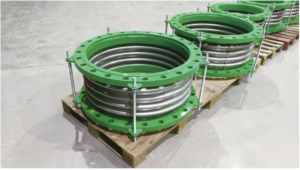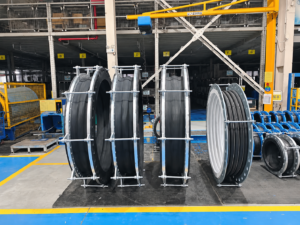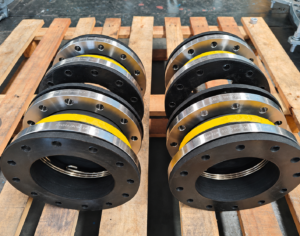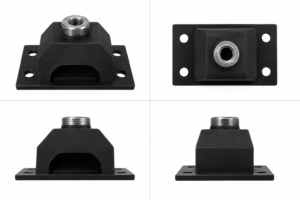
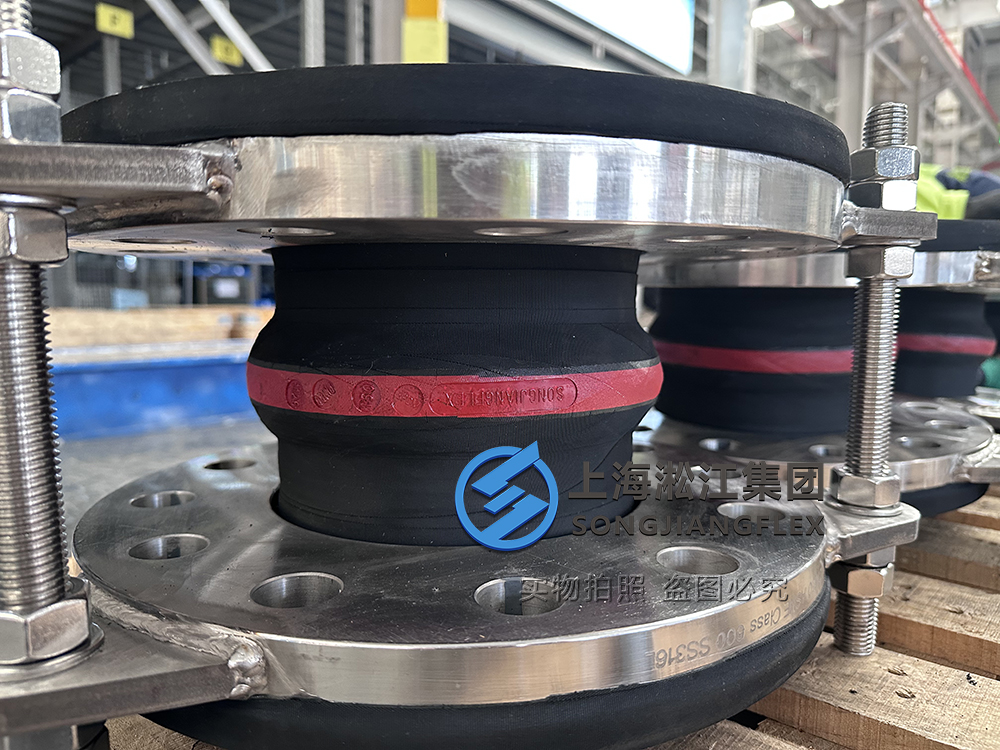
DN80 EPDM rubber expansion joints are flexible pipe connectors used in marine piping systems to absorb vibration, accommodate limited pipe movement, and reduce mechanical stress transmitted between connected equipment and pipelines.
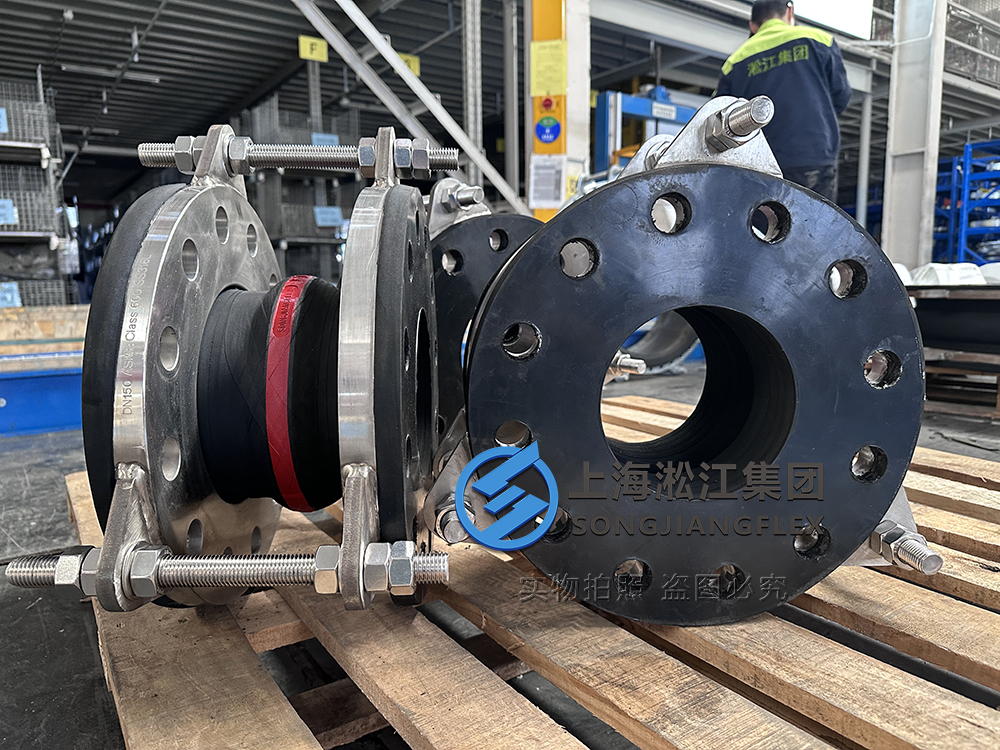
The joint typically consists of an EPDM rubber body reinforced with fabric layers and fitted with metal flanges for secure pipeline connections. Its flexible structure allows controlled axial, lateral, and angular movement within the manufacturer’s specified limits.
In shipbuilding and marine engineering, these rubber expansion joints can be installed in seawater cooling circuits, freshwater cooling lines, and auxiliary water piping systems, provided the rubber compound and construction are suitable for the operating medium.
By reducing vibration transmission and accommodating limited thermal expansion or installation movement, DN80 marine rubber expansion joints help protect connected pumps, piping components, and equipment connections from excessive mechanical loading.
Custom DN80 EPDM Rubber Expansion Joints for a Korean Marine Customer
A South Korean marine customer requested customized DN80 EPDM rubber expansion joints for shipboard piping applications. The project highlights the importance of matching rubber expansion joint construction to the specific requirements of marine equipment and pipeline connections.
For this application, EPDM was selected as the specified rubber material. EPDM is commonly used in water-handling systems because of its resistance to water, weathering, and ozone. However, its suitability for the actual operating medium must be confirmed.
Marine rubber expansion joint customization requires attention to flange dimensions, face-to-face length, operating pressure, temperature, and expected pipeline movement.
For overseas shipbuilding customers, accurate technical drawings and confirmed installation dimensions are essential to ensure that replacement or customized rubber expansion joints fit the intended piping system.
Frequently Asked Questions
1. What specifications are required when selecting a DN80 marine rubber expansion joint?
Selecting a DN80 marine rubber expansion joint requires more than confirming the nominal pipe diameter. Engineers should specify the operating pressure, design temperature, fluid medium, flange standard, face-to-face length, and required axial, lateral, and angular movements.
DN80 generally corresponds to a nominal pipe size of approximately 3 inches, but actual flange dimensions depend on the applicable standard. The selected joint must also meet the system’s pressure and vacuum requirements. Final dimensions and allowable movements should be confirmed through approved technical drawings.
2. Is EPDM rubber suitable for seawater cooling systems on ships?
EPDM rubber is generally suitable for seawater, freshwater, and many water-based cooling applications because it offers good resistance to water, ozone, and weathering. This makes it a practical material option for marine cooling pipelines and auxiliary water systems.
However, EPDM is generally unsuitable for petroleum-based oils, diesel fuel, and lubricating oils. For oil-containing marine pipelines, NBR or another compatible elastomer may be more appropriate. Actual seawater temperature, chemical treatment, and rubber compound formulation must be considered before final material approval.
Willbrandt Gummitechnik+1
3. What pressure and temperature limits apply to DN80 EPDM rubber expansion joints?
The allowable working pressure and temperature of a DN80 EPDM rubber expansion joint depend on its specific construction, reinforcement layers, flange design, and rubber compound.
Nominal diameter alone does not establish a pressure rating. Engineers must verify the manufacturer’s approved pressure-temperature limits, including possible derating at elevated temperatures. Vacuum resistance should also be checked when the joint is installed on pump suction lines.
For marine installations, operating pressure fluctuations, temperature variations, and potential water hammer should be evaluated before selecting the final configuration.
rubberexpansionjoint.com+1
4. How should DN80 rubber expansion joints be installed in marine pipelines?
DN80 rubber expansion joints should be installed between correctly aligned mating flanges with adequate pipe supports and suitable anchoring arrangements.
Before installation, verify flange dimensions, sealing surfaces, bolt clearance, and face-to-face length. Tighten flange bolts gradually using a crosswise sequence and the manufacturer’s specified torque.
Rubber expansion joints should not support pipeline weight or compensate for excessive installation misalignment. Where pressure thrust cannot be adequately restrained by anchors, properly engineered control rods or other restraints may be required to prevent overextension.
Mercer Rubber+1
5. Which shipboard equipment can benefit from DN80 EPDM rubber expansion joints?
DN80 EPDM rubber expansion joints can be considered for marine centrifugal pumps, freshwater cooling pumps, seawater circulation systems, and auxiliary water pipelines where the operating conditions are compatible with EPDM.
They are particularly useful near rotating equipment because their flexible rubber construction helps reduce vibration transmission between machinery and connected piping.
However, the suitability of DN80 depends on the actual pipe size and hydraulic requirements. These joints should not be automatically specified for fuel oil, diesel, or lubricating oil systems without selecting a chemically compatible alternative material.
6. Can a DN80 EPDM rubber expansion joint absorb axial, lateral, and angular movement simultaneously?
A properly designed rubber expansion joint can accommodate axial compression, axial extension, lateral displacement, and angular movement within its specified operating limits.
However, the maximum allowable values for individual movements should not automatically be combined. Simultaneous movements may reduce the available movement capacity in each direction.
For shipboard installations, engineers should consider equipment vibration, thermal expansion, pipe alignment, and dynamic operating conditions. Where multiple movements occur together, the manufacturer should verify the combined movement requirements and recommend an appropriate joint configuration.
rubberexpansionjoint.com+1
7. What information should Korean shipbuilders provide when ordering custom DN80 EPDM rubber expansion joints?
Korean shipbuilders and marine equipment suppliers should provide technical drawings, required quantity, nominal diameter, flange standard, face-to-face length, and installation arrangement when requesting customized DN80 EPDM rubber expansion joints.
Operating pressure, design temperature, fluid composition, expected movements, and vacuum conditions should also be specified.
For replacement projects, photographs and dimensional measurements of existing joints can help identify connection requirements. If marine classification approval, inspection records, material documentation, or special testing is required, these requirements should be stated during the quotation stage so manufacturing and documentation arrangements can be evaluated.
Conclusion and Contact Information
Custom DN80 EPDM rubber expansion joints provide a flexible connection solution for compatible marine water piping systems. The South Korean customer application demonstrates the importance of selecting appropriate materials, confirming installation dimensions, and evaluating operating conditions before manufacturing.
We support customized marine rubber expansion joints based on customer drawings and technical requirements. For quotations, please provide the required quantity, flange standard, face-to-face length, operating pressure, temperature, fluid medium, and movement requirements. Our technical team can assist with product configuration and drawing confirmation for international marine projects.
Email: [email protected]
Our company’s new website is now live, featuring the latest product introductions. For more details, please visit https://shsjflex.com/