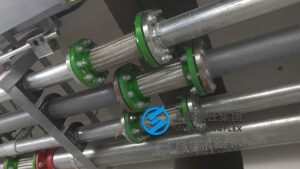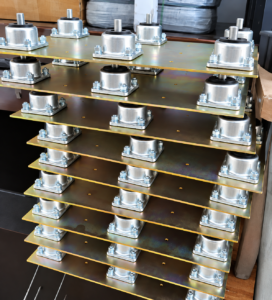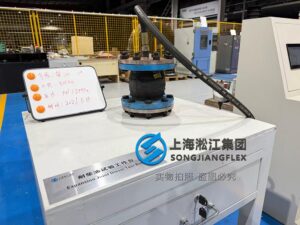
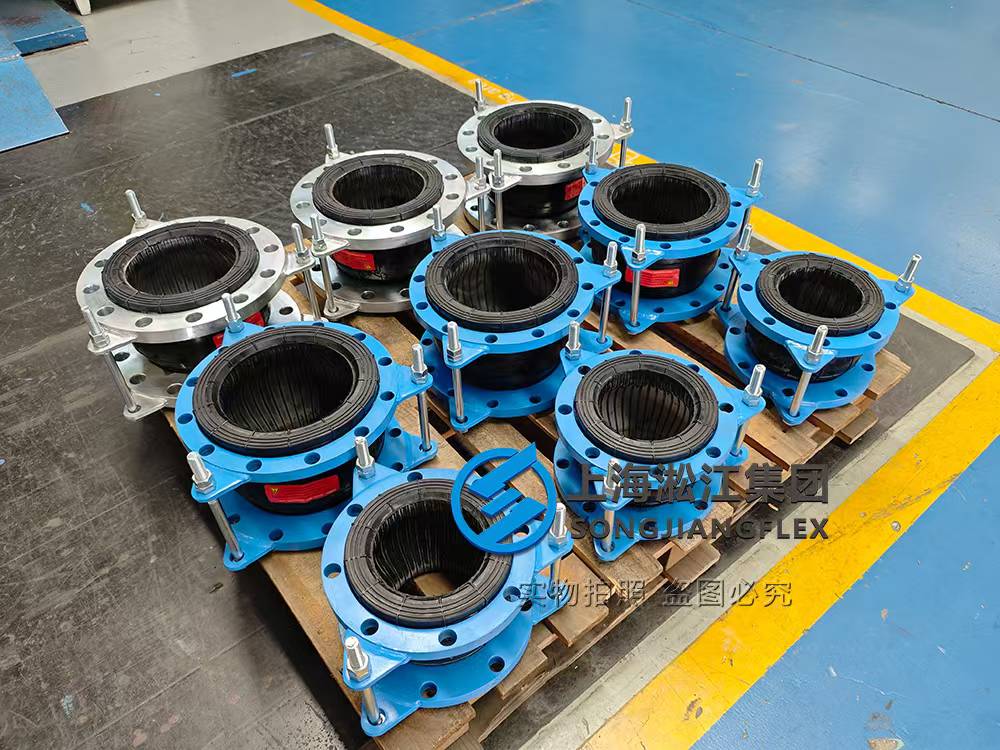
In demanding industrial piping systems, vibration, pressure surges, thermal expansion, and pipeline movement can significantly reduce equipment reliability and service life. A High Pressure Rubber Expansion Joint with Control Rods is specifically designed to absorb vibration, compensate for movement, reduce stress on connected equipment, and prevent excessive displacement under high-pressure operating conditions.
Compared with conventional rubber expansion joints, this reinforced design incorporates high-strength control rods (limit rods), providing additional protection against over-extension while maintaining the flexibility required for dynamic piping systems. It is an ideal solution for industries where operational safety, long service life, and reliable pipeline protection are critical.
What Is a High Pressure Rubber Expansion Joint with Control Rods?
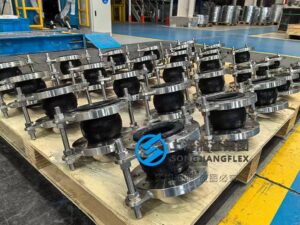
A high pressure rubber expansion joint with control rods is a flexible connector consisting of multiple layers of high-quality elastomer, reinforced fabric cords, steel wire reinforcement, precision steel flanges, and adjustable limit rods.
The flexible rubber body absorbs vibration and movement, while the external control rods restrict excessive axial extension caused by pressure thrust or unexpected system movement. This dual-protection design significantly improves operational safety in high-pressure pipelines.
Typical rubber materials include:
- EPDM for water, cooling water, HVAC, and municipal systems
- NBR for petroleum products and hydraulic oils
- Neoprene (CR) for marine environments
- FKM (Viton®) for aggressive chemicals and elevated temperatures
- PTFE-lined versions for highly corrosive acids and alkalis
Key Features of High Pressure Limit Rubber Expansion Joints
Our high pressure rubber expansion joints are engineered for demanding industrial environments and provide numerous performance advantages.
Excellent Pressure Resistance
Multiple layers of high-strength reinforcing fabric combined with steel wire reinforcement allow the expansion joint to withstand high internal pressure while maintaining excellent flexibility.
Built-In Control Rod Protection
The adjustable control rods effectively limit excessive axial movement, reducing stress caused by pressure thrust, water hammer, or accidental pipeline displacement. This feature greatly enhances system safety and minimizes the risk of joint failure.
Outstanding Vibration Isolation
The highly elastic rubber body efficiently absorbs vibration generated by rotating machinery, reducing transmission to connected pipelines and supporting structures.
Thermal Expansion Compensation
The joint accommodates axial, lateral, and angular movements caused by temperature fluctuations, helping protect pumps, valves, and piping systems from thermal stress.
Long Service Life
Premium rubber compounds offer excellent resistance to aging, ozone, UV exposure, weathering, corrosion, and fatigue, ensuring reliable long-term operation even in harsh industrial environments.
Typical Equipment Using High Pressure Rubber Expansion Joints
High pressure rubber expansion joints with limit rods are widely installed in numerous industrial systems, including:
Industrial Pump Systems
- Centrifugal pumps
- Multistage booster pumps
- High-pressure water pumps
- Fire protection pumps
- Split-case pumps
- Vertical turbine pumps
- Cooling water circulation pumps
- Boiler feed pumps
- Condensate pumps
- Chemical transfer pumps
HVAC & Building Services
- Water-cooled chillers
- Air-cooled chillers
- Cooling towers
- Plate heat exchangers
- Shell-and-tube heat exchangers
- HVAC circulation pumps
- District cooling systems
- Central air conditioning plants
Water Treatment Equipment
- Reverse osmosis (RO) systems
- Ultrafiltration systems
- Desalination plants
- Municipal water treatment stations
- Sewage treatment facilities
- Booster pumping stations
- Water supply pipelines
- Pressure regulating stations
Power Generation Facilities
- Thermal power plants
- Combined cycle power stations
- Nuclear auxiliary cooling systems
- Hydroelectric facilities
- Steam condensate systems
- Cooling water circulation networks
- Boiler systems
Petrochemical & Chemical Industries
- Chemical process pipelines
- Refinery transfer systems
- Acid transfer pipelines
- Alkali circulation systems
- Solvent processing equipment
- Process reactors
- Heat recovery systems
- Storage tank inlet and outlet piping
Marine & Offshore Applications
- Ship engine cooling systems
- Seawater circulation pipelines
- Ballast water systems
- Offshore platform piping
- Marine fire protection systems
- Pump room piping
- Engine room cooling circuits
Why Are Control Rods So Important?
Many engineers underestimate the enormous thrust generated by internal pressure inside large-diameter pipelines. Without proper restraint, the rubber body may experience excessive elongation during pressure surges or system startup.
Control rods provide several important functions:
- Prevent excessive axial extension
- Protect rubber bellows from over-stretching
- Improve operational safety during pressure spikes
- Reduce stress on pipeline anchors
- Increase overall service life
- Maintain proper alignment during operation
- Protect connected pumps and valves from excessive movement
For high-pressure systems, limit rods are often considered an essential safety component rather than an optional accessory.
Semantic Keywords for Industrial Pipeline Solutions
Modern industrial facilities increasingly search for vibration isolation products using technical terminology such as:
High Pressure Rubber Expansion Joint, Rubber Flexible Connector, Control Rod Expansion Joint, Limit Rod Rubber Joint, Anti Vibration Connector, Flexible Rubber Bellows, Industrial Expansion Joint, Pipeline Vibration Isolator, High Pressure Flexible Connector, Pump Connector, HVAC Expansion Joint, Water Hammer Protection, Thermal Expansion Compensation, Chemical Resistant Rubber Joint, PTFE Lined Expansion Joint, EPDM Expansion Joint, NBR Rubber Connector, Industrial Pipe Connector, Flexible Pipe Joint, Heavy Duty Rubber Expansion Joint.
These products play an essential role in improving equipment reliability, minimizing maintenance costs, and extending the lifespan of industrial piping systems.
How to Select the Correct High Pressure Rubber Expansion Joint
Choosing the right expansion joint involves much more than simply matching the pipe diameter. Engineers should carefully evaluate:
- Pipe size (DN/NPS)
- Working pressure
- Test pressure
- Vacuum conditions
- Operating temperature
- Conveyed media
- Required movement (axial, lateral, angular)
- Installation length
- Flange standard
- Rubber material compatibility
- Presence of water hammer
- Outdoor UV exposure
- Need for control rods or vacuum rings
Selecting the proper configuration ensures optimal vibration isolation and long-term reliability.
Frequently Asked Questions
Q1: Why should I choose a rubber expansion joint with control rods instead of a standard model?
A standard rubber expansion joint is designed primarily to absorb vibration and accommodate movement under normal operating conditions. However, in high-pressure systems, internal pressure generates significant thrust forces that can cause excessive axial extension if the piping is not adequately restrained. Control rods act as a mechanical safeguard by limiting excessive movement, protecting the rubber body from overstretching, and reducing stress on adjacent pumps, valves, and anchors. They are especially valuable in systems exposed to pressure surges, frequent pump starts and stops, or water hammer, where additional protection can greatly improve operational safety and service life.
Q2: Can the control rods completely eliminate pipeline movement?
No. Control rods are not intended to lock the expansion joint rigidly in place. Their purpose is to limit excessive movement while still allowing the designed axial, lateral, and angular displacement needed for vibration isolation and thermal expansion compensation. Proper adjustment of the control rods ensures that the joint remains flexible during normal operation but prevents dangerous over-extension under abnormal conditions.
Q3: Which rubber material is best for my application?
The ideal rubber material depends entirely on the service conditions. EPDM is widely used for water, cooling water, HVAC, and municipal applications because of its excellent resistance to heat, ozone, and weathering. NBR is preferred for petroleum products, diesel fuel, lubricating oils, and hydraulic fluids due to its superior oil resistance. Neoprene performs well in marine environments where weather and seawater resistance are important. FKM (Viton®) is recommended for aggressive chemicals and elevated temperatures, while PTFE-lined expansion joints are the preferred solution for highly corrosive acids, alkalis, and chemical processing systems. Selecting the correct elastomer significantly improves safety, reliability, and service life.
Q4: What information is required before selecting a rubber expansion joint?
To ensure accurate product selection, manufacturers generally require detailed application information, including pipe size, working pressure, operating temperature, conveyed medium, installation length, flange standard, expected movement, vacuum requirements, and installation environment. Additional information such as pump type, outdoor exposure, pressure fluctuations, and water hammer conditions also helps engineers recommend the most suitable reinforcement structure, rubber compound, and control rod configuration for maximum performance and durability.
Contact Us
Shanghai Songjiang Vibration Absorber Co., Ltd. is a professional manufacturer specializing in rubber expansion joints, metal expansion joints, vibration isolators, spring mounts, and flexible piping solutions for industrial applications worldwide.
Our company’s new website is now live, featuring the latest product introductions.
For more details, please visit https://shsjflex.com/
Email: [email protected]
We welcome OEM and customized manufacturing projects and can design products according to your pressure, temperature, media, movement, and installation requirements.