Mechanical equipment such as chillers, cooling towers, boilers, air-cooled condensers, pumps, and air handling units can generate continuous vibration during operation. If this vibration is transmitted directly into a concrete floor, rooftop structure, steel frame, or equipment foundation, it may lead to structure-borne noise, pipe stress, equipment movement, and reduced operating stability.
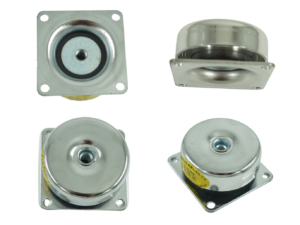
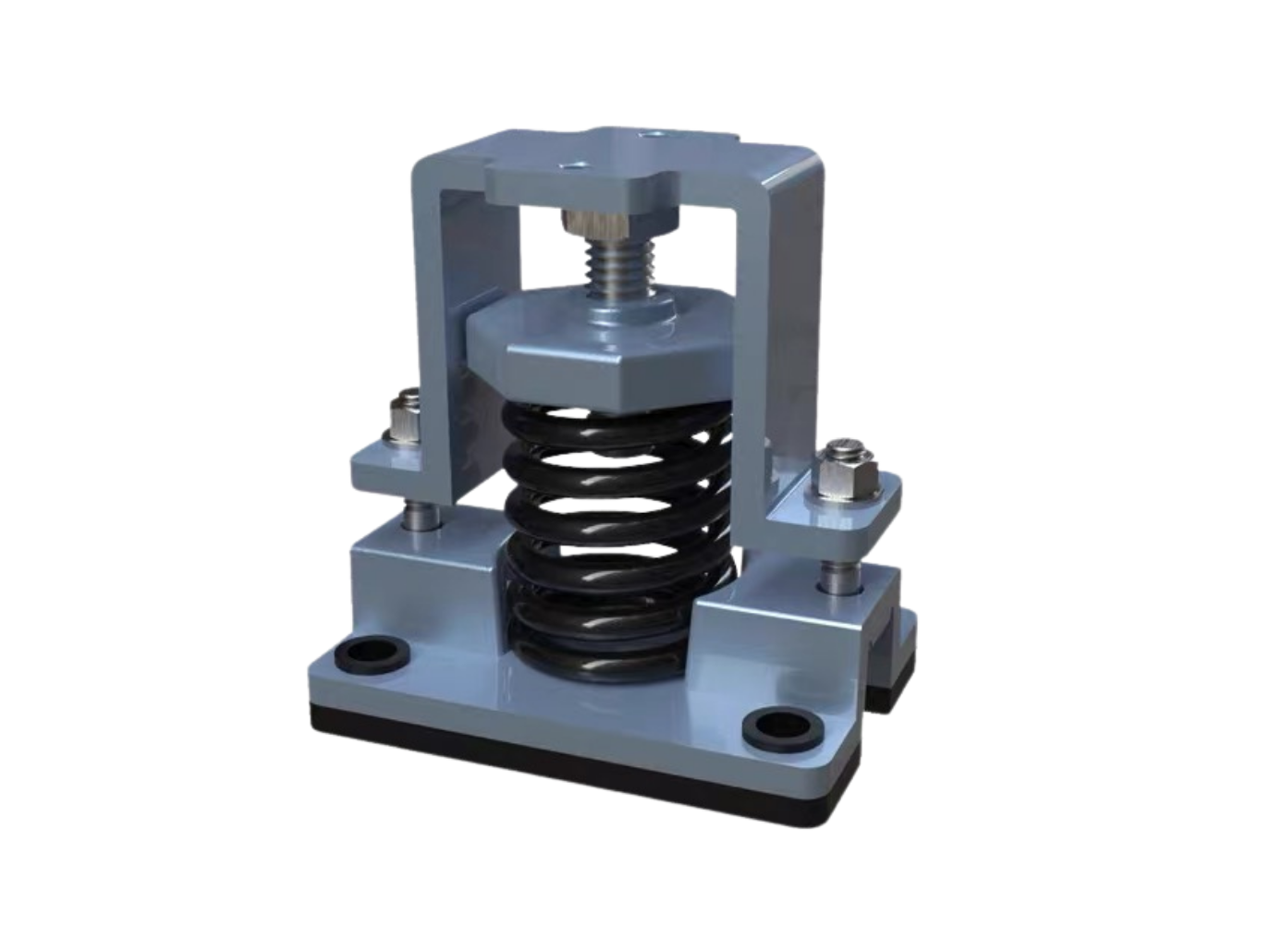
The SPTM-1 Series Spring Vibration Isolator is designed for applications where effective vibration isolation and controlled equipment movement are both important. Its restrained spring structure combines a laterally stable steel coil spring with a durable housing, helping reduce vibration transmission while limiting excessive vertical movement caused by load changes or external forces.
Restrained spring isolators are particularly suitable for HVAC equipment with changing operating weights, such as water-filled chillers and boilers, as well as outdoor equipment exposed to wind loads. This is also consistent with common HVAC vibration-control practice for restrained spring mounts.
How Does the SPTM-1 Spring Isolator Work?
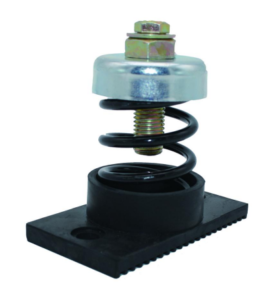
The core vibration isolation element of the SPTM-1 is a steel coil spring. When the supported machine operates, the spring absorbs and isolates mechanical vibration before it can be transmitted into the supporting structure.
Unlike a basic open spring mount, the SPTM-1 incorporates a restrained housing design. The housing helps control excessive vertical and lateral movement when equipment operating conditions change.
For example, a water-cooled chiller may have a different total weight when its water circuit is drained during maintenance. A boiler or cooling tower can also experience significant load variation between operating and maintenance conditions. Restrained spring mounts are commonly used in these situations because they can help control equipment movement as the supported weight changes.
The SPTM-1 also incorporates an adjustment mechanism for equipment leveling and a rubber acoustic pad at the base to help reduce high-frequency vibration and structure-borne noise.
25 mm and 50 mm Spring Deflection Options
Static deflection is one of the most important parameters when selecting a spring vibration isolator.
The SPTM-1 Series is available with standard 25 mm and 50 mm spring deflection options. Higher spring deflection generally provides a lower natural frequency and can improve isolation performance for low-frequency mechanical vibration when the isolator is correctly selected for the equipment operating speed and load.
The use of 25 mm and 50 mm deflection springs is common in HVAC vibration isolation systems, particularly for equipment such as chillers, fans, compressors, and air handling units.
Selection should not be based on equipment weight alone. Engineers should also consider machine RPM, disturbing frequency, mounting location, structural flexibility, center of gravity, number of support points, and actual load at each isolator position.
SPTM-1 for Water-Cooled and Air-Cooled Chillers
Large centrifugal chillers, screw chillers, scroll chillers, and packaged water-cooled chillers can transmit vibration from compressors, motors, refrigerant circuits, and connected pumps into the building structure.
This can become particularly noticeable when the chiller is installed in:
- Rooftop mechanical rooms
- Hospital plant rooms
- Data centers
- Hotels and commercial buildings
- Shopping malls
- Office towers
- Pharmaceutical facilities
- Semiconductor plants
- Basement mechanical rooms
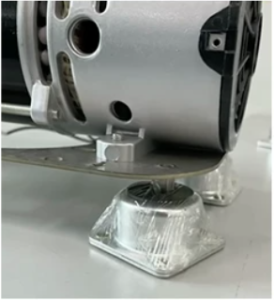
SPTM-1 restrained spring isolators can be installed beneath the chiller base or supporting steel frame. For large equipment, each isolator should be selected according to the actual point load rather than simply dividing the total machine weight equally.
Cooling Tower and Air-Cooled Condenser Isolation
Outdoor equipment introduces another challenge: wind-induced movement.
Cooling tower fans, motors and gearboxes generate operating vibration, while the tower structure may also be exposed to changing water loads and external wind forces. Air-cooled condensers and rooftop condensing units face similar operating conditions.
Restrained spring isolators are commonly recommended for cooling towers and air-cooled condensers where excessive movement due to wind needs to be controlled.
The SPTM-1 housing provides additional movement control compared with a completely free-standing spring, making it suitable for many rooftop HVAC applications where both vibration isolation and equipment stability must be considered.
Applications in Boiler and Pump Systems
SPTM-1 isolators can also be considered for equipment such as:
Hot-water boilers, packaged boilers, heat-exchanger skids, chilled-water pumps, condenser-water pumps, centrifugal pumps, end-suction pumps, base-mounted pumps, booster pump sets, circulation pumps, and HVAC pump inertia bases.
For pump systems, vibration can originate from the motor, impeller imbalance, hydraulic pulsation, shaft misalignment, and mechanical coupling. When pumps are installed close to noise-sensitive areas, correctly selected spring isolators can help reduce the transmission of mechanical vibration through the floor.
Where pumps generate significant dynamic forces, the SPTM-1 may also be combined with a steel equipment base or concrete inertia base, depending on the installation conditions.
Air Handling Units and Large Ventilation Equipment
Large AHUs, rooftop air handling units, centrifugal fans, axial fans, supply fans, return-air fans, exhaust fans, fresh-air units, and industrial ventilation systems are additional potential applications.
These machines often contain rotating fan assemblies and motors. When installed directly on structural steel or concrete slabs, their vibration can be transmitted throughout the building.
Spring vibration isolation is commonly used for AHUs and large fans, especially where low-frequency vibration or structure-borne noise needs to be controlled.
Why Choose a Restrained Spring Design?
Compared with conventional rubber mounts, spring isolators can provide greater static deflection and are therefore better suited to many low-frequency vibration applications.
Compared with completely open spring isolators, a restrained design offers additional control when equipment experiences weight variation, wind loading, temporary external forces, or movement during start-up and shutdown.
Key SPTM-1 design advantages include:
Laterally stable steel spring construction for reliable equipment support; restrained housing to limit excessive movement; 25 mm and 50 mm deflection options for different vibration requirements; internal leveling adjustment for installation alignment; anti-slip acoustic rubber base pad to reduce high-frequency transmission; and springs designed with additional overload capability.
FAQ
1. How do I select the correct SPTM-1 model?
Start with the actual operating weight of the equipment and the load at each mounting point. If a machine weighs 8,000 kg and uses eight isolators, it should not automatically be assumed that each mount carries exactly 1,000 kg. Motors, compressors, heat exchangers, water tanks, piping connections, and other components can create an uneven center of gravity.
For accurate selection, provide the equipment total operating weight, dimensions, number and position of mounting points, operating RPM, equipment type, and, where available, individual support reactions. We can then select the appropriate spring load and deflection.
2. Should I choose 25 mm or 50 mm deflection?
The choice depends on the vibration frequency, equipment speed, structural conditions, and required isolation efficiency. A 25 mm deflection spring is suitable for many general HVAC applications, while 50 mm deflection can provide improved isolation for lower-frequency vibration or installations requiring greater vibration attenuation.
However, larger deflection should not automatically be considered better. The complete system—including equipment stability, connected piping, available installation height, and support structure—must be evaluated.
3. Can SPTM-1 isolators be used under cooling towers?
Yes. Restrained spring isolators are particularly useful for cooling towers and other outdoor HVAC equipment because the restraint structure helps control excessive movement caused by changes in operating weight and external wind forces.
The actual isolator model should be selected according to the cooling tower operating weight, number of support points, weight distribution, fan speed, and site conditions.
4. Can SPTM-1 be used for chillers with changing water loads?
Yes. This is one of the applications where restrained spring isolators are especially useful. A chiller can experience substantial weight variation when water is drained during maintenance. The restrained structure helps limit excessive movement and can reduce unwanted displacement at connected piping.
5. Can the isolators be directly installed under equipment?
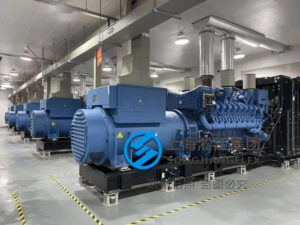
In many applications, yes. However, large chillers, pumps, generators, compressors, or machines with uneven structural bases may require a structural steel base or concrete inertia base to distribute loads correctly.
Before installation, the mounting arrangement, bolt positions, equipment center of gravity, point loads, and foundation conditions should be reviewed.
Our company’s new website is now live, featuring the latest product introductions. For more details, please visit https://shsjflex.com/
Email: [email protected]