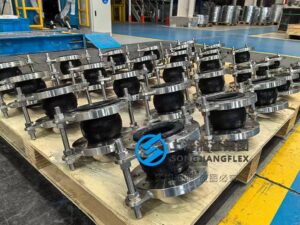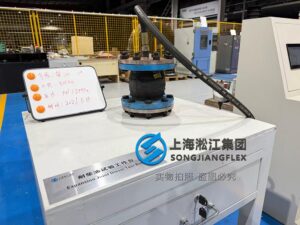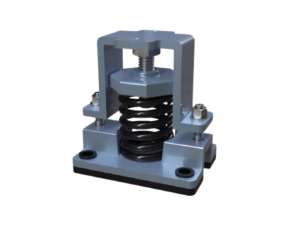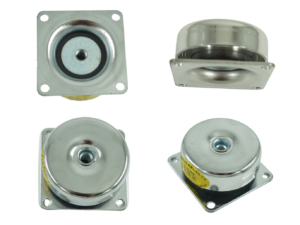
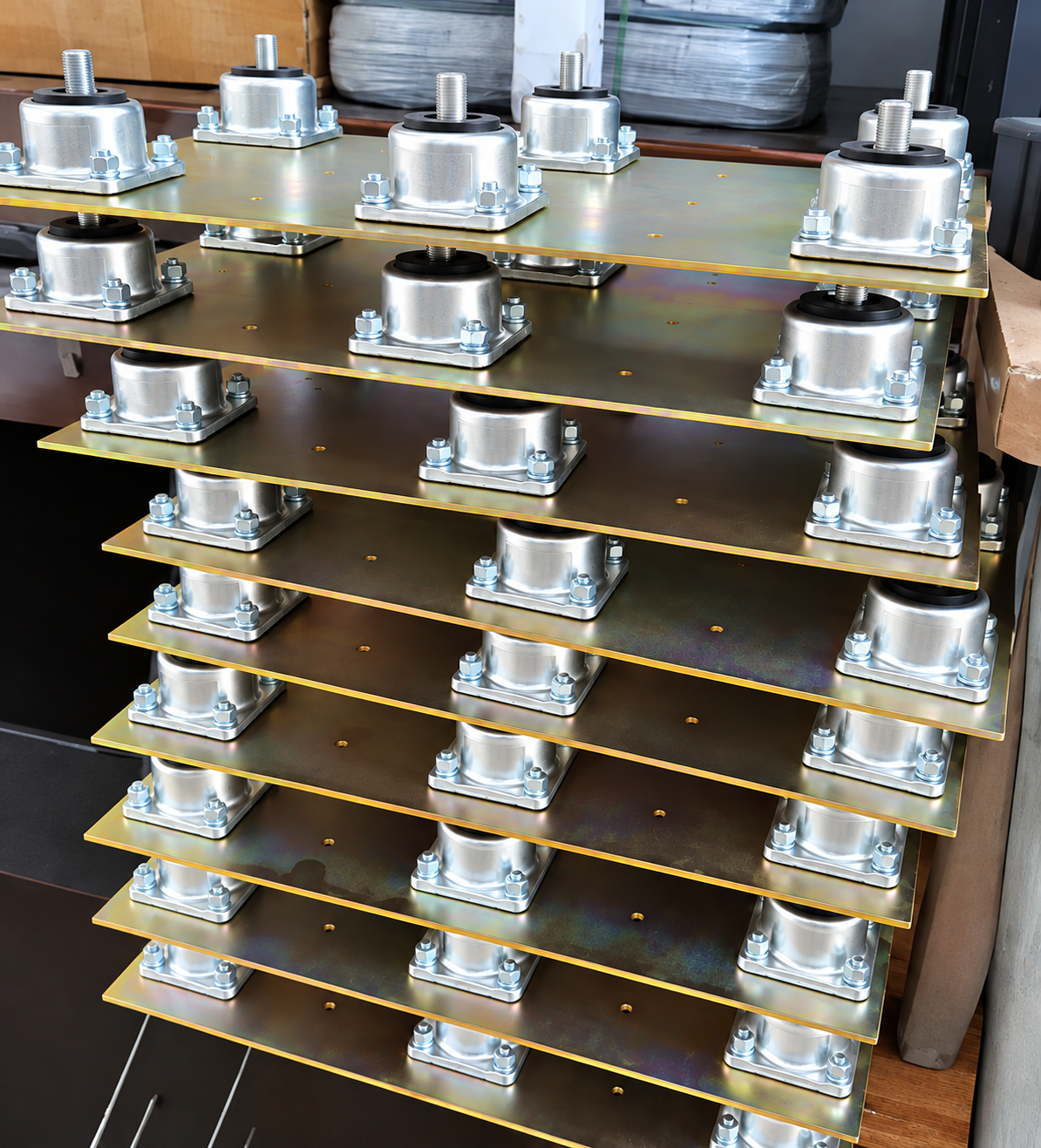
A new batch of Air Damping Vibration Isolators has recently been prepared and shipped to our customer in South Korea. These compact vibration control components are designed for applications where sensitive electronic, communication, control, and precision equipment requires reliable protection against continuous vibration and mechanical shock.
Compared with simple rubber mounts, an air damping vibration isolator combines elastic support, vibration isolation, and damping control in a compact structure. When equipment is exposed to vibration, the internal elastic element allows controlled movement while the damping mechanism dissipates part of the vibration energy, helping reduce excessive oscillation.
For customers working with sensitive electronic systems, mobile equipment, measuring instruments, and precision machinery, this combination provides an effective way to improve equipment stability and reduce vibration transmission.
Why Does Sensitive Equipment Need Vibration Isolation?
Modern industrial equipment increasingly contains sensitive electronic components, sensors, optical modules, circuit boards, connectors, and precision mechanical assemblies.
These components may be affected by vibration generated by:
- Diesel and gasoline engines
- Electric motors
- Cooling fans and blowers
- Pumps and compressors
- Vehicle engines and drivetrains
- Rough road conditions
- Transportation and loading impacts
- Nearby rotating machinery
- Factory floor vibration
- Repeated starting and stopping of machinery
Even when vibration is not strong enough to cause immediate mechanical failure, long-term exposure may influence measurement repeatability, optical alignment, electrical connections, sensor stability, and component service life.
This is why shock and vibration isolation has become increasingly important for modern electronic and precision equipment.
How Does an Air Damping Vibration Isolator Work?
A vibration isolation system generally includes three important elements: the supported equipment mass, an elastic element, and damping.
The elastic element allows the equipment to move independently from the vibrating base, helping reduce the amount of vibration transmitted into the protected equipment.
Damping performs a different function. It helps control excessive movement, particularly when the equipment passes through or operates near the resonance region.
An Air Damping Vibration Isolator uses controlled internal air movement to generate damping. As the isolator compresses and rebounds, airflow resistance dissipates part of the vibration energy.
This allows the isolator to provide both vibration attenuation and shock cushioning.
Applications in Vehicle-Mounted Electronic Equipment
One important application area is vehicle-mounted electronic equipment.
Electronic systems installed inside mobile platforms may continuously experience engine vibration, road excitation, suspension movement, acceleration, braking, and occasional impact.
Typical equipment includes:
- Mobile communication cabinets
- Radio transceiver racks
- RF communication modules
- Microwave communication equipment
- Satellite communication terminals
- Vehicle-mounted control cabinets
- GPS/INS navigation units
- Navigation computers
- Electronic control units
- Data acquisition systems
- Telemetry systems
- Signal processing units
- Power distribution modules
- Mobile monitoring equipment
- Vehicle-mounted computers
- Onboard diagnostic equipment
- Radar electronic cabinets
- Radar signal processors
- Antenna control electronics
These devices may be installed inside communication vehicles, mobile command vehicles, radar vehicles, inspection vehicles, emergency response vehicles, mobile laboratories, engineering vehicles, and specialized transportation platforms.
Installing suitable vibration isolators between the equipment chassis and supporting structure can help reduce transmitted vibration and shock.
Applications in Industrial Control and Electrical Equipment
Air damping isolators can also be considered for industrial electronic and control equipment.
Typical examples include:
- PLC control cabinets
- Industrial computers
- Servo control systems
- Variable-frequency drive cabinets
- Power electronic modules
- Industrial monitoring systems
- Electrical test equipment
- Data acquisition cabinets
- Battery management systems
- Sensor control boxes
- Remote monitoring terminals
- Automation control panels
- Precision power supplies
- Electronic instrumentation racks
For these applications, isolator selection should consider not only total equipment weight but also the actual load carried by each mounting point.
Why Is Load Distribution Important?
A common mistake is selecting vibration isolators only according to the total equipment weight.
For example, if a 40 kg electronic cabinet uses four isolators, it may appear that each isolator supports 10 kg. However, the real load distribution may not be equal.
A heavy transformer, battery pack, power module, motor, or other component may shift the equipment’s center of gravity. One mounting point may therefore carry significantly more load than another.
Before selecting an isolator, engineers should ideally confirm:
- Total equipment weight
- Number of mounting points
- Load at each mounting point
- Center of gravity
- Main excitation frequency
- Installation orientation
- Available installation space
- Expected shock level
- Environmental temperature
- Required vibration isolation performance
Correct load matching helps the isolator operate within its intended working range.
Air Damping Isolators for Precision Instruments
Another important application category is precision instrumentation.
Potential equipment includes:
- Optical measuring instruments
- Laser measurement systems
- Precision weighing systems
- Electronic microscopes
- Surface measurement instruments
- Vibration measurement equipment
- Laboratory analytical instruments
- Optical inspection platforms
- Precision sensor systems
- Calibration equipment
- Coordinate measuring equipment
- Dimensional inspection systems
For precision instruments, vibration does not necessarily need to be severe to become a problem. Small-amplitude vibration can sometimes influence measurement repeatability or optical stability.
This makes low-frequency vibration isolation, precision equipment vibration control, shock absorption, and vibration attenuation important design considerations.
Compact Isolation for Space-Limited Equipment
Another advantage of compact air damping isolators is their suitability for equipment where installation space is limited.
Electronic cabinets, mobile equipment, instrument chassis, and communication systems often have little space available underneath the equipment.
A compact isolator can therefore provide vibration control without requiring a large external isolation platform.
This is particularly useful for equipment manufacturers looking for an integrated OEM vibration isolation solution.
What Information Is Needed for Selection?
To recommend a suitable Air Damping Vibration Isolator, customers should provide as much application information as possible.
The most useful information includes equipment weight, number of isolators, mounting dimensions, center-of-gravity position, vibration frequency, installation direction, environmental conditions, and any special shock requirements.
Photos and equipment drawings are also helpful.
Instead of simply choosing an isolator by appearance or overall equipment weight, selection should be based on the actual operating conditions.
FAQ
Can Air Damping Vibration Isolators be used for vehicle-mounted electronics?
Yes. Vehicle-mounted electronics are an important potential application because vehicles generate vibration from engines, drivetrains, road surfaces, suspension systems, cooling systems, and auxiliary machinery. Electronic cabinets, navigation systems, communication modules, radar electronics, monitoring systems, and mobile control equipment may benefit from suitable vibration isolation. However, the isolator must be selected according to the actual mounting load, vibration environment, shock conditions, and available movement clearance.
Are these isolators suitable for communication and radar equipment?
They can be used for many communication and radar-related applications when their technical parameters match the equipment requirements. Examples include RF modules, microwave communication units, signal processors, communication racks, radar power supplies, antenna control electronics, telemetry systems, and electronic control cabinets. For mobile systems, both continuous vibration and transportation shock should be considered during selection.
Can I select an isolator according to total equipment weight?
Total equipment weight is only the first step. The actual load at each mounting point is more important. Equipment containing transformers, batteries, motors, compressors, power supplies, or other heavy components may have an offset center of gravity. In these cases, dividing the total weight equally by the number of isolators may produce an inaccurate selection. Providing a center-of-gravity drawing or individual mounting-point loads allows a more reliable recommendation.
What is the difference between damping and vibration isolation?
Vibration isolation primarily reduces the transmission of vibration between the source and protected equipment. Damping helps dissipate vibration energy and controls excessive movement, especially around resonance. A properly designed isolation system needs an appropriate relationship between stiffness, supported mass, natural frequency, damping, and excitation frequency. More damping is not automatically better under every operating condition, so the complete system should be considered.
What information should be provided before ordering?
Customers should provide equipment weight, quantity of mounting points, load distribution, mounting-hole dimensions, operating orientation, vibration frequency or rotating speed, expected shock conditions, temperature range, and available installation space. If detailed vibration data are unavailable, equipment drawings, photographs, motor speed, vehicle type, and application descriptions can still help engineers make an initial recommendation.
Contact Us
Our company’s new website is now live, featuring the latest product introductions. For more details, please visit https://shsjflex.com/
[email protected]