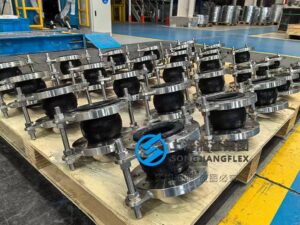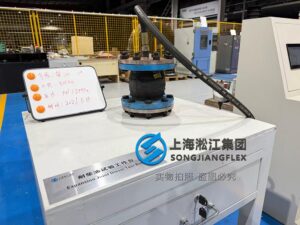
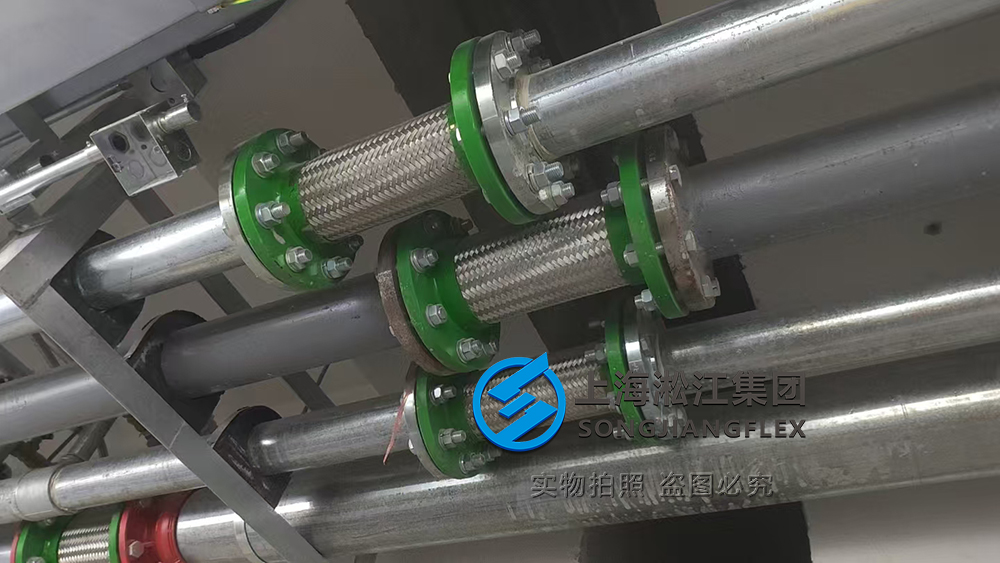
A batch of JWT Stainless Steel Flexible Hoses has recently been installed in an HVAC central chiller plant room, providing flexible connections between rotating mechanical equipment and the associated piping system.
Central air-conditioning plant rooms contain numerous pumps, chillers, heat exchangers, valves, and large-diameter piping networks. During continuous operation, pumps and other rotating equipment generate mechanical vibration. If rigid piping is connected directly to this equipment without an appropriate flexible section, vibration can be transmitted into the connected pipework and building structure.
JWT stainless steel flexible hoses provide a practical solution for these demanding mechanical-room applications. Their corrugated stainless steel construction and external stainless steel braid combine flexibility, pressure resistance, vibration control, and durability in a compact piping component.
Where Are JWT Stainless Steel Flexible Hoses Installed?
In this project, JWT flexible metal hose assemblies are used around the pumping and HVAC piping system inside the chiller plant room.
Typical installation positions include the inlet or outlet piping of:
- Chilled water circulation pumps
- Primary chilled water pumps
- Secondary chilled water pumps
- Condenser water pumps
- Cooling water circulation pumps
- Variable-speed centrifugal pumps
- End-suction centrifugal pumps
- Horizontal split-case pumps
- Vertical inline pumps
- Booster pump sets
- Heat exchanger circulation pumps
- Chiller evaporator water piping
- Chiller condenser water piping
They may also be used in suitable piping connections associated with water-cooled chillers, plate heat exchangers, cooling tower circulation systems, air-handling-unit water loops, and hydronic HVAC systems.
The exact location, hose length, connection type, pressure rating, and material should always be selected according to the actual piping design and operating conditions.
Why Do Chilled Water Pumps Need Flexible Connections?
A centrifugal pump contains a rotating impeller, shaft, motor, bearings, and coupling system. Even a correctly aligned and balanced pump produces a certain level of mechanical vibration during operation.
Additional vibration can result from:
- Motor rotation
- Impeller imbalance
- Hydraulic turbulence
- Cavitation
- Bearing conditions
- Pump start and stop
- Variable-frequency operation
- Pressure fluctuations
- Minor installation misalignment
When the pump is connected directly to rigid steel piping, part of this vibration energy may travel through the pipe network.
A properly selected stainless steel braided flexible hose creates a flexible section between the mechanical equipment and rigid piping. This helps reduce the direct transmission of vibration and mechanical stress.
Stainless Steel Corrugated Hose and Braided Construction
The core component of the JWT flexible connector is the corrugated stainless steel hose.
The corrugated geometry gives the metal hose flexibility that conventional rigid pipe does not have. An external stainless steel wire braid surrounds the corrugated hose and provides mechanical restraint.
The braid is particularly important because internal pressure generates forces that tend to elongate a flexible hose. The braided layer helps restrain this movement while allowing the hose assembly to maintain the flexibility required for its intended application.
Depending on project specifications, stainless steel flexible hose assemblies can be designed with different materials, connection types, nominal diameters, and overall lengths.
Typical Equipment in an HVAC Chiller Plant Room
A modern commercial or industrial chiller plant room can contain many interconnected mechanical systems.
JWT stainless steel flexible connectors may form part of piping systems serving equipment such as:
Centrifugal Chillers: Large commercial buildings, hospitals, hotels, shopping centers, factories, and data centers commonly use centrifugal chillers for centralized cooling.
Screw Chillers: Industrial and commercial cooling systems may use water-cooled or air-cooled screw chillers.
Chilled Water Pumps: These pumps circulate chilled water between the chiller and terminal cooling equipment.
Condenser Water Pumps: In water-cooled systems, these pumps circulate water between the chiller condenser and cooling tower.
Plate Heat Exchangers: Flexible piping connections may be considered where vibration, movement, or installation conditions require them.
Cooling Towers: Cooling tower circulation systems contain pumps and large piping networks that can transmit mechanical vibration.
Air Handling Units: AHUs use chilled-water coils for cooling and dehumidification and are connected to the central hydronic piping network.
Pressurization Units: Closed-loop HVAC systems may incorporate expansion tanks, pressure-maintenance systems, and make-up water equipment.
Reducing Vibration Transmission in Mechanical Rooms
Mechanical-room vibration is not only an equipment issue.
Vibration generated by pumps and chillers can travel through rigid pipework, pipe supports, walls, floors, and structural elements. In buildings such as hotels, hospitals, offices, laboratories, and data centers, controlling structure-borne vibration and noise can be particularly important.
Flexible pump connectors are therefore often used as one element of a broader vibration-control system.
A complete system may also include:
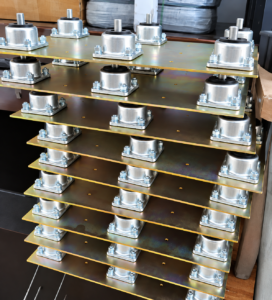
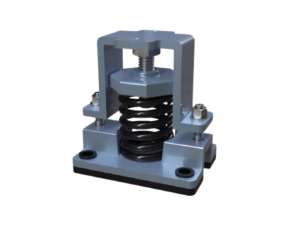
- Spring vibration isolators
- Rubber vibration mounts
- Inertia bases
- Pipe vibration isolators
- Spring hangers
- Flexible pipe connectors
- Equipment foundations
- Correct pipe anchoring and guides
The flexible metal hose should not be considered a replacement for proper equipment vibration isolation. Instead, these components work together to reduce vibration transmission paths.
Why Use Stainless Steel in HVAC Piping?
Stainless steel provides several advantages for flexible piping connections.
Compared with many conventional flexible materials, properly selected stainless steel can provide good temperature capability, corrosion resistance, mechanical strength, and long service life.
This makes stainless steel flexible hoses useful for applications involving:
- Chilled water
- Cooling water
- Hot water
- HVAC hydronic systems
- Industrial process water
- Pump connections
- Heat exchanger piping
- Equipment-room piping
However, the actual stainless steel grade should always be selected according to the fluid composition, chloride concentration, operating temperature, pressure, and surrounding environment.
Flexible Connection for Pump Suction and Discharge Lines
Pump suction and discharge piping are two common locations where flexible connectors may be considered.
On the discharge side, the connector may help isolate vibration generated by the operating pump from the downstream piping network.
On the suction side, careful engineering is especially important. The connector must be properly sized and installed so that it does not negatively affect pump inlet conditions.
Flexible connectors should never be used to compensate for major piping errors or to force improperly aligned piping into position.
Installation Matters
Even a high-quality stainless steel flexible hose can experience premature failure if installed incorrectly.
Important installation principles include:
- Do not twist the flexible hose during installation.
- Do not exceed the specified minimum bend radius.
- Avoid excessive lateral offset.
- Do not use the hose to correct major pipe misalignment.
- Provide proper pipe supports and anchors.
- Avoid torsional loading.
- Protect the hose from welding spatter.
- Ensure flange faces are correctly aligned.
- Confirm the flow medium, pressure, and temperature before installation.
- Leave sufficient space for the intended movement.
The connected piping should be independently supported. The flexible hose should not be expected to carry excessive pipe weight.
Custom JWT Flexible Metal Hose Solutions
Different mechanical rooms require different configurations.
JWT stainless steel flexible hoses can be designed according to project requirements such as:
- Nominal pipe diameter
- Overall length
- Operating pressure
- Operating temperature
- Fluid medium
- Connection standard
- Flange material
- Hose material
- Braid material
- Required movement
- Installation orientation
Available connection concepts may include flanged ends, threaded ends, welded ends, and other customized connections, depending on the actual project requirements.
FAQ
What is the main purpose of a stainless steel flexible hose in a pump room?
Its primary purpose is to provide a flexible connection between mechanical equipment and rigid piping. Pumps generate vibration during operation, and rigid pipework can transmit this vibration over long distances. A properly selected stainless steel flexible connector helps reduce this direct vibration transmission while also accommodating limited movement and installation tolerance. However, it should be used together with correct pump alignment, pipe supports, anchors, and equipment vibration isolators rather than being expected to solve every vibration problem independently.
Can JWT Stainless Steel Flexible Hoses be installed on chilled water pumps?
Yes, chilled water pump connections are a typical application for stainless steel flexible connectors. They can be considered for primary chilled water pumps, secondary chilled water pumps, variable-flow pumps, and other circulation pumps. Selection should be based on pipe diameter, operating pressure, water temperature, connection standard, required length, vibration conditions, and the chemical characteristics of the circulating water.
Can stainless steel flexible hoses be used on condenser water pumps?
Yes, provided that the selected stainless steel material is compatible with the condenser water conditions. Condenser water systems may have different water chemistry from closed chilled-water loops, so corrosion conditions should be evaluated. For cooling-tower systems, factors such as chloride content, water-treatment chemicals, temperature, and external environment should be considered when selecting the stainless steel grade.
What is the purpose of the stainless steel outer braid?
The outer braid is not simply a protective decorative layer. When a corrugated metal hose is pressurized, internal pressure creates forces that tend to elongate the hose. The stainless steel braid restrains this pressure-induced movement and increases the mechanical integrity of the complete hose assembly. The hose and braid therefore work together as an engineered flexible piping component.
Can a flexible metal hose correct pipe misalignment?
Only limited installation tolerance should be accommodated. A flexible metal hose should never be used to force severely misaligned pipes into position. Excessive lateral displacement, twisting, or bending can significantly reduce service life. If large movement exists, the piping arrangement should be reviewed and a suitable expansion joint, expansion loop, or specially engineered flexible hose configuration should be selected.
Should flexible hoses be installed on both sides of a pump?
This depends on the system design, vibration-control requirements, pump arrangement, piping layout, and engineering specification. Flexible connections may be considered at pump suction and/or discharge connections, but the complete piping system must be evaluated. Pipe supports, anchors, pump base isolation, equipment alignment, pressure, and flow conditions all influence the final arrangement.
Contact Us
Our company’s new website is now live, featuring the latest product introductions. For more details, please visit https://shsjflex.com/
[email protected]