Marine equipment operates in a challenging vibration environment. During navigation, shipboard equipment can be continuously affected by main engines, diesel generator sets, propulsion systems, pumps, compressors, ventilation equipment, rotating machinery, hull vibration, and wave-induced motion.
For sensitive onboard equipment, continuous vibration and sudden shock may affect electrical connections, electronic components, measuring accuracy, and long-term reliability.
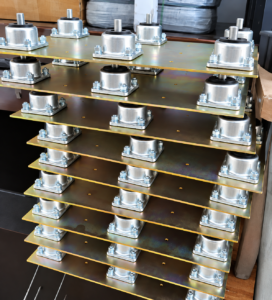
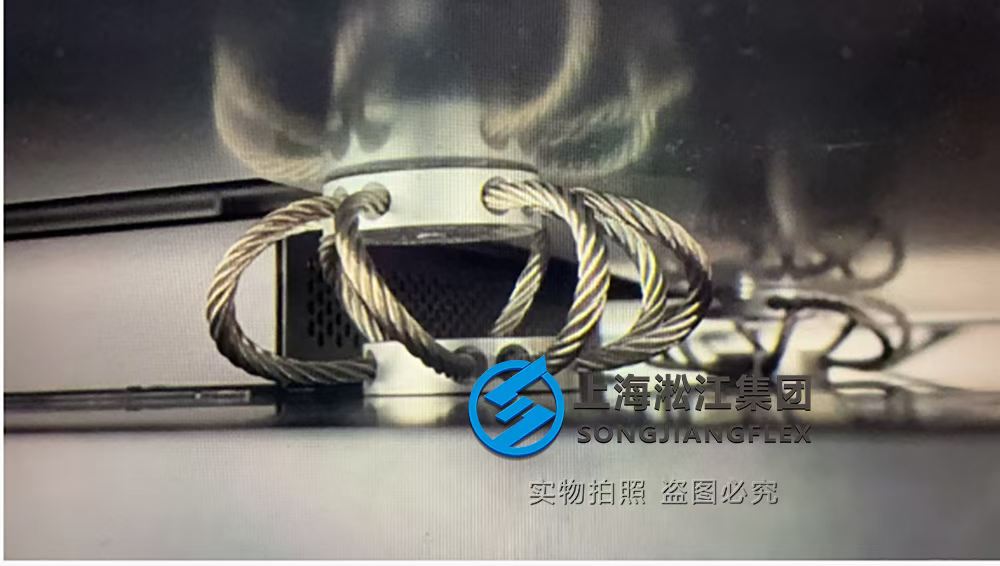
At this marine equipment installation site, wire rope vibration isolators were installed between the shipboard equipment base and supporting structure to provide both vibration isolation and shock protection.
Why Is Vibration Isolation Important on Ships?
Unlike stationary industrial equipment, marine machinery operates on a moving platform. Vibration may come from the equipment itself or be transmitted through the ship structure.
Typical vibration and shock sources include:
- main propulsion engines
- marine diesel generator sets
- auxiliary engines
- propulsion shaft systems
- seawater and cooling-water pumps
- ballast pumps
- fire pumps
- air compressors
- refrigeration compressors
- ventilation fans
- exhaust systems
- hull structural vibration
For this reason, marine vibration isolation is not limited to improving comfort. For sensitive equipment, it also helps protect internal components against repeated mechanical excitation.
Wire rope isolators are already widely used for shipboard electronics and rotating equipment such as pumps, generators, and compressors.
What Shipboard Equipment Can Use Wire Rope Isolators?
One of the advantages of a marine wire rope isolator is its broad application range.
For electrical and electronic systems, typical equipment includes:
marine electrical cabinets, switchboards, distribution panels, PLC control cabinets, frequency converter cabinets, UPS cabinets, battery cabinets, navigation computers, radar electronic units, sonar electronics, communication racks, server cabinets, monitoring systems, data acquisition equipment, and ship automation control systems.
Research on naval ship electrical switchboards has specifically evaluated wire rope isolators for protecting switchboard structures and air circuit breaker components against vibration transmitted from the hull.
For mechanical equipment, wire rope isolators can also be considered for:
small marine generators, auxiliary power units, seawater pumps, freshwater pumps, hydraulic power units, air compressors, refrigeration compressors, ventilation units, exhaust equipment, and other auxiliary machinery.
Installation Under Marine Electrical Cabinets
Electrical cabinets are one of the most typical shipboard applications.
Instead of fixing the cabinet directly to the ship structure, properly selected wire rope isolators can be installed between the cabinet frame and its supporting base.
When vibration or shock reaches the installation structure, deformation of the stainless steel wire rope produces both elastic movement and friction between the individual wire strands. This helps dissipate mechanical energy and reduce the shock and vibration transmitted to the protected equipment.
This characteristic is especially valuable for cabinets containing sensitive components such as:
circuit breakers, PLC modules, relays, power converters, communication modules, industrial computers, monitoring instruments, terminal blocks, control boards, and data acquisition modules.
Suitable for Radar, Navigation and Communication Equipment
Modern vessels contain increasing amounts of sensitive electronic equipment.
Typical examples include marine radar processing units, radar control cabinets, navigation computers, gyrocompass equipment, GNSS/GPS navigation units, voyage data recorder systems, communication racks, radio equipment, sonar electronic units, and integrated bridge electronics.
Marine vibration-control suppliers specifically identify electronic boxes, computers, monitors, and radar units as common sensitive-equipment applications for wire rope isolators.
For these systems, the purpose of the isolator is not simply to reduce visible movement. More importantly, it helps limit vibration and shock transmitted to sensitive internal electronic and mechanical components.
Why Are Wire Rope Isolators Suitable for Marine Environments?
Wire rope isolators have an all-metal construction and can be designed using stainless steel wire rope and metal retaining bars.
Compared with conventional elastomeric mounts, they offer several useful characteristics for marine installations:
High inherent damping: friction between wire strands helps dissipate vibration and shock energy.
Multi-directional protection: wire rope structures can accommodate deformation in multiple directions.
Corrosion resistance: stainless steel construction is suitable for demanding marine environments when the correct material and surface treatment are selected.
Wide environmental adaptability: performance is less dependent on conventional rubber aging.
Long service life: the all-metal structure is suitable for equipment requiring long-term installation with limited maintenance.
Wire rope isolators are also used in applications exposed to salt water, chemicals, oil, and temperature variations because the construction does not rely on conventional elastomeric elements.
What Should Be Checked Before Installation?
Correct model selection is essential.
Before selecting a shipboard wire rope isolator, customers should provide:
Equipment name – electrical cabinet, radar unit, generator, pump, compressor, etc.
Total equipment weight – including accessories installed inside the equipment.
Number of mounting points – usually determined by the equipment base.
Load distribution – especially when the center of gravity is not symmetrical.
Installation orientation – floor, wall, ceiling, or inclined installation.
Vibration frequency – if available.
Shock requirement – acceleration, pulse duration, and direction if specified.
Marine environment – temperature, humidity, salt spray, and corrosion conditions.
Mounting dimensions – bolt-hole spacing and available installation space.
For sensitive marine equipment, the center of gravity should also be considered because it directly influences the load carried by each isolator.
FAQ
1. Can wire rope isolators be used for both vibration and shock protection?
Yes. This is one of the main reasons wire rope isolators are used for shipboard equipment.
During normal vessel operation, equipment may experience continuous vibration transmitted from engines, generators, pumps, compressors, propellers, and other machinery. At the same time, sudden mechanical shocks may occur during severe vessel movement, impact, or other transient events.
A properly selected wire rope isolator combines elastic deflection with frictional damping between individual wire strands. This allows it to reduce vibration transmission while also absorbing a significant amount of transient mechanical energy.
However, vibration isolation and shock protection should be calculated separately when the project has specific performance requirements.
2. Can wire rope isolators be installed under marine electrical cabinets?
Yes. Electrical and electronic cabinets are among the most common applications.
They can be used for switchboards, PLC cabinets, communication racks, power distribution cabinets, control cabinets, converter cabinets, monitoring cabinets, and other shipboard electronic enclosures.
The isolator model should be selected according to the total cabinet weight, number of mounting points, center of gravity, installation direction, and required shock/vibration performance.
For tall cabinets, the center of gravity and lateral stability are especially important. Additional upper or rear restraint may be required depending on the installation and shock requirements.
3. How do I select the correct wire rope isolator for shipboard equipment?
Start with the actual equipment rather than selecting by isolator dimensions alone.
Please provide the equipment weight, mounting-point quantity, center of gravity, mounting orientation, vibration frequency, shock acceleration, available installation space, bolt-hole dimensions, and environmental conditions.
If possible, provide an equipment drawing showing the base dimensions and mounting-hole positions. For projects with specified marine or military test requirements, the applicable vibration and shock standards should also be provided before final selection.
4. Do wire rope isolators require regular maintenance?
Wire rope isolators are generally considered low-maintenance components because they do not rely on lubrication or conventional rubber elements.
However, periodic visual inspection is still recommended in marine installations. Mounting bolts should be checked for loosening, and the wire rope and retaining bars should be inspected for abnormal deformation, mechanical damage, or severe corrosion.
After an unusually large shock event, the isolators and mounting structure should also be inspected before continued operation.
Marine Equipment Needs Reliable Vibration Protection
A shipboard wire rope vibration isolator provides a practical solution for equipment that must withstand continuous vibration, multidirectional movement, and mechanical shock.
From electrical switchboards, radar electronics, navigation systems, and communication cabinets to pumps, generators, compressors, and auxiliary equipment, the correct vibration isolation system can help improve equipment protection and long-term operating reliability.
For model selection, please send us your equipment weight, number of mounting points, installation dimensions, vibration frequency, shock requirements, and equipment drawing.
Our company’s new website is now live, featuring the latest product introductions. For more details, please visit https://shsjflex.com/
Email: [email protected]