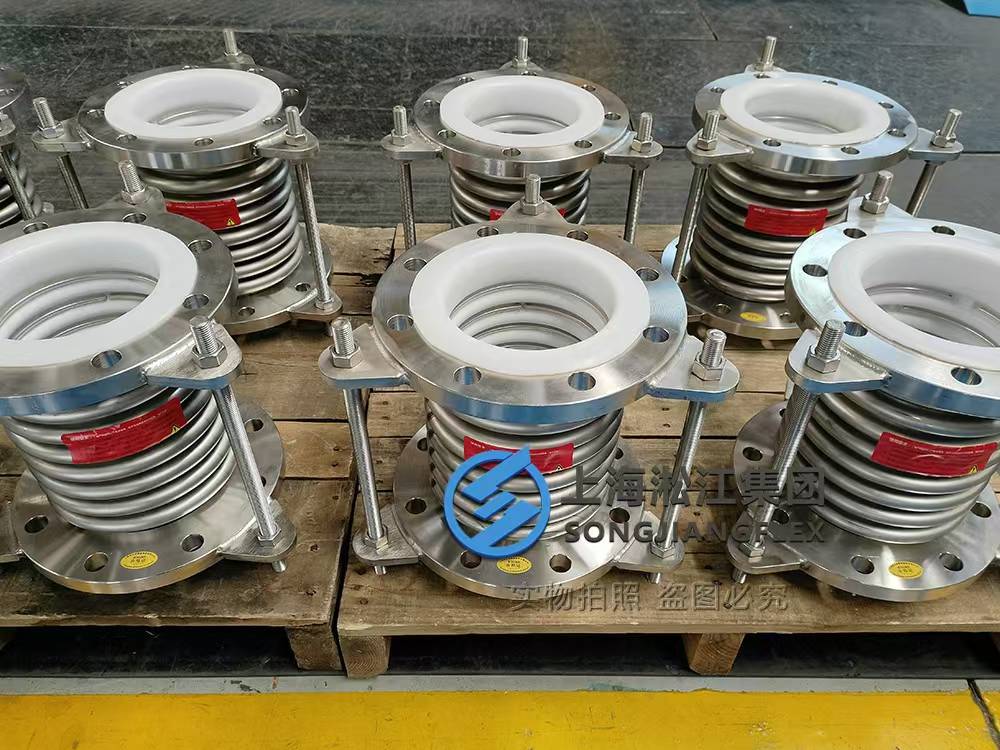
Copper sulfate process piping can present a challenging combination of corrosive media, chemical concentration changes, temperature fluctuations, pump vibration, and pipeline thermal movement. In chemical processing, electroplating, hydrometallurgy, copper refining, and wastewater treatment systems, the piping components must be selected not only for pressure resistance but also for long-term chemical compatibility.
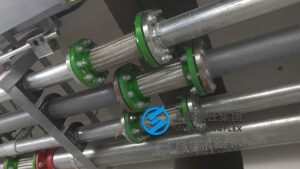
For these demanding applications, a PTFE-Lined Stainless Steel Bellows Expansion Joint provides a practical solution by combining the flexibility of a stainless steel bellows with the chemical-resistant barrier provided by PTFE.
Rather than allowing the copper sulfate solution or associated acidic process liquid to directly contact the stainless steel bellows, the internal PTFE lining separates the process medium from the metallic flexible element. This construction is especially valuable in special chemical piping where corrosion resistance and movement compensation are required simultaneously.
Why Is Copper Sulfate Piping a Special Application?
Copper sulfate is widely used or generated in copper electrorefining, electrowinning, electroplating, printed circuit board processing, mineral processing, chemical production, and industrial wastewater treatment.
In many industrial processes, copper sulfate does not exist as a simple room-temperature aqueous solution. The actual process liquid may contain sulfuric acid, copper ions, process additives, impurities, or other chemical components, making material selection more complicated.
Typical copper sulfate process equipment may include:
- copper sulfate solution preparation tanks
- electrolyte circulation tanks
- electrolytic cells
- electrowinning cells
- copper electrorefining tanks
- crystallization tanks and crystallizers
- chemical mixing vessels
- acid-resistant centrifugal pumps
- magnetic-drive chemical pumps
- electrolyte circulation pumps
- filter presses
- plate heat exchangers
- evaporators and concentration systems
- chemical dosing skids
- storage tanks
- transfer pump skids
- wastewater neutralization systems
The connecting pipelines between this equipment may experience thermal expansion, equipment vibration, installation deviation, and repeated start-stop cycles. A rigid piping connection may transfer these forces directly to pump nozzles, valves, tanks, and other equipment.
This is where a corrosion-resistant expansion joint becomes important.
How Does a PTFE-Lined Stainless Steel Bellows Work?
A PTFE-lined stainless steel expansion joint combines two different material functions.
The stainless steel bellows provides the flexible mechanical structure needed to accommodate designed axial, lateral, or angular movement. The PTFE liner forms the primary corrosion-resistant barrier between the chemical medium and the metallic bellows.
PTFE-lined expansion joints are widely used in chemical piping handling acids and highly corrosive chemicals because PTFE offers strong resistance to a broad range of corrosive fluids. The lining protects wetted metallic surfaces while the bellows provides the required flexibility.
For copper sulfate piping, this combination is especially useful when the solution also contains acidic components such as sulfuric acid.
Where Can It Be Installed in a Copper Sulfate System?
Electrolyte Circulation Pump Piping
In copper electrorefining and electrowinning systems, electrolyte must circulate continuously between tanks, treatment equipment, heat exchangers, and electrolytic cells.
A PTFE-lined bellows expansion joint can be installed at suitable positions around electrolyte circulation pump suction or discharge piping to accommodate designed pipeline movement and help reduce mechanical loads transmitted through the piping.
Typical associated equipment includes horizontal chemical centrifugal pumps, fluoroplastic-lined pumps, magnetic-drive pumps, acid circulation pumps, and electrolyte transfer pumps.
Copper Sulfate Crystallization Systems
Copper sulfate production may involve solution preparation, filtration, evaporation, concentration, cooling, crystallization, solid-liquid separation, and drying.
The piping around evaporators, crystallizers, circulation pumps, heat exchangers, and storage tanks can experience temperature changes during operation. These changes cause the pipeline to expand and contract.
A properly designed PTFE-lined metal expansion joint can absorb specified thermal movement while maintaining a corrosion-resistant wetted surface.
Electroplating and Surface Treatment Lines
Copper sulfate solutions are commonly associated with copper plating processes.
Typical equipment includes copper plating tanks, electrolyte circulation pumps, cartridge filtration units, chemical dosing tanks, rectifier cooling systems, heat exchangers, solution storage tanks, and wastewater collection systems.
In these facilities, compact piping layouts may leave limited space for large expansion loops. A bellows expansion joint can provide movement compensation in a relatively compact installation space when correctly designed with suitable anchors and pipe guides.
Why Add PTFE Instead of Using Stainless Steel Alone?
For ordinary water, air, or other compatible services, a stainless steel bellows may be sufficient. However, chemical piping must be evaluated according to the actual medium.
The corrosion behavior of a copper sulfate process line can change according to solution concentration, sulfuric acid content, chloride contamination, operating temperature, pressure, and other dissolved chemicals.
The purpose of the PTFE liner is to create a chemically resistant barrier between the process fluid and the metal bellows. PTFE-lined piping and expansion-joint systems are commonly used for transporting highly corrosive fluids because the fluoropolymer lining isolates the underlying metallic structure from direct chemical exposure.
This makes the design particularly suitable for special chemical pipelines, acidic copper solutions, electrolyte circulation systems, and corrosive process piping.
More Than Corrosion Resistance: Thermal Movement Matters
Chemical compatibility alone does not solve every piping problem.
Copper sulfate processing systems may include heated tanks, heat exchangers, evaporators, crystallizers, and long process pipelines. As operating temperatures change, the piping expands and contracts.
Expansion joints are designed to accommodate specific types and amounts of axial movement, lateral displacement, and angular movement. However, these movements cannot simply be assumed or combined without engineering review; the allowable movement depends on the bellows geometry, number of convolutions, pressure, temperature, and complete expansion-joint design.
Therefore, before manufacturing a PTFE-lined stainless steel bellows, the actual pipeline movement should be calculated or provided by the project engineer.
What Information Is Required Before Selection?
For copper sulfate or other special chemical piping, the expansion joint should never be selected according to DN size alone.
Please provide:
Medium: Copper sulfate solution and all other chemical components
Concentration: CuSO₄ concentration and sulfuric acid concentration, if applicable
Operating temperature: Normal and maximum temperature
Working pressure: Normal and design pressure
Pipe size: DN / NPS
Installation length: Required face-to-face dimension
Movement: Axial, lateral, and angular requirements
Connection: Flange standard or welding connection
Pipeline condition: Pressure, vacuum, or alternating operating condition
Operating cycles: Expected movement or thermal cycling frequency
Installation drawing: Including anchors, guides, pumps, tanks, and connected equipment
Chemical expansion-joint selection should consider the complete combination of medium, concentration, temperature, pressure, movement, size, and connection arrangement, rather than judging suitability from the material name alone.
FAQ
1. Can a PTFE-lined stainless steel bellows be used directly for copper sulfate solution?
It can be considered for copper sulfate process piping, but final material confirmation should be based on the complete chemical composition and operating conditions.
In an actual copper processing system, the medium may contain copper sulfate together with sulfuric acid, chlorides, additives, or other impurities. Concentration and temperature can significantly influence corrosion conditions.
Therefore, before production, we recommend providing a complete medium composition together with concentration, operating temperature, design temperature, working pressure, and design pressure. This allows the PTFE lining, bellows material, flange material, and complete structural design to be evaluated together.
2. What is the main advantage of PTFE lining inside a stainless steel bellows?
The main advantage is that the PTFE liner provides a corrosion-resistant wetted barrier, while the stainless steel bellows provides mechanical flexibility and structural support.
Without a liner, the process liquid directly contacts the metallic bellows. In corrosive chemical service, the bellows is particularly important because its thin convoluted structure repeatedly flexes during operation.
With a properly designed PTFE lining, direct contact between the corrosive process medium and the metallic flexible element can be reduced or avoided, making this construction particularly valuable for acidic process piping, chemical transfer lines, electrolyte circulation systems, and other corrosive-media applications.
3. Can the expansion joint absorb pump vibration as well as thermal expansion?
A bellows expansion joint can accommodate designed piping movement and may help isolate certain mechanical movement, but it should not automatically be treated as a general-purpose vibration isolator.
For a copper sulfate circulation pump, the piping system should first be correctly supported and aligned. Pipe anchors and guides should control the direction of movement, while the expansion joint is designed for its specified axial, lateral, or angular displacement.
If significant pump vibration exists, the pump operating speed, vibration frequency, amplitude, piping support arrangement, and required movement should be reviewed separately. This prevents excessive cyclic stress from being imposed on the bellows.
4. Can this expansion joint be used in sulfuric-acid-containing copper electrolyte?
PTFE is widely selected as a lining material for corrosive chemical piping, including acidic service, and PTFE-lined metal expansion joints are commonly used where acids and highly corrosive chemicals are handled.
However, the complete expansion joint must still be evaluated according to the actual sulfuric acid concentration, copper sulfate concentration, temperature, pressure, impurities, and process conditions.
The chemical resistance of PTFE by itself should not be interpreted as the pressure or temperature rating of the complete expansion joint. The bellows, PTFE liner, flanges, welds, external hardware, and structural configuration must all meet the project requirements.
A Reliable Solution for Special Chemical Piping
A PTFE-Lined Stainless Steel Bellows Expansion Joint is not simply a standard pipe connector. In copper sulfate and acidic electrolyte systems, it serves as an engineered transition between chemical corrosion protection and pipeline movement compensation.
For copper refining, electroplating, hydrometallurgy, copper sulfate production, crystallization, chemical processing, and wastewater treatment projects, correct selection begins with understanding the actual process medium.
Send us your medium composition, concentration, temperature, pressure, pipe size, required movement, flange standard, installation length, and pipeline drawing. We can evaluate the appropriate configuration according to your actual application.
Our company’s new website is now live, featuring the latest product introductions. For more details, please visit Shanghai Songjiang Vibration Absorber Co., Ltd.
Email: [email protected]